In this article
The rule for this guide is the same strict one behind our fragrance-free moisturiser guide: no “fragrance”, “parfum” or “aroma” anywhere in the ingredient list, and no masking fragrance hiding behind an “unscented” claim. Fragrance is the leading cosmetic contact allergen — a five-country European study put fragrance contact allergy at about 1.9% of the general population (Diepgen et al. 2015) — so the rule is worth taking seriously. Three pharmacy staples pass it, each verified against its maker’s own published formulation. One honest caveat up front: body wash is rinse-off, and European research (the EDEN study) found leave-on products the significant driver of fragrance allergy, not rinse-off ones. So this is the lower-stakes swap in your routine — but for eczema-prone or highly sensitive skin, it is still the standard pharmacy pick.
The rule: what 'fragrance-free' has to mean here
Ignore the front of the bottle. In the US, the FDA lets fragrance and flavour ingredients be listed under the single word “Fragrance” — because, as the FDA explains, fragrance formulas are complex mixtures that count as trade secrets. In the EU, the rule is stricter: since Regulation (EU) 2023/1545, 81 fragrance allergens must be named individually once they pass a threshold — 0.001% in leave-on products, 0.01% in rinse-off products like body wash. New products sold in the EU have had to comply since 31 July 2026.
The rule for this guide: no fragrance, parfum or aroma anywhere in the ingredient list, and no masking fragrance hiding behind “unscented”. That last clause matters more than it sounds — the FDA itself warns that “even some products labeled ‘unscented’ may contain fragrance ingredients”, added just to mask the smell of the other ingredients. For elimination purposes, only a verified “fragrance-free” claim (confirmed on the list) counts. The full reasoning is in our synthetic fragrance explainer.
The picks
QV Wash — the Australian pharmacy default
QV (Ego Pharmaceuticals) describes its Wash as a “fragrance free, colour free and pH balanced” cleanser that “produces a light foam that cleanses without drying the skin”, formulated with 10% glycerin and “suitable for use with skin prone to eczema, dermatitis and psoriasis” — verified on QV’s own product page. It is the easiest verified fragrance-free body wash to buy in Australia: every pharmacy and most supermarkets stock it, in family sizes.
The honest footnote: QV’s own published ingredient list includes sodium lauryl sulfate and parabens. “Fragrance-free” is a claim about fragrance only — it does not mean everything-free, a theme this guide keeps returning to.
Vanicream Gentle Body Wash — the allergy-default (US/international)
Vanicream’s position is the starkest on this page: “All of our cleansers are free of dyes, fragrance, masking fragrance, lanolin, parabens and formaldehyde releasers” — verified on Vanicream’s cleanser page — and the Gentle Body Wash holds the National Eczema Association’s Seal of Acceptance, which demands not just fragrance-free but no discernible scent at all, plus clinical safety testing reviewed by dermatologists and allergists. If your skin reacts to almost everything, start here.
The honest footnote: Vanicream is a US brand with limited Australian retail presence — most readers here will order it online. The formula is also deliberately minimal: no ceramides, no butters, no extras. That is the point, but dry skin may want a moisturiser after.
Cetaphil Moisturizing Relief Body Wash — the richer formula (US/international)
Cetaphil’s relief body wash lists “Fragrance free … Paraben free … Sulfate Free … Hypoallergenic … Dermatologist Tested” on its official product page, built on shea butter and avocado oil for sensitive, dry skin. It is the pick for readers who want fragrance-free without giving up a rich, creamy wash.
The honest footnote: the same official list includes benzyl alcohol — an EU-listed fragrance allergen, used here as a preservative. It is the perfect example of why “fragrance free” is a labelling claim about added fragrance, not a guarantee of zero allergens. And the verified page is the US Cetaphil site; check the Australian pack shows the same claims before you buy.
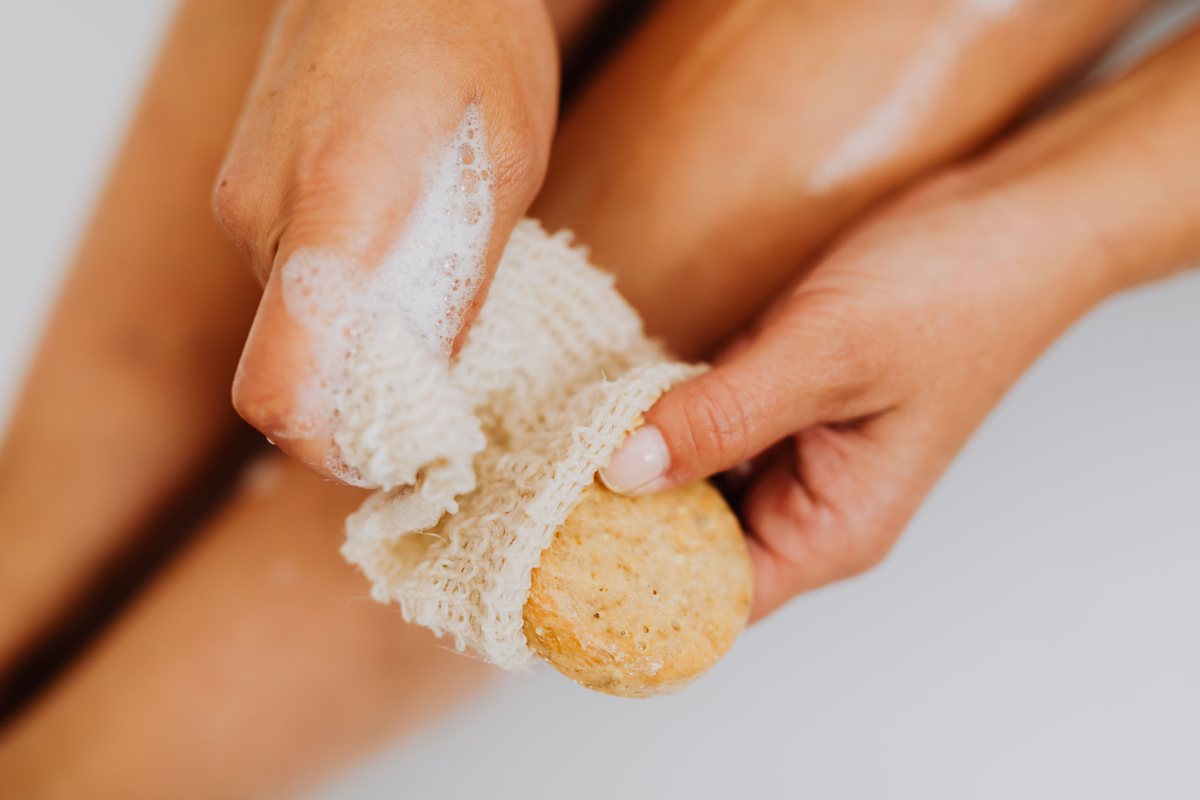
An honest caveat: rinse-off products play a smaller role
Here is where this guide stays honest about the science. The EDEN fragrance study — over 3,100 patch-tested Europeans (van Amerongen et al. 2021) — found that leave-on products were the exposure significantly associated with fragrance allergy. Rinse-off products were analysed as a separate category and were not the significant driver. Contact time matters: a moisturiser sits on your skin all day; a body wash is gone in minutes.
So the priority order is real: swap fragrance out of leave-on products first (our fragrance-free moisturiser guide is the higher-stakes one), then complete the job with the wash. Three reasons to still bother: aggregate exposure across a whole routine adds up; for eczema-prone, dermatitis-prone or highly sensitive skin, fragrance-free washing is the standard pharmacy advice; and nobody’s skin gets calmer from a wash that re-deposits the allergen the moisturiser just eliminated.
The debate
The industry and regulator position
Fragrance is legal, widely used, and the great majority of users tolerate it — the Diepgen study’s ~1.9% allergy figure means roughly 98 in 100 people do not have fragrance contact allergy. The FDA’s position is that fragrance formulas are complex mixtures and legitimate trade secrets, and US law does not require individual disclosure. Where allergy is diagnosed, dermatologists manage it with patch testing and avoidance advice.
The advocate position
EWG (advocacy) calls the single-word “fragrance” label a loophole — “hidden chemicals” — and argues full disclosure would let sensitive consumers protect themselves and pressure reformulation. Advocates cite self-reported surveys such as Steinemann 2016, in which 34.7% of 1,136 US respondents reported health problems on exposure to fragranced products — survey data, not a diagnosis, but a measure of how many people feel affected.
The EU has taken a middle path: not a ban, but mandatory naming of 81 allergens above thresholds, so sensitive readers can at least see what they are avoiding. That is the regulation making this guide’s label-check possible.
Who should choose which
- Eczema-prone families in Australia: QV Wash — value, every-pharmacy availability, and a matching bath range built on the same fragrance-free discipline.
- Highly reactive or multiply sensitive skin: Vanicream Gentle Body Wash — the longest exclusion list on this page and the NEA seal behind it.
- Dry, tight skin that dislikes thin washes: Cetaphil Moisturizing Relief — the rich formula, with the benzyl-alcohol footnote kept in mind.
- Face-only washers: none of the above on the face. Body washes are formulated for body skin; faces get a dedicated fragrance-free facial cleanser.
Whichever you choose, the wash is half the equation: lukewarm water, short contact time, and a fragrance-free moisturiser applied to damp skin afterwards matter as much as the bottle for eczema-prone skin.
Checking any body wash yourself
- Turn the bottle around. Fail it if you see fragrance, parfum or aroma — or “unscented” without a fragrance-free claim to match (masking fragrance hides here).
- Scan the tail of the list for the EU’s named allergens — limonene, linalool, geraniol, benzyl alcohol and their kin must be named individually in the EU above 0.01% in rinse-off products, which is your free audit trail even outside the EU.
- Remember the two footnotes: fragrance-free ≠ allergen-free (Cetaphil’s benzyl alcohol) and fragrance-free ≠ everything-free (QV’s SLS and parabens). The claim answers one question only.
- Judge contact time as well as formula: a fragranced leave-on body lotion is a bigger exposure than a fragranced rinse-off wash, so audit your routine in that order.
- Give any switch three to four weeks before judging — and if a rash persists, the next step is patch testing with a dermatologist, not a different bottle.
Frequently asked questions
What is the difference between fragrance-free and unscented?
Fragrance-free means no fragrance material was added. Unscented means you cannot smell it — which, as the FDA warns, may be achieved with a masking fragrance that still counts as fragrance exposure for allergic skin. For elimination purposes, only a verified 'fragrance-free' claim — confirmed on the ingredient list — counts.
If body wash rinses off, does its fragrance really matter?
Less than a leave-on product’s: the European EDEN study found leave-on products the significant driver of fragrance allergy, with rinse-off analysed separately. So audit leave-on products first. But aggregate exposure across a routine adds up, and for eczema-prone or highly sensitive skin, fragrance-free washing is the standard pharmacy recommendation anyway.
My 'fragrance-free' body wash smells faintly of something. Why?
Unfragranced products often carry the mild base smell of their raw ingredients — oils, fatty alcohols, surfactants. That is normal and is not fragrance. The National Eczema Association’s Seal of Acceptance goes further than the label claim: it requires no discernible scent at all in the final product.
Can a fragrance-free body wash still cause a reaction?
Yes — fragrance is the most common allergen, not the only one. Preservatives such as benzyl alcohol (present in our Cetaphil pick as a preservative, and an EU-listed fragrance allergen) can be someone’s trigger. Persistent problems belong with a dermatologist and patch testing.
Are 'natural' essential-oil scents safer than synthetic fragrance?
Not inherently. The EU’s named-allergen list includes naturally occurring fragrance components such as limonene and linalool alongside synthetic ones — 'natural' is not the safety test. The safety test is the verified fragrance-free claim, checked on the list.
Should children use fragrance-free body wash?
For children with eczema or sensitive skin, fragrance-free washes are the standard pharmacy recommendation — fragrance has no function on a child’s skin and is a leading contact allergen, and our QV pick is marketed for skin prone to eczema and dermatitis. For a specific child’s condition, your pharmacist or doctor’s advice takes precedence over any guide.
Checked against FDA, European Commission, Ecomundo, Diepgen et al. 2015 sources · Last updated 2026-10-24 · How we assess ingredients
Sources (8)
- FDA — Fragrances in Cosmetics
- European Commission — Fragrance allergens labelling
- Ecomundo — Regulation (EU) 2023/1545: 81 fragrance allergens to be named
- Diepgen et al. 2015 — Fragrance contact allergy prevalence (PubMed)
- van Amerongen et al. 2021 — EDEN fragrance study, leave-on vs rinse-off (PMC)
- National Eczema Association — Seal of Acceptance criteria
- EWG — What is 'fragrance'? (advocacy)
- Steinemann 2016 — Fragranced products and self-reported effects (PubMed)