In this article
- What aloe vera is — gel, latex and whole-leaf extract
- Why it is in your skincare
- What the evidence shows on skin
- Drinking aloe: the blood-sugar signal and the liver cases
- The cancer question: what the rat study actually found
- What regulators say
- The debate
- Who should avoid it, or patch-test first
- How to judge a formula
- Frequently asked questions
Aloe vera is the soothing gel in almost every after-sun product — and the ingredient behind one of the most misunderstood cancer findings in skincare. The confusion has a single cause: gel, latex and whole-leaf extract are three different substances, and most of what you read about aloe never says which one it means. The gel inside the leaf is mostly water and a polysaccharide called acemannan; the bitter yellow latex under the rind carries anthraquinones, including aloin; and whole-leaf extract is both together, unless it has been decolourised. On skin, the evidence is modest: small, low-quality burn trials hint at faster healing — about nine days faster in one pooled analysis of just 138 people — but the Cochrane review found no high-quality evidence overall, and one small study found aloe raises skin hydration while leaving water loss unchanged. The cancer finding is real, and it is narrow: a non-decolourised whole-leaf extract caused large-intestine tumours in rats in a two-year study, and the World Health Organization's cancer agency lists that same extract as possibly carcinogenic to humans — with inadequate evidence in people, and with no finding at all against inner-leaf gel or decolourised extract. This article keeps the three forms separate throughout, so you can see exactly what applies to the gel in your bathroom and what applies only to the leaf juice in a bottle.
What aloe vera is — gel, latex and whole-leaf extract
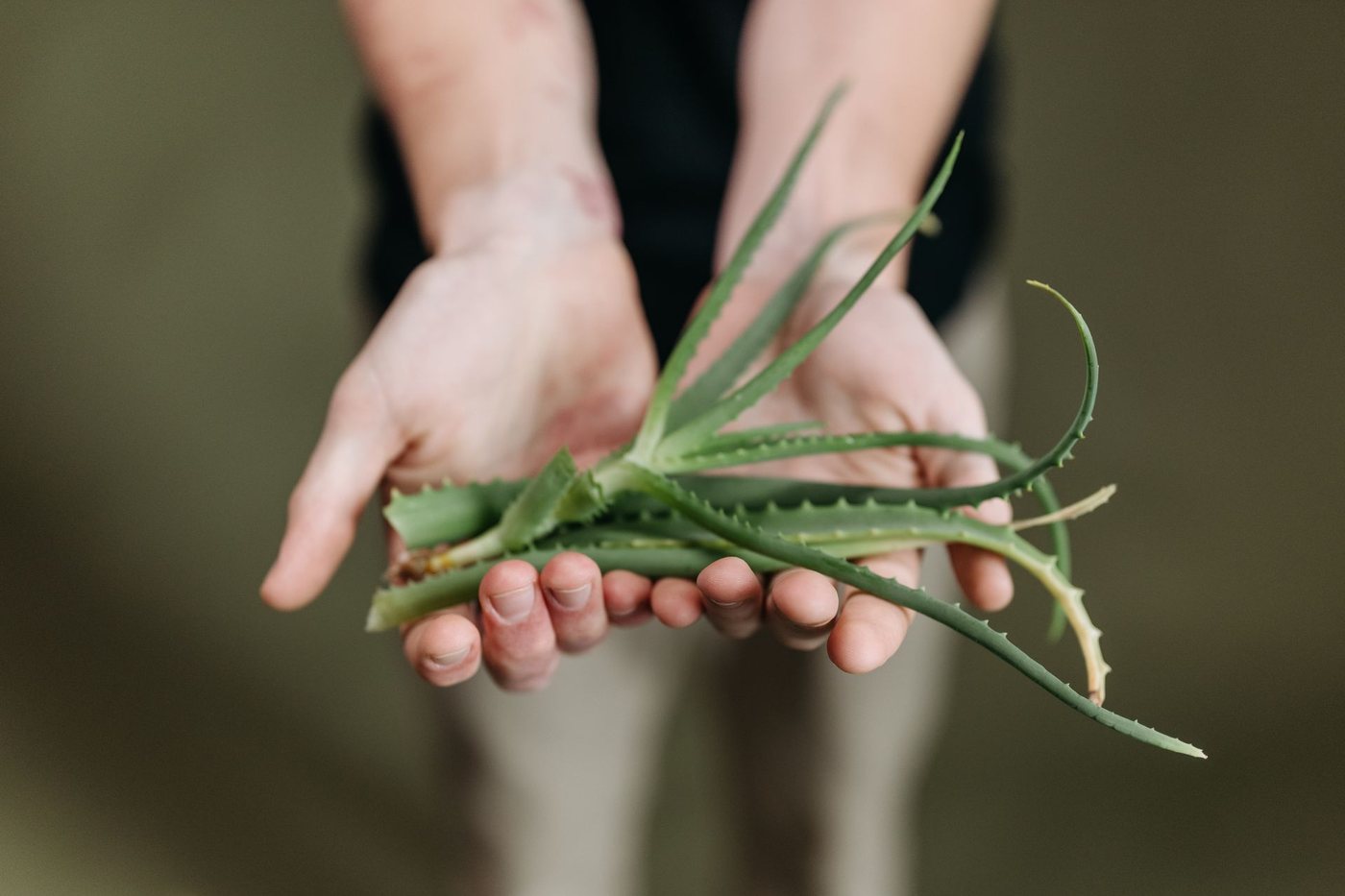
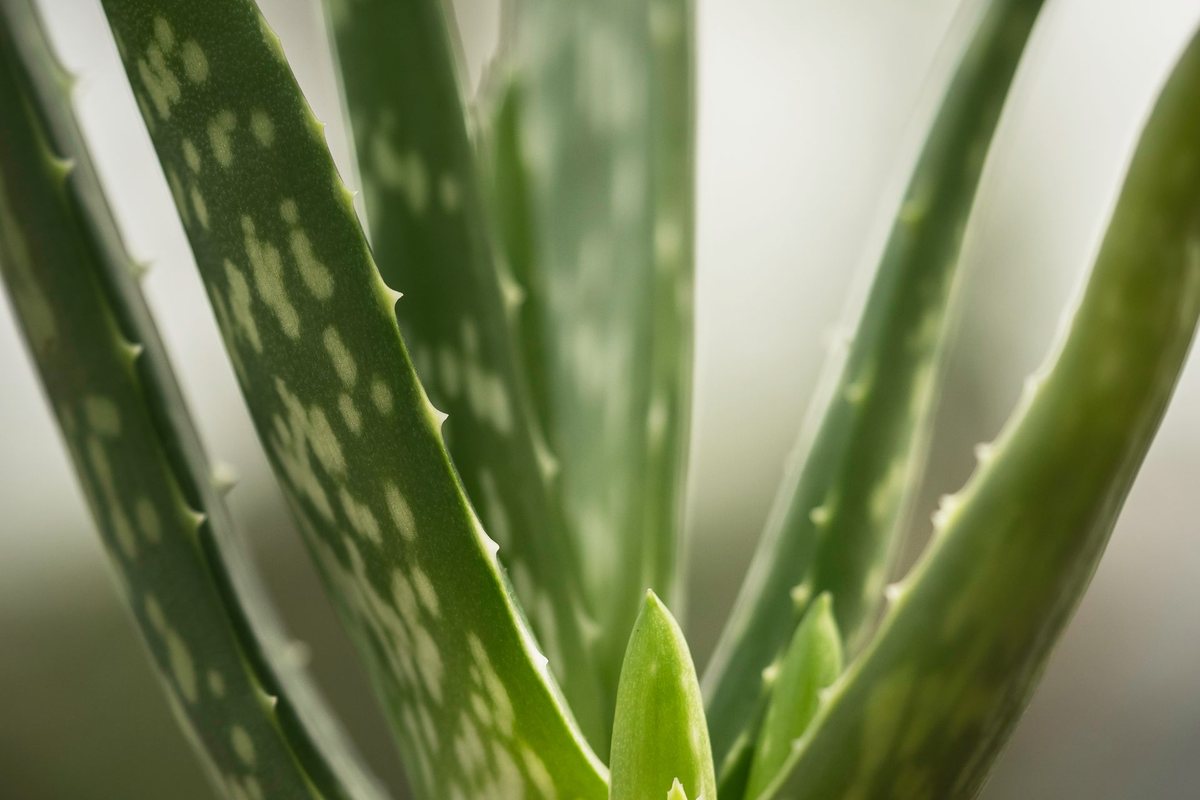
Aloe vera is not one ingredient. It is three different substances that happen to come from the same leaf — and almost every argument about aloe, including the cancer question, turns on which of the three is being talked about. The plant is Aloe barbadensis Miller (syn. Aloe vera (L.) Burm.f.), a succulent in the family Asphodelaceae. Older sources still place it in Liliaceae, so you will see both family names in the literature; the plant is the same. A cut leaf has three identifiable layers, and each one yields a different material with a different chemistry and a different safety record.
| Form | Where it comes from | What it mainly contains | Typical use |
|---|---|---|---|
| Gel (inner-leaf gel / fillet) | Clear pulp of the inner leaf; about 98.5% water | Polysaccharides, chiefly acemannan; water, amino acids, vitamins, minerals, enzymes | Skin care, drinks |
| Latex (aloe sap / “aloes”) | Bitter yellow sap from pericyclic tubules just under the rind | Anthraquinone glycosides: aloin A and aloin B (barbaloin), aloe-emodin | Stimulant laxative (historical; no longer sold over the counter in the US) |
| Whole-leaf extract | Whole crushed leaf (gel + latex together) | Both of the above, unless processed | Drinks, supplements — safety depends entirely on whether it was decolourised |
The gel is the familiar part. Fresh gel is about 98.5% water, and the remaining solids contain polysaccharides, amino acids, vitamins, minerals, organic acids, lignins, phenolic compounds and phytosterols. Its major polysaccharide is acemannan, a highly acetylated mannan made of mannose with small amounts of glucose and galactose — approximately 31 mannose units to one glucose to one galactose — produced in specialised leucoplast cells of the inner leaf. Whole-leaf extract, by contrast, contains more than 200 chemical substances. Acemannan is fragile: heat, oxygen, enzymes, time and aggressive filtration degrade it, so acemannan content varies widely between products. No verified figure exists for how much is lost in processing, so this article does not quote one.
The latex is the part with the pharmacology. Its principal anthraquinones are aloin A and aloin B (barbaloin and isobarbaloin) and aloe-emodin, the aglycone released when gut bacteria cleave aloin. These are hydroxyanthracene derivatives (HADs), the same chemical family behind senna and cascara. Colonic bacteria cleave aloin to aloe-emodin, which stimulates colonic motility and reduces water reabsorption — the laxative mechanism, and also the reason latex is the fraction behind most of aloe's oral safety problems.
Decolourisation is the processing step that separates the two stories. It means passing pressed juice — whole-leaf or inner-leaf — through an activated-charcoal (activated-carbon) filter to adsorb the anthraquinones and latex constituents. The measured effect is large: aloin in unfiltered whole-leaf extract runs at 8 mg/g, against 0.08 mg/g in decolourised extract — a factor of 100. It is not a free lunch: decolourised extract also loses some high-molecular-weight polysaccharides, with about 19–23% lower complex-polysaccharide content than gel or whole extract, and reduced thickness. A product can therefore be lower in the compounds of concern and lower in acemannan at the same time, which is why “decolourised” is a safety description, not a quality guarantee.
Why the distinction matters is stated plainly by the US National Center for Complementary and Integrative Health (NCCIH): most toxicity and safety studies in animals tested non-decolourised whole-leaf extract of aloe vera, which it notes is not commonly used by consumers. The National Toxicology Program cancer finding and the IARC Group 2B classification apply only to non-decolourised whole-leaf extract — not to inner-leaf gel, and not to decolourised whole-leaf extract. California's Proposition 65 listing makes the same distinction in law. Keep that sentence in mind for the rest of this article: whenever a claim about aloe does not name its form, it is unfinished.
Tip: when a headline says “aloe vera” without naming the form, ask three questions before believing it — gel, latex or whole-leaf, and decolourised or not. That single habit resolves most of the confusion around this ingredient.
Why it is in your skincare
Aloe gel is in skincare for a simple reason: it feels like relief. It is mostly water, it cools on contact, and it leaves a light, non-greasy film — exactly what sunburned skin wants, and exactly what a moisturiser wants from a supporting ingredient. The Cosmetic Ingredient Review (CIR) Expert Panel, the US industry panel that assessed aloe-derived ingredients in 2007, describes them as functioning primarily as skin-conditioning agents, included in cosmetics only at low concentrations: typical raw-material concentrations of 0.1% or less, although they can be as high as 20%. Dedicated aloe gels are the exception, where leaf juice can be the bulk of the formula rather than a supporting player.
What the gel actually does on skin is narrower than its reputation. Its best-measured effect is hydration: the polysaccharides in the gel hold water in the outer skin layer, a humectant mechanism in the same family as glycerin. Its reputation for “soothing” is harder to pin down — the trials measured hydration and burn healing, not redness or comfort scores, so the soothing claim rests on the cooling feel and on tradition rather than on a measured anti-redness effect. That does not make it false; it makes it unmeasured, and this article will not dress it up as a trial result.
Formulators also use aloe because it is easy to work with. Leaf juice blends into water-based gels, lotions and cleansers without the stability problems of plant oils, and it carries a “natural” story that marketing teams like. That story is where the label gets slippery: “aloe vera gel” is not an INCI name, it is a marketing and common name. On a label, it may mean actual inner-leaf gel, or leaf juice thickened with carbomer, or a small dose of leaf juice in a mostly-water gel. The INCI list is the reliable record, and the final section of this article shows how to read it.
Tip: if aloe is the reason you bought the product, check where it sits on the INCI list. Ingredients are listed in descending order of concentration above 1%, so aloe near the top means a meaningful dose and aloe near the end means a token presence. A gel that lists aloe first is a different product from a lotion that lists it after water, glycerin and several others.
Related: Glycerin: The Humectant in Almost Everything
What the evidence shows on skin
The human evidence for aloe on skin is a study in contrasts: the best-studied use, burns, has both the most encouraging number in this article and the most authoritative negative verdict — and they are both correct, because they are measuring different things.
| Use | Best evidence | What it actually shows |
|---|---|---|
| Burns | Maenthaisong 2007 (pooled n=138) vs Cochrane 2012 (7 trials, 347 participants) | Mixed: a pooled hint of faster healing against no high-quality evidence overall |
| Moisturisation | Dal’Belo 2006 (20 women) | Hydration up; water loss unchanged |
| Acne | Hajheydari 2014 (n=60, 8 weeks) | Helps only alongside tretinoin; no aloe-only evidence |
| Psoriasis | Plant-extract meta-analysis 2013 (3 aloe trials) | Weak; no strong conclusions possible |
| Eczema | NCCIH; Jones 2021 pooled analysis | No good evidence of benefit |
Burns first, because that is where the numbers are. Maenthaisong and colleagues (2007, Burns) systematically reviewed four studies of aloe for burn wound healing. Meta-analysis of two studies — 138 people with first- and second-degree burns — found healing 8.79 days shorter with aloe than with control (weighted mean difference 8.79 days, 95% CI 2.51–15.07, p=0.006). The authors' own caveat matters as much as the number: they wrote of a “paucity to draw a specific conclusion” because the products and outcome measures differed, and concluded only that the cumulative evidence “tends to support” aloe as possibly effective for first- to second-degree burns. Only two of the four studies were randomised, and both pooled studies were at high risk of bias. That 8.79-day figure is a pooled estimate from two small, high-bias studies — never write “heals burns 9 days faster” as a fact.
The Cochrane review (Dat and colleagues, 2012, CD008762) is the highest-quality synthesis, and it is negative — so it gets equal weight here, not a footnote. Across seven randomised trials and 347 participants with acute and chronic wounds, the authors found an absence of high-quality clinical trial evidence to support aloe as a treatment for acute and chronic wounds. On burns specifically, aloe mucilage did not increase burn healing compared with 1% silver sulfadiazine (RR 1.41, 95% CI 0.70–2.85). One surgical-wound trial found aloe significantly delayed healing, by a mean of 30 days (95% CI 7.59–52.41). The trials were poor quality and at high risk of bias, and clinical heterogeneity precluded meta-analysis. A wound-healing evidence summary from the Wound Healing Association, covering evidence to February 2017, lands between the two: eight studies, all at moderate or high risk of bias, all in partial-thickness burns up to 40% of total body surface area, supporting a Grade B recommendation that topically applied aloe “could be used to improve healing in partial thickness burns, especially when there is limited access to contemporary dressings.” NCCIH's own position is cautious in the same direction: clinical research “suggests” topical aloe gel may speed burn healing and reduce burn-related pain — a “suggests”, not a proven effect.
For wounds that are not burns, the picture is thinner still. Cochrane 2012 is the controlling source: no high-quality evidence for acute or chronic wounds, and that one trial showing delayed healing of surgical wounds. An older systematic review (Vogler & Ernst 1999, ten trials, 803 participants) likewise concluded that clinical effectiveness “is not sufficiently defined at present” — one trial found healing 72 hours faster, another 30 days slower. The honest summary is that aloe has no proven wound-healing role beyond the contested burn signal.
Moisturisation is the one skin effect with a clean, if small, human study. Dal’Belo and colleagues (2006, Skin Research and Technology) tested formulations with 0.10%, 0.25% or 0.50% freeze-dried aloe extract against vehicle on the forearms of 20 healthy women. After a single application, only the 0.25% and 0.50% formulations increased stratum-corneum water content compared with vehicle; after two weeks, all three concentrations did. But transepidermal water loss (TEWL) was not modified at any time point compared with vehicle. The authors concluded aloe is “a natural effective ingredient for improving skin hydration, possibly through a humectant mechanism.” The article-safe version: aloe can raise skin water content, but this study found no effect on water loss — so do not claim it “reduces water loss” or “repairs the skin barrier” on this evidence. Weaker supporting studies exist, including one in which hydration and TEWL rose on both the test and control sides, but they are not strong enough to carry an effect size.
Acne is a case study in reading the trial design, not the headline. NCCIH notes that two small studies suggest topical aloe gel, in combination with other forms of treatment, may improve acne — combination, not alone. The trial behind that sentence is Hajheydari and colleagues (2014, Journal of Dermatological Treatment): a randomised, double-blind, eight-week trial in 60 people with mild-to-moderate acne, comparing 0.05% tretinoin plus 50% aloe gel against tretinoin plus vehicle. The combination was significantly better at reducing non-inflammatory (p=0.001), inflammatory (p=0.011) and total (p=0.003) lesion scores, and erythema was significantly less severe at the end of the study (p=0.046). Scaling was the most-reported adverse effect. The critical caveat: there was no aloe-only arm, so this trial says nothing about aloe as a standalone acne treatment — only that it improved a prescription retinoid's results and tolerability. It is a single small trial; do not generalise it. A broader 2021 meta-analysis of complementary treatments across acne, atopic dermatitis and psoriasis (Jones and colleagues, 40 studies) found no statistically significant difference between those treatments, including aloe, and placebo for any of the three diseases, and concluded there was insufficient evidence to support recommending them.
Psoriasis and eczema are where the evidence runs out. On psoriasis, NCCIH says only that a small amount of research suggests topical aloe may help. A 2013 plant-extract meta-analysis in the British Journal of Dermatology pooled 12 randomised trials, three of them aloe, and found a pooled efficacy for plant extracts against placebo (RR 3.37, 95% CI 1.36–8.33) — but that figure pools several plants, not aloe alone, and the authors concluded there was only “limited support” for aloe in plaque psoriasis, that strong conclusions cannot be made, and that the size of any effect cannot be measured accurately. No serious adverse events were reported. On eczema, NCCIH lists it among conditions with not enough reliable information to say whether aloe might be helpful, and the Jones pooled result above covers atopic dermatitis in the same negative finding. There is no good randomised evidence for aloe in eczema — do not claim a benefit.
A handful of other topical claims — genital herpes, lichen planus, oral submucous fibrosis, radiation skin damage, mouth sores from dental appliances — sit at the same level: NCCIH notes a small amount of research suggests benefit, and none is supported by a large or high-quality trial. Present them as early, small-study signals only, or leave them out; this article leaves them as that one sentence.
Allergy to aloe is rare, but real — and the pattern is instructive. NCCIH notes topical gel is generally well tolerated, with occasional reports of burning, itching, rash and eczema. The largest patch-test study, Reider and colleagues (2005, Contact Dermatitis), patch-tested 702 consecutive dermatology patients with three aloe preparations — oily leaf extract, aloe pulvis from the whole plant, and concentrated gel — and found zero reactions. The authors' explanation is that the gel is almost exclusively carbohydrate, and carbohydrates are unlikely to induce contact sensitisation; the anthraquinone-containing bark is the sensitising fraction, and it is largely removed from modern gel products. The counter-example is a 2007 case report (Ferreira and colleagues): a 72-year-old woman developed a three-month itchy rash on her legs, then eyelid redness and scaling, after applying home-made aloe leaf juice to her legs. Patch tests were positive to aloe jelly and aloe pulvis, while twenty volunteer controls showed no reaction to the same extracts. The authors note reports are rare probably because manufacturers process out the irritant extracts — and warn that home use “as is” is the risk pattern. Other published cases include contact dermatitis from Aloe arborescens and contact urticaria in a young child after direct application of aloe plant juice, and the CIR report also records case reports of acute eczema, contact urticaria and dermatitis from topical aloe.
Tip: patch-test a new aloe product on the inner forearm and wait 24–48 hours, especially if you are using raw leaf or home-made juice. Stop if burning, itching or a rash develops. The gel in a manufactured product and the juice squeezed from a leaf in the kitchen are not the same exposure.
Related: Panthenol (Pro-Vitamin B5): The Quiet Barrier Soother, Explained Without the Hype
Drinking aloe: the blood-sugar signal and the liver cases
Swallowing aloe is a different question from putting it on skin, and the evidence splits by form just as sharply. The gel you drink, the latex that used to be a laxative and the whole-leaf extract in a bottle are not interchangeable exposures — and the regulators treat them that way.
| Oral form | What the evidence says | Standing |
|---|---|---|
| Gel | Short-term use up to 42 days looked safe in the studies NCCIH summarises; a fragile blood-sugar signal in small trials | Sold as drinks and supplements; not a diabetes treatment |
| Latex | Established stimulant laxative; kidney and interaction risks with overuse | Removed from US over-the-counter laxatives in 2002 |
| Whole-leaf extract | Rat cancer finding applies to the non-decolourised form; liver-injury cases linked to oral leaf extracts | Banned from EU foods in 2021; that ban is now in legal dispute |
The laxative story is the oldest oral use, and the one with a settled regulatory ending. The anthraquinone glycosides in latex are well-established stimulant laxatives. In 2002 the US Food and Drug Administration issued a final rule (67 FR 31125, 9 May 2002, effective 5 November 2002) removing aloe — including aloe extract and aloe flower extract — and cascara sagrada from the over-the-counter laxative monograph, on the grounds that they were not generally recognised as safe and effective for that use. The reason matters: no manufacturer submitted the safety data the FDA had asked for in 1998 — mutagenicity, genotoxicity and carcinogenicity data — after the ingredients were reclassified to Category III. This was a lack-of-data ruling, not a positive finding of harm in humans, and manufacturers had 180 days to remove the ingredients from over-the-counter laxatives. Any over-the-counter product still containing aloe and labelled for laxative use is misbranded and an unapproved new drug. The rule was carried forward under the monograph-reform framework in the FDA's Final Administrative Order OTC000032, posted in May 2023.
The blood-sugar signal is real but fragile — the kind of finding that shrinks when you look at it properly. Suksomboon and colleagues (2016, Journal of Clinical Pharmacy and Therapeutics) systematically reviewed eight randomised trials with 470 patients — 235 with prediabetes and 235 with type 2 diabetes — using preparations that varied widely, from fresh leaves and juice to dried gel powder and leaf extract, over two to three months, with 24 to 122 patients per trial. In prediabetes, fasting plasma glucose fell by 0.22 mmol/L (95% CI −0.32 to −0.12, p<0.0001), with no effect on HbA1c. In type 2 diabetes, fasting glucose fell by 1.17 mmol/L (95% CI −2.35 to 0.00, p=0.05, borderline) and HbA1c by 11 mmol/mol (95% CI −19 to −2, p=0.01). Heterogeneity was high, and three of the eight trials were low quality. When the low-quality studies were removed, the type 2 fasting-glucose effect was no longer significant and the HbA1c effect weakened but stayed significant (p=0.04). The authors called for well-powered trials using standardised preparations. The article-safe wording: small, mixed-quality trials hint that oral aloe may modestly lower blood sugar, but the effect shrinks or disappears when poor-quality trials are removed. It is not a diabetes treatment — and anyone on diabetes medication should treat it as a hypoglycaemia risk, not a benefit, because oral aloe gel may lower blood sugar on top of insulin or oral hypoglycaemics.
On the other side of the oral ledger, NCCIH summarises the research as suggesting that short-term use of oral aloe gel up to 42 days is safe. It also notes a 2023 review that looked at animal and laboratory studies of aloe vera inner-leaf gel extract and decolourised whole-leaf extract used in commercially available food-grade drinkable products containing no more than 10 ppm of aloin, whose authors concluded the drinkable products were not genotoxic. That is NCCIH's wording, and this article does not go beyond it — the review itself was not opened here, and its authors include industry-affiliated researchers. NCCIH also supplies the honest counterweight in the same passage: a small amount of laboratory research suggests that even the decolourised extract might have the potential to damage DNA or chromosomes. Purified decolourised juice studies in rats, at total anthraquinones below 0.1 ppm and up to 2% in drinking water for 13 weeks, found no significant toxicological findings — but those were industry-conducted studies, not independent ones, and they should be read that way.
The liver cases are the sharpest warning in the oral record — rare, idiosyncratic, and attached to oral leaf extracts, not to topical gel. The first reported case (Rabe and colleagues, 2005, World Journal of Gastroenterology) was a 57-year-old woman who took 500 mg A. barbadensis extract tablets daily for about four weeks: bilirubin 8.9 mg/dL against a normal of under 1.1, ALT 1,480 U/L against a normal of under 22, AST 711 U/L, and a biopsy showing severe acute hepatitis with bridging necrosis. She recovered fully after stopping aloe. Yang and colleagues (2010, Journal of Korean Medical Science) reported three further cases — women aged 55, 57 and 62 — after months of aloe tablets, rated “probable” toxic hepatitis on the RUCAM causality scale, with enzymes normalising after discontinuation. NCCIH's summary gives the safest published range for the pattern: oral leaf extracts linked to cases of acute hepatitis after as little as three weeks and as long as five years of use. A 2024 case report describes a 20-year-old man with acute liver failure four days after home-made aloe tea, with acute renal failure alongside it, and a full recovery by day 31. The framing to keep: liver injury is rare and idiosyncratic, and it is linked to oral leaf extracts — often uncharacterised products — not to a gel rubbed on skin. Other oral adverse effects recorded in the literature include diarrhoea, low potassium, brown pigmentation of the colon from chronic anthraquinone laxative use (pseudomelanosis coli, a benign marker of chronic use), kidney failure, phototoxicity and hypersensitivity.
Tip: if you drink aloe, the form on the label is the whole decision. A gel-based drink with disclosed low aloin is a different product from a whole-leaf juice, and a home-made juice from a whole leaf is the highest-risk version of all — it carries the full latex fraction, with no decolourisation step at all.
The cancer question: what the rat study actually found
This is the section the whole article has been building towards, and it needs to be read slowly, because the finding is both serious and narrow — and most retellings get one of those two words wrong.
The study. Boudreau and colleagues (2013, Toxicological Sciences), reporting the National Toxicology Program's Technical Report 577 (August 2013), ran two-year drinking-water studies of a non-decolourised whole-leaf extract of Aloe barbadensis Miller. Fischer 344/N rats — 48 of each sex per group — received the extract at 0.5%, 1% and 1.5% in drinking water; B6C3F1 mice — 48 of each sex per group — received it at 1%, 2% and 3%. A 13-week range-finding phase had already shown goblet-cell hyperplasia of the large intestine in both species at 1–3%. At two years, adenomas and carcinomas of the ileo-caecal and caecal-colic junction, caecum, ascending colon and transverse colon were significantly higher than controls in male and female rats at 1% and 1.5%. There were no large-intestine neoplasms in mice at any dose, and none in rats at 0% or at 0.5%. Survival decreased in female rats at 1.5%. Mucosal and goblet-cell hyperplasia of the large intestine increased in both species. The NTP's conclusion, in its own words, was that aloe vera whole-leaf extract is an intestinal irritant in rats and mice and a carcinogen of the large intestine in rats; its formal call was clear evidence of carcinogenic activity in rats.
One qualifier belongs in the same paragraph as the result, not buried below it. The test material was specifically non-decolourised: a later letter (Dentali, 2013) pointed out that the original report's title had omitted the word, and the report was corrected. The material's aloin content was roughly a hundred times that of decolourised material — the same order of magnitude as the 8 versus 0.08 mg/g gap in the first section. Decolourised whole-leaf extract and gel were not tested in the two-year study at all.
| Form | What the cancer evidence says |
|---|---|
| Non-decolourised whole-leaf extract | Caused large-intestine tumours in rats at 1% and 1.5% in drinking water over two years; IARC Group 2B; listed under California Proposition 65 |
| Decolourised whole-leaf extract | Not tested in the two-year NTP study; a 2023 review summarised by NCCIH found drinkable products at no more than 10 ppm aloin were not genotoxic in animal and lab studies — but lab research also hints at possible DNA-damaging potential |
| Inner-leaf gel | Not the evaluated agent in the NTP study or the IARC classification; no cancer finding against it |
The classification. The International Agency for Research on Cancer, in Monographs Volume 108, Some Drugs and Herbal Products (evaluation 2013, published 2016), classified aloe vera whole-leaf extract as Group 2B — “possibly carcinogenic to humans.” IARC found sufficient evidence of carcinogenicity in experimental animals and inadequate evidence in humans. Group 2B is the “possible” category — the same group that has held pickled vegetables, petrol engine exhaust and radiofrequency electromagnetic fields. It is a hazard identification, not a risk quantification: it does not mean a normal consumer exposure causes cancer, and it does not apply to inner-leaf gel or decolourised extract, which were not the evaluated agent.
What the finding does not show is as important as what it does. There is no human cancer data. Mice did not develop tumours at any dose. The 0.5% rat dose group had no tumours. The doses were lifetime drinking-water exposures — the animals drank the extract as their water for two years — not comparable to a spoonful of gel, a glass of juice, or a cosmetic. And the mechanism points at the latex fraction: the anthraquinones are the suspects, which is why decolourisation, which removes them, is the centre of the industry's defence and the regulators' scepticism alike.
Tip: the accurate sentence is “a non-decolourised whole-leaf extract caused large-intestine tumours in rats in a two-year study.” The inaccurate sentence is “aloe vera causes cancer.” The difference between those two sentences is the difference between the evidence and the headline.
What regulators say
There is no single global verdict on aloe, because regulators do not regulate “aloe” — they regulate a form, in a use, in a jurisdiction. The result is a patchwork that looks contradictory until you sort it by those three things.
European Union — cosmetics. Regulation (EC) No 1223/2009 of 30 November 2009 is the framework law: Article 3 requires every cosmetic to be safe under normal or foreseeable use, Article 10 requires a safety assessment by the Responsible Person before the product goes on the market, and Article 19 governs labelling, with INCI names in descending order of concentration above 1%. Aloe's annex status was verified against the consolidated text: aloe is not in Annex II (prohibited substances) and not in Annex III (restricted substances), and the positive lists in Annexes IV–VI do not apply, since aloe is none of a colorant, a preservative or a UV filter. The consequence is that aloe-derived cosmetic ingredients are permitted by default, subject to the finished-product safety assessment — the standard position for an unlisted botanical ingredient. One thing must not be written: there is no SCCS opinion on aloe in cosmetics — a search of the SCCS opinions pages returned none, and the committee issues opinions only on request, usually for annex-listed or contentious substances. That is not the same as the SCCS having cleared aloe: it has not assessed it. The current SCCS Notes of Guidance is the 12th revision, SCCS/1647/22, adopted 15 May 2023.
| INCI name | CAS | EC | CosIng function |
|---|---|---|---|
| Aloe Barbadensis Leaf Juice | 85507-69-3 | 287-390-8 | Skin protecting, skin conditioning |
| Aloe Barbadensis Leaf Extract | 85507-69-3 | 287-390-8 | Skin conditioning, humectant, soothing, antioxidant |
| Aloe Barbadensis Leaf Juice Powder | 85507-69-3 / 94349-62-9 | 287-390-8 / 305-181-2 | Antimicrobial, antioxidant, gel forming, hair conditioning, humectant, moisturising, skin conditioning, soothing |
| Aloe Barbadensis Leaf Water | — | — | Skin conditioning |
The CosIng definition of Leaf Juice is “the juice expressed from the leaves of the aloe, Aloe barbadensis”, and the CosIng reference number for Leaf Juice Powder is 54348. The closest safety assessment is not European at all: the Cosmetic Ingredient Review Expert Panel's final report (2007, International Journal of Toxicology) concluded that aloe-derived ingredients function primarily as skin-conditioning agents and are included in cosmetics only at low concentrations, that the industry-established limit for anthraquinones in aloe material for non-medicinal use is 50 ppm or lower, and that clinical studies showed no phototoxicity at cosmetic concentrations. The CIR is an industry expert panel, not a government regulator — label its conclusion as the panel's assessment. It also noted that water-extracted Aloe barbadensis was abortifacient with skeletal abnormalities in pregnant rats, and recorded case reports of contact dermatitis and urticaria.
European Union — food. The science base is the EFSA ANS Panel opinion of 2018 (EFSA Journal 2018;16(1):5090, adopted 22 November 2017, published 23 January 2018): emodin, aloe-emodin and danthron showed genotoxicity in vitro; aloe extracts were genotoxic in vitro, probably due to the hydroxyanthracene derivatives; aloe-emodin was genotoxic in vivo; whole-leaf aloe extract and danthron were carcinogenic in animal studies. The Panel concluded that hydroxyanthracene derivatives should be considered genotoxic and carcinogenic unless there are specific data to the contrary, that there is a safety concern for extracts containing them although uncertainty persists — and it was unable to set a daily intake that does not give rise to health concerns. No safe dose could be derived. An earlier EFSA opinion in 2013, on a bowel-function health claim, had found that HADs can improve bowel function but advised against long-term use and high doses, citing electrolyte imbalance, impaired intestinal function and laxative dependence.
On that science, Commission Regulation (EU) 2021/468 of 18 March 2021 amended Annex III to Regulation (EC) No 1925/2006 and prohibited aloe-emodin, emodin, danthron and preparations from the leaf of Aloe species containing hydroxyanthracene derivatives in food, including supplements. It came into force on 8 April 2021 with no transitional period. The Regulation itself states no numerical limit, but the Commission's Standing Committee treated 1 mg/kg (1 ppm) of aloe-emodin, emodin, or aloin A plus aloin B in a ready-to-use product as evidence of presence — a 1 ppm enforcement and impurity threshold, not a permitted maximum written into the Regulation. Recital 10 of the Regulation notes that HADs can be removed during manufacture by filtering, leaving only trace levels as impurities.
The ban's current legal status is contested, and the article must say so in both directions. On 13 November 2024 the EU General Court annulled most of Regulation (EU) 2021/468. The aloe case, T-189/21, Aloe Vera of Europe BV v Commission, annulled the Aloe-leaf preparations entry, holding that it infringed Article 8(1) and (2)(a)(i) of Regulation (EC) No 1925/2006 because the ban covered all Aloe-leaf preparations containing HADs irrespective of the amount of HADs they contain. The other judgments reached the same conclusion for the other entries; only the danthron entry survived. The Commission appealed on 22 January 2025 — Case C-38/25 P, joined with three other appeals — and Advocate General Ćapeta delivered an opinion on 10 September 2026. An Advocate General opinion is not a final judgment, and no Court of Justice final ruling had been given as of November 2026. Meanwhile the Regulation remains enforced in practice — the Commission's position, and an interim suspension was refused in July 2025. It would be wrong to write either “aloe is banned in EU food” without the appeal caveat, or “the ban was overturned” without it. A July 2026 Commission draft proposes moving the plants currently under Union scrutiny — senna, frangula and cascara — to the prohibited list, with twelve months to sell through existing stock; as of 20 November 2026 it had not been published in the Official Journal, so it is pending, not law.
United States. Cosmetics need no pre-market approval: the law does not require cosmetic products and ingredients, other than colour additives, to have FDA approval before they go on the market, and manufacturers are legally responsible for safety and labelling. The Modernization of Cosmetics Regulation Act of 2022 added facility registration, product listing, adverse-event reporting and a safety-substantiation record-keeping duty — but still no pre-market approval. A product making drug claims, such as treating eczema or healing burns, is a drug and needs pre-market approval; the cosmetic and drug boundary is claim-driven. The over-the-counter laxative removal of 2002 is covered in the drinking section above. On food, the position is narrower than it is usually stated: aloe is not generally GRAS as a food ingredient. What exists is a flavouring permission — 21 CFR 172.510 lists aloe (Aloe perryi, A. barbadensis, A. ferox and hybrids) as a natural flavouring substance permitted in food in the minimum quantity needed for flavouring effect, under good manufacturing practice, and the FDA's substances database lists aloe extract as a flavouring agent and flavour enhancer, FEMA No. 2047. That is a flavouring-use permission only; it does not make aloe juice or gel a GRAS food or a GRAS dietary ingredient at beverage or supplement doses. No FDA GRAS notice for aloe vera gel or juice as a food ingredient was found in the FDA GRAS Notice Inventory. Dietary supplements fall under the 1994 DSHEA framework: the FDA does not pre-approve supplements, manufacturers must ensure safety and must not make disease claims — and the FDA has issued warning letters to aloe sellers that crossed that line, including AloeCure in January 2021 (disease claims for joint, liver and immune health), Texas Aloe in April 2019 (acid-reflux testimonial claims), and Salud Natural in April 2016 (analgesic, anti-inflammatory, antiviral and antimicrobial claims, plus manufacturing violations).
Australia. Aloe is a permitted ingredient in listed medicines: products containing aloe appear on the Australian Register of Therapeutic Goods as listed medicines (AUST L) — for example, Ambrotose AO Capsules, ARTG 533547, listed 18 November 2026. The framework is the Therapeutic Goods (Permissible Ingredients) Determination, which lists permitted ingredients and their conditions; the specific aloe entry number in the Determination was not pulled in this research, so no item number is cited here. A product with therapeutic claims is a medicine, not a cosmetic. Cosmetics themselves have no pre-market approval or product notification in Australia: the importer must register with the Australian Industrial Chemicals Introduction Scheme under the Industrial Chemicals Act 2019, categorise every ingredient against the Australian Inventory of Industrial Chemicals, and lodge an annual declaration by 30 November. Labels follow the ACCC's Consumer Goods (Cosmetics) Information Standard 2020, with INCI names in descending order. On food, aloe is not on the prohibited list: Schedule 23 (Prohibited plants and fungi) of the Australia New Zealand Food Standards Code was read in full and contains no Aloe species. No FSANZ maximum level for aloin or aloe-emodin was found in Schedule 19 or elsewhere in the Code in this research — so do not state an Australian aloin limit; none was verified. General food law still applies: food must be safe and not mislabelled.
California, Canada and Taiwan — three different answers to the same question. California's Proposition 65 listing covers “aloe vera, non-decolorized whole leaf extract” only, effective 4 December 2015, listed automatically through the Labor Code mechanism triggered by the IARC Group 2B classification. The state's own fact sheet stresses the scope: most consumer products with aloe do not contain that type of extract — they contain decolourised whole-leaf extract, which is not on the list — and aloe gel, decolourised extract and latex are explicitly not covered. A warning is required only for significant exposures to the listed extract, such as some oral whole-leaf products sold in California. Canada's regulator publishes single-ingredient monographs — “Aloe – Oral”, “Aloe – Topical” and “Aloe vera Leaf Gel – Oral”, dated 28 March 2025. The leaf-gel monograph permits oral use in adults aged 18 and over as a source of antioxidants (up to 200 mL/g of fresh leaf gel per day) and as a demulcent (7.5–200 mL/g per day), with a pregnancy and breastfeeding caution. Licensed natural health products carry a Natural Product Number; for example, a topical aloe gel licensed for minor wounds, burns and sunburn carries NPN 80115558. Taiwan's food regulator allows only completely peeled leaves of Aloe vera and Aloe ferox as food ingredients, caps aloin at 10 ppm in the food product, and requires a warning label that women during menstruation, pregnancy and lactation, children, and patients with digestive-tract, liver or kidney disease are not recommended to consume it — in force 1 January 2023. South Korea's regulator proposed in March 2022 to remove whole aloe leaf from the list of generic functional ingredients for health functional foods, because it contains aloe latex that could cause adverse effects related to liver toxicity when consumed in the long run, while aloe gel would remain. Whether that proposal was enacted was not verified — it is described here as a 2022 proposal, not as current law.
Related: Ceramides: What They Are, Why Barrier Repair Starts Here, and How to Spot a Serious Formula
The debate
The case that the problem is solved by processing
The cancer finding concerns one specific material — non-decolourised whole-leaf extract — and the industry's answer is that the material is not what consumers buy. NCCIH makes the same point independently: most toxicity and safety studies in animals tested non-decolourised whole-leaf extract, which is not commonly used by consumers. Decolourisation, passing the juice through activated charcoal, removes the anthraquinones of concern to negligible levels: aloin falls from 8 mg/g to 0.08 mg/g, a factor of 100. The International Aloe Science Council (IASC), an industry trade association, sets its quality standard at no more than 10 ppm total aloin A and B in single-strength juice and powders intended for oral consumption — a limit set, in its own words, to ensure no laxative effects — and requires at least 5% acetylated mannan by dry weight. IASC states that products made to its standard are safe for daily consumption, and responding to the Center for Science in the Public Interest's “avoid” rating in 2013, it cited studies finding no carcinogenic effects in mice or rats consuming decolourised aloe, and noted that IARC itself recorded that purification by decolourisation removes the toxic latex constituents of concern. The strongest recent citation is the 2023 review summarised by NCCIH: animal and laboratory studies of drinkable products containing no more than 10 ppm of aloin concluded the products were not genotoxic. On this view, the hazard is real but confined to an unprocessed form, and the processing step that removes it is routine, measurable and certified.
The case that processing does not settle it
The regulators' answer is that genotoxicity cannot be assumed away by a filter. EFSA's 2018 opinion treated hydroxyanthracene derivatives as genotoxic and carcinogenic unless there are specific data to the contrary, and it was unable to set a daily intake that does not give rise to health concerns — no safe dose exists in its assessment. Critically, EFSA explicitly noted some evidence of genotoxic effects of aloe extracts depleted of HADs, which undercuts the claim that decolourisation fully resolves the concern. NCCIH echoes the caveat: a small amount of laboratory research suggests that even the decolourised extract might have the potential to damage DNA or chromosomes. The Center for Science in the Public Interest, a US consumer advocacy non-profit, gave aloe vera an “avoid” rating in its Chemical Cuisine guide after the NTP study. And the real-world products do not always match the standard: a 2024 study that measured hydroxyanthracene derivatives in five commercial aloe gel beverages found aloin A plus aloin B above 1 ppm — the EU's enforcement threshold — in four of the five samples, although Ames tests on the lowest- and highest-HAD samples showed no mutagenicity. On this view, the hazard is established in rats for one specific form, the human risk at consumer exposures is unquantified, and the decolourisation defence is plausible and partly evidenced but not conclusively proven.
Both sides agree on the facts: the NTP tumours in rats, aloin as the suspect, and decolourisation removing most of the aloin. They disagree on what follows — industry says the problem is solved by processing, regulators say genotoxicity cannot be assumed away and no safe dose exists. The practical consumer position both sides can live with is the same one this article has been building towards: choose inner-leaf gel or decolourised products, look for IASC certification or aloin disclosure, and do not drink home-made whole-leaf juice. The Environmental Working Group (EWG), a US non-profit advocacy organisation and not a regulator, is not a tie-breaker here: its Skin Deep scores rate finished products, not the ingredient, and its aloe-gel product pages are driven by co-ingredients such as preservatives and triethanolamine. Its ingredient page for Aloe Barbadensis Leaf Juice rates data availability as Good and all four common-concern categories as LOW, while marking the ingredient “Restricted” for EWG VERIFIED products — but that is EWG's own hazard model, not a safety verdict, and it should be read as what EWG says, never as a regulatory finding.
Who should avoid it, or patch-test first
Topical aloe gel is generally well tolerated, and most people will never need this section. The people who do are the ones using the oral forms, or the ones with a specific interaction — and for them the advice is specific, not general.
- Pregnancy and breastfeeding — avoid oral aloe. NCCIH states that oral aloe, whether gel, latex or whole-leaf, may be unsafe during pregnancy: latex is a stimulant laxative that may cause uterine contractions, and oral gel lacks safety data. It advises consulting a clinician. Mayo Clinic's guidance is stricter than NCCIH's: it advises against aloe use in either form during pregnancy and breastfeeding. Topical gel on intact skin is generally considered low risk in secondary summaries — but neither NCCIH nor Mayo gives it a clear pass, so do not present it as established. Ask your clinician.
- Children under twelve — no oral latex or whole-leaf extract. Mayo Clinic's guidance is that oral latex and whole-leaf extract are not for children younger than twelve, consistent with the approach regulators take to anthraquinone laxatives generally.
- Kidney disease — avoid oral latex. Mayo Clinic reports that taking a gram of aloe latex a day for several days can cause kidney damage and might be fatal, and chronic latex use is linked to kidney failure in the toxicology literature. Avoid oral latex with renal insufficiency.
- People taking digoxin or diuretics. Overuse of latex causes diarrhoea, which depletes potassium, and low potassium increases the risk of adverse effects from cardiac glycosides such as digoxin — NCCIH states the risk plainly, and Mayo Clinic advises against taking aloe latex together with digoxin. The mechanism is pharmacological (potassium depletion sensitising the heart muscle), not proven by a dedicated interaction trial — say “theoretical but clinically accepted”, not “proven”. The same potassium logic applies to diuretics (“water pills”): latex plus diuretics can add to potassium loss.
- People on diabetes medicines. Oral aloe gel may lower blood sugar, so combined with insulin or oral hypoglycaemics it might raise the risk of low blood sugar. Monitor glucose, and treat oral aloe as a hypoglycaemia risk rather than a benefit.
- People on warfarin or other anticoagulants. Oral aloe might slow blood clotting, and latex-induced diarrhoea can add to warfarin's effect, raising bleeding risk. The evidence is at case-report and theoretical level.
- Bowel disease or obstruction — avoid oral latex. Do not take oral latex with intestinal obstruction, appendicitis, Crohn's disease, ulcerative colitis, haemorrhoids, or abdominal pain, nausea and vomiting. Latex-induced diarrhoea can also reduce the absorption of other oral medicines.
- Anyone with liver disease, or a past reaction to oral aloe. The liver-injury cases in the drinking section were linked to oral leaf extracts, and the pattern was idiosyncratic — there is no dose that makes it predictable. If you have liver disease, or you have ever developed abnormal liver tests while taking an oral aloe product, do not restart one.
- People who react to garlic, onion, tulip or lily family plants — patch-test first. Aloe sits in Asphodelaceae, formerly Liliaceae, and consumer and clinical summaries commonly warn that people allergic to other plants in that family may be at higher risk. No primary study quantifying cross-reactivity was found in this research, so present it as a precaution, never as an established rate. The likely sensitisers are the anthraquinones in the latex fraction, which is why purified gel products sensitise less often.
- Anyone tempted by home-made whole-leaf juice. Squeezing a whole leaf and drinking the juice is the highest-risk version of aloe: it carries the full latex fraction, with no decolourisation step, and the Ferreira allergy case and the 2024 liver-failure case both involved home-made preparations. If you want aloe in a drink, buy a decolourised product with disclosed aloin content, and do not make your own.
For everyone else, the practical advice is short: patch-test a new aloe product on the inner forearm for 24–48 hours, stop if burning, itching or a rash develops, and keep oral aloe away from the groups above. A product that stings on sunburned or broken skin is not necessarily an allergy — but stinging that persists, or a rash that spreads, is a reason to stop and, if it does not settle, to speak with a doctor or dermatologist.
How to judge a formula
Use the same checks this guide teaches for every “with” claim — and for aloe, add one more: which form is actually in the bottle.
| INCI name | What it is |
|---|---|
| Aloe Barbadensis Leaf Juice | Juice expressed from the leaves — the common “aloe vera juice/gel” ingredient |
| Aloe Barbadensis Leaf Extract | Extract of the leaves, solvent-extracted; often a concentrate |
| Aloe Barbadensis Leaf Juice Powder | Juice dried to a powder; 200× concentrates are common and are reconstituted in the formula |
| Aloe Barbadensis Leaf Water | Aqueous preparation; water from the leaves |
Position matters. Ingredients are listed in descending order of concentration above 1%, so aloe listed first means the product is mostly aloe juice, while aloe listed after water, glycerin and several others means a small dose. “Aloe vera gel” is not an INCI name — it is a marketing and common name. On a label, “aloe vera gel” in the marketing copy may refer to leaf juice thickened with carbomer, or to actual inner-leaf gel. The INCI list is the reliable record.
“100% aloe” gels are not 100% aloe. Even gels with aloe first on the INCI list contain gelling agents, pH adjusters and preservatives, and there is no legal minimum aloe content for the name. A verified example from packaging lists: Fruit of the Earth Aloe Vera 100% Gel lists Aloe Barbadensis Leaf Juice, Triethanolamine, Tocopheryl Acetate, Carbomer, Tetrasodium EDTA, DMDM Hydantoin, Diazolidinyl Urea. Aloe is first — but the product is still not 100% aloe: carbomer plus triethanolamine make the gel texture, and DMDM hydantoin and diazolidinyl urea are preservatives. Contrast that with the same brand's moisturiser lotion spray, which lists aloe sixth, after water, isopropyl myristate, glycerin, sorbitan isostearate and dimethicone. The reliable check is the INCI list position, not the front of the pack.
The aloin numbers are a genuine source of confusion, because different limits apply to different uses. Keep them in one place:
| Limit | Number | What it covers |
|---|---|---|
| CIR (cosmetics, industry panel) | 50 ppm anthraquinones or lower | Aloe material for non-medicinal (cosmetic) use |
| IASC (oral, industry standard) | 10 ppm aloin A and B | Single-strength juice and powders intended for oral consumption |
| EU food (enforcement threshold) | 1 ppm | Aloin A plus aloin B, or aloe-emodin/emodin, as evidence of presence in a ready-to-use product |
| Taiwan food (legal limit) | 10 ppm aloin | Food products, in force 1 January 2023 |
Those four numbers are not four opinions about the same thing. The cosmetic limit is about anthraquinones in material for skin use; the IASC limit is an industry standard for oral raw materials; the EU figure is an enforcement threshold for a banned substance, not a permitted maximum; and the Taiwan figure is a legal limit for food. A product can pass one and fail another, and a label will not tell you which limit it was tested against unless the maker discloses it or holds IASC certification. There is no labelling requirement for aloin content in most markets, including US supplements — a consumer cannot tell aloin content from a label unless the maker discloses it or the product carries the IASC seal.
Real products do not always match the standard. A 2024 study that measured hydroxyanthracene derivatives in five commercial aloe gel beverages found aloin A at 6.05–337.98 ng/mL and aloin B at 8.84–346.89 ng/mL, with aloin A plus aloin B above 1 ppm — the EU impurity threshold — in four of the five samples; aloe-emodin was detected in three samples. Ames tests on the lowest- and highest-HAD samples showed no mutagenicity. The authors' conclusion was to standardise processing to minimise HADs in commercial formulations. That is the practical meaning of the debate section: the standard exists, the processing exists, and the products on shelves do not always meet them.
The IASC seal is worth understanding precisely. The International Aloe Science Council is an industry trade association, not a regulator, and its certification programme is voluntary and third-party audited. Its quality standard covers raw materials, not finished products: aloin A and B at no more than 10 ppm for single-strength juice and powders, at least 5% acetylated mannan by dry weight, at least 1% total aloe solids in leaf juice and 0.5% in inner-leaf juice, with malic acid and glucose present and a whole-leaf marker (isocitrate) at no more than 5% for inner leaf. Products in the programme are analytically tested for aloin content against the 10 ppm maximum, and the seal indicates the product meets the content and purity standard and truthful labelling. What the seal does not certify is efficacy: it does not certify that a product “does anything” for health. And note the scope: the IASC 10 ppm limit is an industry standard for oral raw materials, while the cosmetic industry limit is 50 ppm anthraquinones and the EU food enforcement threshold is 1 ppm.
Finally, watch the processing words. “Decolourised”, “purified” and “charcoal-filtered” on a label all point to the activated-charcoal filtration step that removes latex constituents — but none of them is a regulated term. A label can say “purified” without meeting any defined standard, so treat those words as processing descriptions, not as certifications, and look for the IASC seal or a disclosed aloin figure instead.
One last practical note: aloe is at its best as a supporting ingredient in a formula that does not ask it to do everything. A gel that lists aloe high, pairs it with a humectant and an occlusive, and costs very little is doing the essential job — cooling, hydrating, and getting out of the way. A product that sells aloe as a cure for burns, acne or diabetes is selling a claim the trials do not support, whatever the front of the pack says.
Related: Ceramides: What They Are, Why Barrier Repair Starts Here, and How to Spot a Serious Formula
Frequently asked questions
Does aloe vera cause cancer?
There is no human evidence that it does. A non-decolourised whole-leaf extract caused large-intestine tumours in rats in a two-year study at 1% and 1.5% in drinking water, and the World Health Organization's cancer agency lists that same extract as possibly carcinogenic to humans, with inadequate evidence in people. The finding does not apply to inner-leaf gel or to decolourised extract, which were not the evaluated agent — so the form on the label is what matters.
Can I drink aloe vera juice?
Choose carefully, and only if none of the groups in the safety section applies to you. Research summarised by NCCIH suggests short-term use of oral aloe gel up to 42 days is safe, and a 2023 review it cites found drinkable products at no more than 10 ppm of aloin were not genotoxic in animal and lab studies. Prefer a decolourised gel-based drink with disclosed aloin content or IASC certification, avoid whole-leaf and home-made juice, and do not drink it if you are pregnant, under twelve, have kidney or liver disease, or take diabetes medication.
Is aloe vera gel safe in pregnancy?
Oral aloe is the concern: NCCIH states that oral aloe, whether gel, latex or whole-leaf, may be unsafe during pregnancy, because latex is a stimulant laxative that may cause uterine contractions and oral gel lacks safety data. Mayo Clinic's guidance is stricter and advises against aloe use in either form during pregnancy and breastfeeding. Topical gel on intact skin is generally considered low risk in secondary summaries, but neither NCCIH nor Mayo gives it a clear pass — ask your clinician before using it.
Is aloe good for acne?
Not on its own, as far as the evidence goes. The only randomised trial tested aloe combined with a prescription retinoid: 0.05% tretinoin plus 50% aloe gel beat tretinoin alone on lesion scores over eight weeks in 60 people, with less redness — but there was no aloe-only arm, so the trial says nothing about aloe as a standalone acne treatment. A broader 2021 meta-analysis found no significant difference between complementary treatments, including aloe, and placebo for acne.
Why does my aloe gel sting?
The most common reasons are the state of your skin and the rest of the formula. Aloe stings more on sunburned or broken skin, and many gels contain alcohol, fragrance or preservatives that sting on their own — the product is rarely pure aloe, even when the front of the pack says so. True allergy to aloe is rare: a patch-test study of 702 dermatology patients found zero reactions. Patch-test on the inner forearm first, and stop using the product if burning, itching or a rash develops or spreads.
Is aloe vera good for sunburn?
It feels good on sunburn, and that is most of what it reliably does. Small, low-quality trials hint that aloe gel may speed burn healing — about nine days faster in one pooled analysis of just 138 people — but the Cochrane review found no high-quality evidence overall, and aloe did no better than silver sulfadiazine in the trials it pooled. Use it for cooling and light hydration, not as a treatment, and get medical attention for severe burns, blistering, or signs of infection.
Checked against NCCIH, NTP TR 577, IARC Vol. 108, EFSA 2018, FDA, CIR 2007 and EWG (advocacy source) · Last updated 2026-11-22 · How we assess ingredients
Sources (44)
- National Center for Complementary and Integrative Health (NCCIH). Aloe Vera: Usefulness and Safety. Last updated February 2025 — the controlling plain-language summary: forms, skin evidence, oral gel safety up to 42 days, the 2023 review of drinkable products at no more than 10 ppm aloin, and the warning that most animal safety studies used non-decolourised whole-leaf extract
- Guo X, Mei N. Aloe vera: A review of toxicity and adverse clinical effects. J Environ Sci Health C Environ Carcinog Ecotoxicol Rev. 2016;34(2):77-96 — composition, acemannan, aloin 8 mg/g non-decolourised vs 0.08 mg/g decolourised, decolourisation polysaccharide loss, adverse-effect list
- Boudreau MD, Mellick P, Olson G, Felton R, Thorn B, Beland F. Clear evidence of carcinogenic activity by a whole-leaf extract of Aloe barbadensis Miller (aloe vera) in F344/N rats. Toxicol Sci. 2013;131(1):26-39 — doses, group sizes, tumour sites, clear-evidence wording
- National Toxicology Program. NTP Technical Report on the Toxicology and Carcinogenesis Studies of a Nondecolorized Whole Leaf Extract of Aloe Barbadensis Miller (Aloe Vera) in F344/N Rats and B6C3F1 Mice (Drinking Water Studies). NTP TR 577, August 2013 — two-year study, tumours at 1% and 1.5% in rats only, none in mice or at 0.5%
- IARC Working Group. Aloe vera, whole leaf extract — Group 2B. In: Some Drugs and Herbal Products. IARC Monographs Vol. 108. Lyon: IARC; 2016 (evaluation 2013) — Group 2B, sufficient animal evidence, inadequate human evidence
- EFSA Panel on Food Additives and Nutrient Sources added to Food (ANS). Safety of hydroxyanthracene derivatives for use in food. EFSA Journal. 2018;16(1):5090 — HADs genotoxic and carcinogenic unless data to the contrary; no safe daily intake could be set
- European Commission answer to Parliamentary Question E-006984/20 (5 Mar 2021) — confirms EFSA's position, including genotoxicity signals in HAD-depleted extracts
- US Food and Drug Administration. Status of Certain Additional Over-the-Counter Drug Category II and III Active Ingredients (aloe; cascara sagrada) — Final rule. Federal Register 67(90):31125, 9 May 2002; effective 5 November 2002 — aloe removed from the OTC laxative monograph for lack of submitted safety data
- US FDA. Rulemaking History for OTC Laxative Drug Products; and Final Administrative Order OTC000032, Monograph M007: Laxative Drug Products for Over-the-Counter Human Use (posted 2 May 2023) — carries the 2002 rule forward under monograph reform
- Dat AD, Poon F, Pham KBT, Doust J. Aloe vera for treating acute and chronic wounds. Cochrane Database Syst Rev. 2012;(2):CD008762 — 7 trials, 347 participants; no high-quality evidence; no benefit vs silver sulfadiazine; surgical wounds delayed by 30 days
- Maenthaisong R, Chaiyakunapruk N, Niruntraporn S, Kongkaew C. The efficacy of aloe vera used for burn wound healing: a systematic review. Burns. 2007;33(6):713-718 — pooled healing 8.79 days shorter, n=138, two studies, with the authors' own caveats
- Suksomboon N, Poolsup N, Punthanitisarn S. Effect of Aloe vera on glycaemic control in prediabetes and type 2 diabetes: a systematic review and meta-analysis. J Clin Pharm Ther. 2016;41(2):180-188 — 8 RCTs, 470 patients; fragile blood-sugar signal lost when low-quality trials were removed
- Hajheydari Z, Saeedi M, Morteza-Semnani K, Soltani A. Effect of Aloe vera topical gel combined with tretinoin in treatment of mild and moderate acne vulgaris: a randomized, double-blind, prospective trial. J Dermatolog Treat. 2014;25(2):123-129 — n=60, 8 weeks, combination beat tretinoin alone; no aloe-only arm
- Dal'Belo SE, Gaspar LR, Maia Campos PMBG. Moisturizing effect of cosmetic formulations containing Aloe vera extract in different concentrations assessed by skin bioengineering techniques. Skin Res Technol. 2006;12:241-246 — 20 women; hydration up at 0.25-0.50% single use and all doses at two weeks; TEWL unchanged
- Jones VA, et al. Complementary and alternative medicine treatments for common skin diseases: a systematic review and meta-analysis. J Drugs Dermatol / JID Innovations. 2020;2:76-93 — 40 studies; no significant difference vs placebo for acne, atopic dermatitis or psoriasis; insufficient evidence to recommend
- Vogler BK, Ernst E. Aloe vera: a systematic review of its clinical effectiveness. Br J Gen Pract. 1999;49(447):823-828 — 10 trials, 803 participants; clinical effectiveness not sufficiently defined
- Plant extracts for the topical management of psoriasis: a systematic review and meta-analysis. Br J Dermatol. 2013;169(4):769-782 — 12 RCTs, three of them aloe; pooled plant-extract efficacy vs placebo, but no strong conclusions possible for aloe alone
- Reider N, Issa A, Hawranek T, et al. Absence of contact sensitization to Aloe vera (L.) Burm. f. Contact Dermatitis. 2005;53(6):332-334 — 702 consecutive patients patch-tested, zero reactions
- Ferreira M, Teixeira M, Silva E, Selores M. Allergic contact dermatitis to Aloe vera. Contact Dermatitis. 2007;57(4):278-279 — home-made leaf juice case, 72-year-old woman, positive patch tests, twenty controls negative
- Rabe C, Musch A, Schirmacher P, et al. Acute hepatitis induced by an Aloe vera preparation: a case report. World J Gastroenterol. 2005;11(2):303-304 — first reported case, 57-year-old woman, 500 mg tablets for about four weeks, ALT 1480 U/L, resolved after stopping
- Yang HN, Kim DJ, Kim YM, et al. Aloe-induced toxic hepatitis. J Korean Med Sci. 2010;25(3):492-495 — three cases in women aged 55, 57 and 62, RUCAM probable, enzymes normalised after discontinuation
- Mayo Clinic. Aloe (oral / topical) — Drugs and Supplements — pregnancy and breastfeeding caution, under-twelve oral use, kidney damage, digoxin, diuretics, diabetes medicines and warfarin interactions (paraphrased with attribution; verified via fetched snippet, not quoted verbatim)
- Cosmetic Ingredient Review Expert Panel. Final report on the safety assessment of Aloe-derived ingredients. Int J Toxicol. 2007;26(Suppl 2):1-50 — industry-established anthraquinone limit of 50 ppm for cosmetic use; low use concentrations; no phototoxicity at cosmetic concentrations
- International Aloe Science Council. Aloe Vera Quality Standard — aloin A and B no more than 10 ppm for oral-use raw materials; acetylated mannan at least 5% dry weight (INDUSTRY BODY — IASC is an industry trade association, not a regulator)
- California OEHHA. Chemicals Listed Effective December 4, 2015 as Known to the State of California to Cause Cancer: Aloe Vera, Non-Decolorized Whole Leaf Extract — Proposition 65 listing, non-decolourised whole-leaf extract only
- Environmental Working Group. EWG Skin Deep — Aloe Barbadensis (Aloe Vera) Leaf Juice ingredient page (ADVOCACY — EWG is a US non-profit advocacy organisation, not a regulator) — data availability Good; all four common-concern categories LOW; EWG VERIFIED Restricted
- Wound Healing Association (WHAM). Evidence summary: Aloe vera for treating burns. Evidence to February 2017 — 8 studies, moderate or high risk of bias; Grade B recommendation for partial-thickness burns
- Nutraceuticals World. CSPI Warns Against Ingesting Aloe Vera; IASC responds. 27 August 2013 — CSPI avoid rating and the IASC industry response, including studies of decolourised aloe
- Regulation (EC) No 1223/2009 of the European Parliament and of the Council of 30 November 2009 on cosmetic products (recast), OJ L 342, 22.12.2009, p. 59 — framework law; aloe not in Annexes II or III
- European Commission, CosIng database — entries for Aloe Barbadensis Leaf Juice / Leaf Extract / Leaf Juice Powder (CAS 85507-69-3; EC 287-390-8; Leaf Juice Powder CosIng Ref 54348), definitions as quoted in CosIng-derived sources
- Scientific Committee on Consumer Safety (SCCS), European Commission — opinions index and Notes of Guidance, 12th revision (SCCS/1647/22, adopted 15 May 2023). No aloe-specific opinion found
- Commission Regulation (EU) 2021/468 of 18 March 2021 amending Annex III to Regulation (EC) No 1925/2006 as regards botanical species containing hydroxyanthracene derivatives, OJ L 96, 19.3.2021, pp. 6-8 (in force 8 Apr 2021) — HAD-containing aloe-leaf preparations prohibited in food
- General Court, Judgment of 13 November 2024, Case T-189/21, Aloe Vera of Europe BV v European Commission — annulment of the Aloe-leaf preparations entry in Regulation (EU) 2021/468
- Court of Justice, Appeal Case C-38/25 P, European Commission v Aloe Vera of Europe BV (appeal brought 22 Jan 2025; OJ C/2025/1414, 10.3.2025); Advocate General opinion delivered 10 September 2026 — appeal pending, no final ruling
- US FDA. FDA Authority Over Cosmetics: How Cosmetics Are Not FDA-Approved, but Are FDA-Regulated; and Cosmetics and US Law (MoCRA 2022) — no pre-market approval for cosmetics
- 21 CFR 172.510, Natural flavoring substances — Aloe listed as a natural flavouring substance permitted in the minimum quantity needed for flavouring effect; flavouring use only, not general GRAS status
- US FDA Warning Letter: American Global Health Group, LLC (AloeCure), 22 Jan 2021, CMS 610283 — disease claims made AloeCure products unapproved drugs
- US FDA Warning Letter: Texas Aloe Corporation, Inc., 3 Apr 2019, CMS 558414 — Aloe Vera Juice sold with acid-reflux testimonial claims; unapproved new drug and misbranding
- Therapeutic Goods Administration (Australia). ARTG record, Ambrotose AO Capsules (ARTG 533547, listed 18 Nov 2026; ingredients include Aloe vera) — aloe a permitted ingredient in listed medicines
- Australia New Zealand Food Standards Code — Schedule 23, Prohibited plants and fungi (F2015L00435; in force 1 Mar 2016; read in full — no Aloe entry); no aloin limit found in Schedule 19
- Health Canada, Natural and Non-prescription Health Products Directorate. Single-ingredient monographs: Aloe — Oral, Aloe — Topical, Aloe vera Leaf Gel — Oral (28 March 2025) — oral leaf gel permitted in adults 18 and over, with pregnancy and breastfeeding caution
- Taiwan Food and Drug Administration. Draft Regulation for The Use Restrictions and Labeling Requirement of Aloe as a Food Ingredient (MOHW Food No. 1091302179, 7 Oct 2020; aloin no more than 10 ppm; warning label) — WTO notification; implementation reported 1 Jan 2023
- South Korea, Ministry of Food and Drug Safety — proposal (March 2022) to remove whole aloe leaf from Health Functional Food generic functional ingredients; aloe gel to remain. NutraIngredients-Asia, 16 Mar 2022 (PROPOSAL ONLY — enactment not verified)
- Di Minno A, Morone MV, Ullah H, et al. Liquid chromatography-tandem mass spectrometry (LC-MS/MS)-based quantification of hydroxyanthracene derivatives in Aloe vera (L.) Burm. f. gel commercial beverages and preliminary safety evaluation through in vitro genotoxicity studies. Food Safety and Health. 2024 — aloin A plus aloin B above 1 ppm in four of five commercial samples; no mutagenicity in Ames tests on the lowest- and highest-HAD samples