In this article
Titanium dioxide is the white mineral behind the white cast — the UV filter in most 'mineral' sunscreens, the pigment that makes toothpaste and foundation white, and the food whitener (E171) the European Union banned in 2022. The evidence about it is unusually clear on one point and unusually split on another, and the dividing line is the route it takes into your body. On skin, in a lotion or cream, the verdict is consistent: the EU's Scientific Committee on Consumer Safety calls nano titanium dioxide safe at up to 25% on healthy, intact or sunburnt skin, the US FDA has proposed it as safe and effective at the same level, and human studies find it stays on the surface of the skin and in the topmost layer — even after two days under occlusion. Inhaled, it is a different story: the International Agency for Research on Cancer lists it as possibly carcinogenic, based on rat lung tumours after breathing high doses of fine powder, and the EU does not allow the nano form in sprays or powders that could reach the lungs. Eaten, the world's regulators genuinely disagree: the EU banned it in food because a genotoxicity concern could not be ruled out, while the WHO/FAO, the UK, the US FDA, Health Canada and Australia's FSANZ reviewed the same evidence and kept it. Here is what each verdict rests on — and what to look for on a label.
What titanium dioxide is
Titanium dioxide is a white, insoluble, inert mineral oxide — TiO2 — with an unusually high refractive index, which is why it is both a brilliant white pigment and a UV filter. The same chemical appears under three different names depending on where you meet it: on a cosmetic label it is Titanium Dioxide (its INCI name); on a colour listing it is CI 77891; in food it was E171. Its CAS number is 13463-67-7. It is mined as ore, refined into a synthetic white powder, and used in everything from paint and paper to pills and sunscreen — the pigment job and the UV-filter job are the same material doing two different things with light.
Two details decide how it behaves. The first is crystal form: titanium dioxide comes as rutile or anatase, and sunscreen grades are rutile-based, because anatase is substantially more photocatalytic — it reacts more readily with light, which is the opposite of what a sunscreen ingredient should do. The second is particle size: pigmentary titanium dioxide (the white opacifier in foundation and toothpaste) uses larger particles, while the nano form used as a UV filter has primary particles typically 5–20 nanometres across, forming aggregates of 30–150 nanometres in a finished sunscreen. A nanometre is a billionth of a metre, and the EU's nanomaterial definition covers particles with at least one dimension between 1 and 100 nanometres — so sunscreen-grade titanium dioxide is a nanomaterial by definition, and in the EU its label must say so: "Titanium Dioxide (nano)".
That size distinction is the key to the whole article, because nearly every argument about titanium dioxide is really an argument about a particular form, in a particular product, by a particular route. The pigment in your foundation is not the nano filter in your sunscreen; the powder in a loose face powder is not the lotion on your shoulder; and the white coating on a pill is not the food additive in a sweet. Keep the form and the route in mind and the conflicting verdicts stop looking contradictory.
Tip: if a product lists "Titanium Dioxide" without "(nano)", it is not necessarily nano-free — the "(nano)" label is an EU requirement, and the US does not require nano labelling on sunscreens. The absence of the word on a US product tells you nothing about particle size.
Why it is in your sunscreen
Titanium dioxide blocks ultraviolet light by two mechanisms at once, and the popular description of it — a "mirror" that reflects the sun off your skin — is wrong in either case. It is a semiconductor with a band gap of 3.0–3.2 electron volts: UV photons carrying more energy than the band gap excite electrons in the crystal, and the energy is dissipated as heat. That is absorption. It also scatters light — deflects it in other directions — and the balance between the two depends on particle size and wavelength: larger particles scatter more, nano particles absorb more. Reputable sources state opposite dominances (one clinical review says nano titanium dioxide absorbs roughly 95% of the UV that reaches it; another explainer says scattering accounts for more than two-thirds), and no single authoritative figure exists — so this article does not quote either percentage as settled. What is settled is that both mechanisms operate, and that "reflects" is the wrong word for either of them.
Its coverage is strong where it matters most and weaker where its partner takes over. Titanium dioxide is strongest in UVB (290–320 nm) and short-wave UVA (UVA-II, 320–340 nm), and weaker against long-wave UVA (UVA-I, 340–400 nm). Zinc oxide covers that long-UVA range well, which is why the two are combined in most mineral sunscreens: titanium dioxide handles the burning rays, zinc oxide handles the ageing rays, and together they cover the spectrum. Both are the only two mineral UV filters, both are authorised in the EU at 25%, and both are the only two actives the FDA has proposed as safe and effective in the US.
The white cast is the same physics as the protection. Larger particles scatter visible light as well as UV, which is what makes a mineral sunscreen look white on skin; nano particles scatter visible light much less, which is why modern mineral sunscreens look transparent. The trade-off is real: the smaller the particle, the less visible the cast — and the more the ingredient counts as a nanomaterial, with all the regulatory attention that brings.
One more property matters, and it is the reason sunscreen-grade titanium dioxide is always coated. Uncoated titanium dioxide is photocatalytic: under UV it can generate reactive oxygen species (free radicals). Sunscreen grades are therefore coated — typically with aluminium oxide or silicon dioxide, or one of the coating combinations the EU's SCCS has specifically assessed — to trap those radicals at the particle surface. Coated titanium dioxide is considered photostable. Whether coated sunscreen-grade material generates meaningful free radicals on human skin in real use was not established by any source in this research, so this article does not claim that it does.
Related: Zinc Oxide: Broad-Spectrum Mineral Protection, the White-Cast Trade-Off, and Who It Suits
What the evidence shows on skin
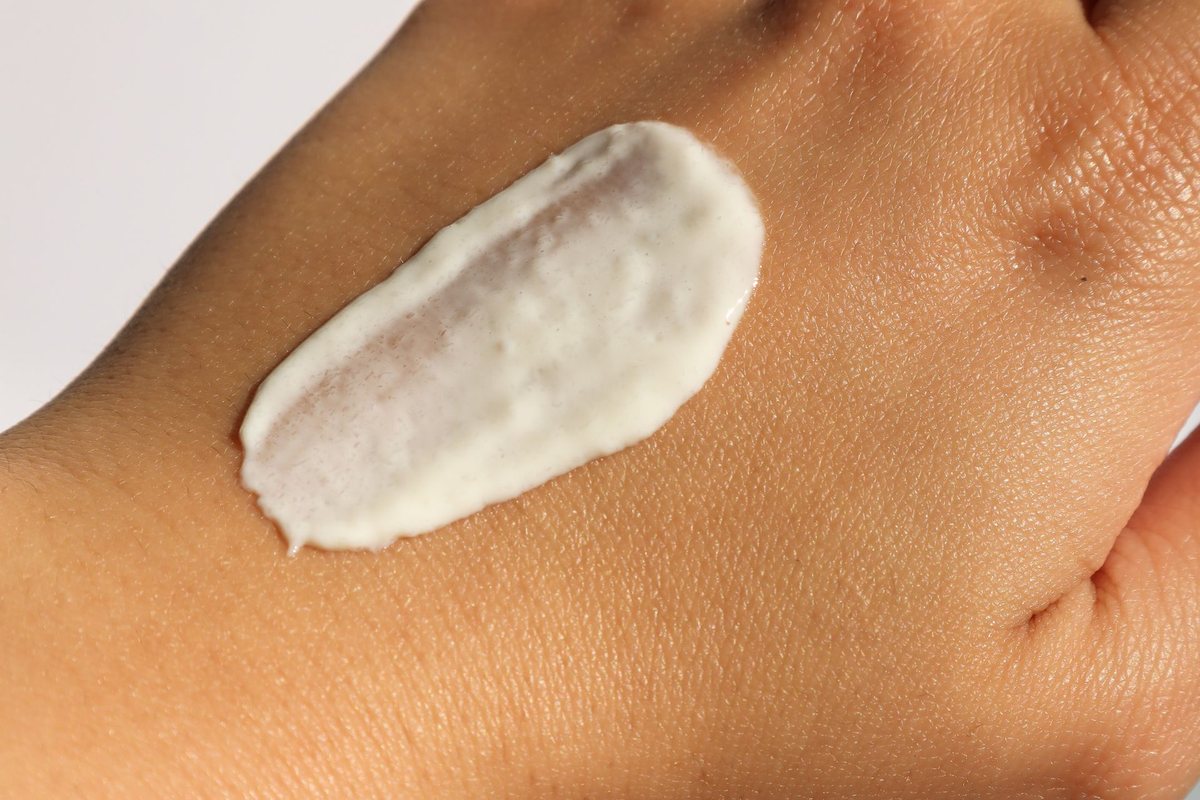
The skin evidence is the settled part of the file, and it is settled in titanium dioxide's favour. Human studies, using different techniques on different skin, keep arriving at the same place: it stays on the surface.
The strongest human evidence comes from in vivo studies — studies on living people, not skin in a dish. Pflücker and colleagues (2001) applied three different forms of micronised titanium dioxide to human skin and found, by electron and light microscopy, that it was "solely deposited on the outermost surface of the stratum corneum and cannot be detected in deeper stratum corneum layers, the human epidermis and dermis". A 2009 study in Skin Pharmacology and Physiology tested coated 20-nanometre titanium dioxide in three sunscreen formulations under realistic use conditions: after a two-hour exposure, the particles were "only present at the skin surface and in the uppermost stratum corneum regions", and layers deeper than the stratum corneum were devoid of titanium dioxide or zinc oxide "even after 48 h of exposure to the sunscreen, under occlusion". Mavon and colleagues (2007) found more than 90% of both sunscreens tested in the first 15 tape strippings, with the remainder localised in skin furrows and hair-follicle openings — "an absence of TiO2 penetration into the viable skin layers through either transcorneal or transfollicular pathways". And the EU's NANODERM project, using radiolabelled titanium dioxide and autoradiography, examined about 500 images and found no clear pathway through the skin: the particles had penetrated the outermost layers through mechanical action, with "no diffusive transport".
The regulators agree with the studies. Australia's Therapeutic Goods Administration, in its literature review of titanium dioxide and zinc oxide nanoparticles in sunscreens, concluded that "on current evidence, neither TiO2 nor ZnO NPs are likely to cause harm when used as ingredients in sunscreens and when sunscreens are used as directed", and that "the majority of in vitro studies (using both animal and human skin) and in vivo studies have shown that both ZnO and TiO2 NPs either do not penetrate or minimally penetrate the stratum corneum". The EU's SCCS, in its 2013 opinion revised in 2014, concluded that nano titanium dioxide as a UV filter in sunscreens at up to 25% "can be considered to not pose any risk of adverse effects in humans after application on healthy, intact or sunburnt skin". A 2019 safety review by Dréno and colleagues summarises the SCCS position: nano titanium dioxide is a non-sensitizer and mild- or non-irritant to skin, with "no evidence of carcinogenicity, mutagenicity or reproductive toxicity after dermal exposure".
There is one honest nuance, and it concerns sunburnt skin. In a pig-skin study, UVB-damaged skin let titanium dioxide penetrate deeper within the stratum corneum than normal skin — 17 layers in, against 7 — and one sensitive technique (TOF-SIMS) detected titanium in the epidermis and superficial dermis. But no titanium reached the perfusate — the fluid standing in for the bloodstream — so there was no systemic absorption. The SCCS's 25% conclusion explicitly covers sunburnt skin, and the TGA review notes that animal skin overstates human risk: pig skin is up to four times and rat skin nine to eleven times more permeable than human skin.
Allergy is the last skin question, and the answer is that true allergy to titanium dioxide is rare to the point of being hard to study. A 2025 cohort study by Daniely and colleagues (255 patients patch-tested in Tel Aviv between 2012 and 2024) calls titanium allergy "extremely rare, primarily since its main form TiO2 does not penetrate the skin, nor is it absorbed via the gastrointestinal tract", and notes that patch testing with titanium dioxide itself "hardly elicits any reactions" — the allergy literature concerns titanium metal in implants, jewellery and dental work, not sunscreen titanium dioxide. Dermatology guidance adds that reactions to "mineral" sunscreens are more often caused by fragrance, preservatives or other ingredients in the formula than by the mineral filters themselves.
Tip: the "no penetration" finding is about intact and sunburnt skin. The NANODERM project recommended that sunscreen should not be applied to open wounds — a sensible precaution that has nothing to do with titanium dioxide specifically.
Related: Panthenol (Pro-Vitamin B5): The Quiet Barrier Soother, Explained Without the Hype
The inhalation warning
If the skin story is reassuring, the inhalation story is the reason titanium dioxide carries warnings at all — and it is the route every regulator treats differently from skin contact. Breathing fine titanium dioxide powder is the one exposure route with a cancer classification attached to it.
The classification comes from the International Agency for Research on Cancer. In February 2006, an IARC working group re-evaluated titanium dioxide and classified it as Group 2B — "possibly carcinogenic to humans" — moving it from Group 3 ("not classifiable"). The basis was "sufficient evidence of carcinogenicity in experimental animals" — lung tumours in rats after inhalation of high doses of respirable particles smaller than 10 micrometres, under lung-overload conditions, where very high dust concentrations overwhelm normal lung clearance and cause chronic inflammation — and "inadequate evidence of carcinogenicity in humans", because epidemiological studies of titanium dioxide production workers did not show an increased lung-cancer risk. Two things about that classification are routinely lost in retellings: IARC assesses hazard, not risk — the potential of the substance, not the risk from a given exposure level or route — and its scope is inhalation only. Nothing in the IARC evaluation concerns titanium dioxide applied to skin or eaten.
The European Union then turned the IARC finding into law — and then, unusually, un-turned it. In 2020 the Commission classified titanium dioxide powder as Carc. 2, H351 ("suspected of causing cancer by inhalation"), applying to powder containing 1% or more particles with an aerodynamic diameter of 10 micrometres or less. In November 2022 the General Court annulled that classification, finding methodological shortcomings in the underlying studies and violations of the CLP Regulation. On 1 August 2025 the Court of Justice upheld the annulment, and in December 2025 the Commission published a notice (C/2025/6670) confirming that titanium dioxide powder is not subject to harmonised Carc. 2 classification. Any page still stating that the EU classifies titanium dioxide as a suspected carcinogen is out of date. The IARC Group 2B classification still stands — it is a different thing from the EU classification, made by a different body, under different rules.
California's Proposition 65 listing is narrower than it sounds. Titanium dioxide has been listed since 2 September 2011 — but only as "titanium dioxide (airborne, unbound particles of respirable size)". The listing does not cover titanium dioxide when it remains bound within a product matrix, which is how it exists in a lotion or a cream. In 2025 the state's Office of Environmental Health Hazard Assessment set a No Significant Risk Level: daily exposure at or below 440 micrograms per day (airborne, unbound particles up to 10 micrometres) and 44 micrograms per day (particles up to 0.8 micrometres) "is deemed to pose no significant risk".
What does all this mean for the products on your shelf? The EU's SCCS has been consistent: nano titanium dioxide in spray products "cannot be considered safe", because sprays can deliver particles to the lungs. For pigmentary (non-nano) titanium dioxide in powders, the SCCS's 2020 opinion — implemented by Regulation (EU) 2021/850 from 1 October 2021 — found loose face powder safe up to 25%, but aerosol hair sprays safe only up to 1.4% for consumers and 1.1% for hairdressers. A 2018 SCCS opinion on nano titanium dioxide in sprays found the information provided insufficient to assess safety at all. The practical line, agreed by the SCCS, the TGA and even the advocacy group EWG: do not inhale it — prefer lotions and creams over sprays and loose powders containing it.
The food story: E171 and the regulator split
Titanium dioxide's other life is as a food whitener, and it is here — not in sunscreen — that the world's regulators split. The split is real, it is about genotoxicity, and it is worth understanding in full, because it is the most honest disagreement in this guide.
The European position. In May 2021 the European Food Safety Authority's panel on food additives concluded that titanium dioxide (E171) "can no longer be considered safe as a food additive". The panel found that titanium dioxide particles have the potential to cause DNA strand breaks and chromosomal damage (though not gene mutations), that it could not identify a particle size below which the concern stops, and that it could not rule out a concern for genotoxicity — so it could not establish a safe level for daily intake. The panel did not conclude that E171 causes cancer, and it did not identify an immediate health concern. But the conclusion was enough: in January 2022 the Commission adopted Regulation (EU) 2022/63 withdrawing the E171 authorisation. It entered into force on 7 February 2022, and food could no longer be placed on the market containing it after 7 August 2022. France had already suspended E171 in food from 1 January 2020. The ban covers food only — cosmetics and medicines are not affected, and E171 was kept on the EU list for use as a colour in medicines. The Commission's August 2025 working document confirmed it remains approved in medicinal products, after the European Medicines Agency found it is used in about 91,000 human medicines and that full replacement would take more than twelve years.
The other position. The Joint FAO/WHO Expert Committee on Food Additives (JECFA) re-evaluated titanium dioxide in November 2023 and concluded the opposite: "the available data did not provide convincing evidence of genotoxicity", the substance was not carcinogenic in adequately conducted two-year studies in mice and rats (at doses up to 7,500 mg/kg body weight per day in mice and 2,500 in rats), and there was no evidence of reproductive or developmental toxicity up to 1,000 mg/kg per day. JECFA reaffirmed its acceptable daily intake as "not specified" — the value it set in 1969. The UK's Committee on Toxicity, in August 2024, concluded "it is unlikely that there would be a risk to health from current UK dietary exposures of E171 TiO2", set a health-based guidance value of 10 mg/kg body weight per day from a no-effect level of 1,000 mg/kg per day, and found its genotoxicity committee saw "little evidence" of genotoxicity in the highest-quality studies. The US FDA still authorises titanium dioxide as a food colour additive up to 1% by weight (21 CFR 73.575, since 1973), and says it "did not identify concerns related to potential genotoxicity based on the data available". Health Canada (2022) and Food Standards Australia New Zealand both concluded there is no evidence that dietary exposure to food-grade titanium dioxide is a concern for human health.
Why do they disagree? The disagreement turns on which studies count. EFSA weighed nanoparticle studies — often on engineered nano material rather than food-grade titanium dioxide — and applied a precautionary reading: because a genotoxicity concern could not be ruled out, no safe intake could be set. JECFA, the UK and the FDA weighted food-grade-material studies more heavily and found the genotoxicity evidence unconvincing. A 2024 peer-reviewed perspective in Frontiers in Toxicology argues EFSA "made a manifest error", citing a re-evaluation of 34 datasets used by EFSA that found no support for a direct DNA-damaging mechanism for either nanoscale or pigment-grade titanium dioxide — a perspective piece, not a regulator, and presented as such. On the other side, a 2023 meta-analysis of 26 studies (Cao and colleagues) found a significant association between titanium dioxide nanoparticles and DNA damage and chromosome damage, in vivo and in vitro — mostly high-dose laboratory studies, which sit in direct tension with JECFA and the UK committee's reading of the same literature.
Two more studies frame the colon question. Bettini and colleagues (2017) fed rats food-grade titanium dioxide at 10 mg/kg per day in drinking water for 100 days and reported colon microinflammation, preneoplastic lesions and aberrant crypt development. The UK Committee on Toxicity, reviewing the same endpoint, found "no evidence that TiO2 induced ACF and no evidence to support progression to proliferative lesions in the colon". The readings directly contradict each other, and the article does not pick a winner. One fact both sides agree on: oral bioavailability is low, less than 1% — very little of what is eaten is absorbed.
The US picture. A 2023 petition by the Environmental Defense Fund and other groups asked the FDA to repeal the food-colour listing (docket FDA-2023-C-1487, filed 14 April 2023). It is still pending; the FDA has not decided it. No US state has banned titanium dioxide in food generally: California's AB 418 originally included it but the provision was removed before the law was signed; West Virginia's HB 2354 does not name it; Arizona's HB 2164 does name it — but only for food served or sold in public schools in federally funded meal programmes, from the 2026–27 school year.
Related: Octinoxate: The UVB Filter Behind the Reef-Sunscreen Bans
What regulators and reviewers say
Titanium dioxide has one of the most thoroughly documented regulatory files in cosmetics — and the file is consistent about skin, cautious about lungs, and split about food. Here it is, jurisdiction by jurisdiction.
European Union — cosmetics. Titanium dioxide is authorised twice under Regulation (EC) No 1223/2009: as a colourant (Annex IV, entry 143, CI 77891) and as a UV filter (Annex VI, entries 27 for the non-nano form and 27a for the nano form), both at a maximum of 25% in ready-to-use preparations — and where the two forms are combined, the sum must not exceed 25%. The nano form is excluded from any application that may lead to exposure of the lungs by inhalation. Powder forms containing 1% or more particles of 10 micrometres aerodynamic diameter or less are separately restricted by Annex III entry 321: 25% in loose face powder, 1.4% in hair aerosol sprays for consumers and 1.1% for professional use. The SCCS has issued six opinions on it since 2013: the dermal safety opinion (SCCS/1516/13), additional coatings (SCCS/1580/16, 2017), sprays (SCCS/1583/17, 2018 — information insufficient to assess), inhalation (SCCS/1617/20, 2020), oral products (SCCS/1661/23, 2024 — see below) and a new coating it could not conclude safe (SCCS/1667/24, 2024). In September 2025 the Commission asked the SCCS for a new opinion on titanium dioxide in cosmetics, after industry submitted additional data in June 2025. As of this article's publication, no final opinion had appeared; one is expected before the end of 2026.
European Union — food and medicines. Banned as a food additive (Regulation (EU) 2022/63, above). Still authorised as a colourant in medicines, confirmed in the Commission's August 2025 working document.
United States — sunscreen. Sunscreens are over-the-counter drugs in the US, and the live framework is OTC Monograph M020, created by the CARES Act in 2020. The FDA's 2021 proposed order (OTC000008) proposes GRASE — generally recognized as safe and effective — status for sunscreens containing zinc oxide and/or titanium dioxide, at up to 25%. That is a proposal, not a final order for these two filters: the deemed final order still governs, under which the listed actives are deemed GRASE. Two 2026 changes show the framework is still moving: bemotrizinol was added in June 2026 (Final Order OTC000039, effective 9 August 2026), and PABA and trolamine salicylate were removed as not GRASE in September 2026. The old 1999 sunscreen monograph (21 CFR Part 352) was stayed indefinitely and is not the live framework — older pages that cite it as current are out of date.
United States — food. Still authorised as a colour additive up to 1% by weight (21 CFR 73.575), permanently listed and exempt from batch certification. The 2023 petition to repeal the listing is still pending, as above.
Australia. Sunscreens are therapeutic goods, regulated by the TGA, and nanoparticulate titanium dioxide and zinc oxide are permitted actives. The TGA's literature review concludes neither is likely to cause harm as used in sunscreens — and Australian sunscreen labels are not required to declare particle sizes. For food, FSANZ reviewed titanium dioxide and found no evidence that dietary exposure is a concern for human health.
The oral-products question. The SCCS's May 2024 scientific advice (SCCS/1661/23) is the newest wrinkle, and it concerns products you put in your mouth, not on your skin. The committee assessed 84 grades (44 pigmentary, 40 nano) used in oral cosmetic products such as toothpaste and lipstick, and concluded that "the available evidence is not sufficient to exclude the genotoxicity potential of almost all of the types of TiO2 grades used in oral cosmetic products" — the only exceptions were two nano grades (RM09 and RM11), for which the data indicate no genotoxicity concern, though more information is needed on uptake in the oral mucosa even for those. The committee could not recommend safe limits for oral or inhalation exposure beyond those already set in the earlier opinions, and it left its dermal conclusions unchanged. This advice does not change the sunscreen verdict. It does mean the lipstick and toothpaste question is genuinely open, and the pending new SCCS opinion may change it.
Advocacy databases. EWG — an advocacy organisation, not a regulator — takes a split position that mirrors the regulators' own split: its food-chemicals evaluation calls titanium dioxide "an ingredient of concern in food" and suggests limiting consumption of food containing it, and it recommends avoiding spray or powder products containing it because of inhalation risk. Its Skin Deep entry for sunscreen-grade titanium dioxide is comparatively mild: cancer low–moderate, allergy low, developmental and reproductive toxicity low — and it notes the ingredient "does not penetrate healthy skin, and thus appears to pose a low health risk in lotions". EWG's scores are hazard-based screening scores that do not account for concentration in a finished product, and EWG co-filed the 2023 FDA petition, so it is an interested party on the food question, not a neutral reporter. The Center for Science in the Public Interest rates titanium dioxide "Avoid" in its Chemical Cuisine guide, citing EFSA and nanoparticle concerns.
Related: Avobenzone: The UVA Filter That Fades in Sunlight — and Why Sunscreens Still Depend on It
The debate
The case that titanium dioxide is a safe, settled ingredient
The skin file is the thickest of any UV filter in this guide: human studies find no penetration past the surface layer, even after 48 hours under occlusion; the EU's SCCS, the US FDA's proposal and Australia's TGA all agree on 25% as the safe level; the SCCS calls it a non-sensitizer and mild- or non-irritant; and true allergy is, in the words of a 2025 cohort study, "extremely rare". The food ban is a precautionary decision about a different route — eating, not applying — and five other major regulators reviewed the same evidence and kept it. The inhalation classification that frightens people was annulled by the EU's own courts, and the IARC listing is a hazard classification about breathing fine powder, not about wearing sunscreen. On this view, titanium dioxide is the most honestly assessed mineral filter available: a white, stable, well-tested ingredient whose risks are confined to the one route — inhalation — that a lotion or cream never takes.
The case that the reassurance is incomplete
The genotoxicity question is genuinely unresolved, and the split is not a fringe disagreement: the EU's own food-safety authority could not rule it out, and its scientific committee could not exclude it for almost all grades in oral products — toothpaste and lipstick, used daily, more than once a day. A 2023 meta-analysis of 26 studies found a significant association with DNA and chromosomal damage. The rat colon study and the UK committee's reading of the same endpoint directly contradict each other. The IARC Group 2B listing still stands, and the EU's carcinogen classification was annulled on the methodology of one study, not on proof of safety. And shoppers cannot reliably tell what they are buying: nano labelling is an EU rule the US does not require, "reef-safe" has no legal definition, and the pending SCCS opinion may yet change the oral-products picture. On this view, titanium dioxide is safe on skin and uncertain everywhere else — and the uncertainty is the story, not a footnote.
Who should avoid it, or patch-test first
Almost everyone can use titanium dioxide on their skin — it is in baby sunscreens and post-treatment products for a reason. The exceptions are about form and route, not about the ingredient itself.
- Spray and loose-powder users. This is the one clear avoidance: do not use spray sunscreens or loose powders containing nano titanium dioxide, because sprays can deliver particles to the lungs. The SCCS does not consider nano titanium dioxide safe in spray products, and the EU does not authorise it in any application that may lead to lung exposure. Choose a lotion, cream, gel or stick instead.
- Loose-powder wearers. Loose face powder with pigmentary titanium dioxide is considered safe up to 25% in the EU — but that is a manufacturer limit, enforced at the formula level, not something you can measure at home. If you use loose powder daily, apply it with a brush rather than puffing clouds of it into the air, and keep it away from your face while you load the brush.
- Lip products and toothpaste. The SCCS's 2024 advice could not exclude genotoxicity for almost all titanium dioxide grades in oral products. That is an absence of reassurance, not a finding of harm — and the pending new SCCS opinion may resolve it. If you want to be cautious while it is pending, choose lip products and toothpaste without titanium dioxide; the ingredient is a whitener there, not a functional necessity.
- Sensitive or acne-prone skin. Titanium dioxide is a non-sensitizer on the SCCS's assessment, and true allergy is extremely rare. If a mineral sunscreen breaks you out or irritates you, the likelier culprit is another ingredient in the formula — often fragrance or a preservative — than the mineral filter itself. Patch-test a new product on a small area first, as with any sunscreen.
- People who eat a lot of whitened food. In the EU this is a non-issue — E171 is banned in food. In the US and Australia it is still legal up to 1% by weight. If you eat a lot of sweets, chewing gum or white-coated pills and the uncertainty bothers you, the practical step is to check ingredient lists for "titanium dioxide" or "artificial color" and choose alternatives — bearing in mind that the regulators who kept it did so after reviewing the same evidence as the EU.
The one irritation signal worth naming is the photocatalysis caveat: uncoated titanium dioxide generates reactive oxygen species under UV. Sunscreen grades are coated to prevent exactly that, and the SCCS has assessed the coatings. A product that lists titanium dioxide among its actives and is sold as a sunscreen has been formulated with coated material — but a raw powder bought for DIY cosmetics has not, and should not be used on skin.
How to judge a titanium dioxide formula
Use the same checks this guide teaches for every "with" claim, with three that are specific to this ingredient. Form: lotions, creams, gels and sticks are the safe forms; sprays and loose powders are the forms to avoid, because the risk route is inhalation. A "mineral" spray is still a spray. Label: in the EU, look for "Titanium Dioxide" and, where the nano form is used, "Titanium Dioxide (nano)"; as a colourant it appears as "CI 77891". In the US, sunscreen actives appear in the Drug Facts panel with their percentage — titanium dioxide up to 25% is the proposed GRASE level, and a product listing it at a percentage within that range is within the proposed limit. In food in the US, it appears as "artificial color" or "colored with titanium dioxide". Combination: a mineral sunscreen that pairs titanium dioxide with zinc oxide covers the full UVA range; titanium dioxide alone is weaker in long-wave UVA, so a titanium-dioxide-only product that claims broad-spectrum protection is relying on the rest of its formula to make up the difference.
Two claims deserve scepticism. "Reef-safe" or "reef-friendly": the phrase has no legal or regulatory definition anywhere. The evidence is mixed and dose- and coating-dependent: coated nano titanium dioxide showed no significant metabolomic changes in the coral Pocillopora damicornis at 5–1,000 micrograms per litre over seven days, while uncoated nano zinc oxide caused bleaching from 300 micrograms per litre — but a 2025 study found 30 mg/L of nano titanium dioxide harmed the coral Galaxea fascicularis over 48 hours, and the US National Academies concluded in 2022 that the data are "not yet sufficient to quantify the risk" of UV filters to aquatic life. Hawaii's Act 104, in force since 1 January 2021, bans the sale of sunscreens containing oxybenzone or octinoxate and allows mineral sunscreens — that is a legal fact, not a toxicity verdict, and it says nothing about titanium dioxide's own effect on coral. "Non-nano": no regulator statement on such claims was verified in this research, and the US does not require nano labelling — so a "non-nano" claim on a US product cannot be checked from the label alone.
One last practical note: titanium dioxide is the reason mineral sunscreens leave a white cast, and the cast is a rough guide to coverage. A mineral sunscreen that rubs in completely clear on every skin tone has either very small particles (and therefore a nano form, with the labelling rules that follow) or very little mineral filter in it. The cast is not a flaw in the ingredient — it is the ingredient working, visibly.
Related: Homosalate: The UVB Filter Europe Cut Back to Face Products Only
Frequently asked questions
Is titanium dioxide safe in sunscreen?
Yes, on the evidence, in lotions, creams, gels and sticks at up to 25%: the EU's SCCS calls nano titanium dioxide safe at that level on healthy, intact or sunburnt skin, the FDA has proposed it as safe and effective at the same level, and human studies find it stays on the skin's surface and in the topmost layer — even after 48 hours under occlusion. Avoid spray and loose-powder forms, where the particles can be inhaled.
Is titanium dioxide a carcinogen?
The International Agency for Research on Cancer lists it as Group 2B — 'possibly carcinogenic to humans' — based on lung tumours in rats that inhaled high doses of fine powder, with inadequate evidence in humans. The EU's own Carc. 2 classification was annulled by the General Court in 2022 and the annulment upheld by the Court of Justice on 1 August 2025, so it is not current law. Nothing in either classification concerns titanium dioxide applied to skin or eaten.
Why is titanium dioxide banned in food in the EU but allowed in the US?
In 2021 the European Food Safety Authority concluded it could not rule out a genotoxicity concern for E171 and could not set a safe intake level, so the EU banned it in food in 2022 on precautionary grounds. The WHO/FAO committee (JECFA, 2023), the UK Committee on Toxicity (2024), the US FDA, Health Canada and Australia's FSANZ reviewed the same evidence and found no convincing genotoxicity evidence, so they kept it. A 2023 petition asking the FDA to repeal the US listing is still pending; the FDA has not decided it.
Does titanium dioxide penetrate the skin?
Human studies say no: it stays on the skin surface and in the uppermost layer of the stratum corneum, with no detection in the viable epidermis or dermis and no systemic absorption — even after 48 hours under occlusion. Sunburnt skin lets particles go deeper within the stratum corneum, and one sensitive technique detected titanium in the epidermis of UVB-damaged pig skin, but no titanium reached the bloodstream in that study.
Should I avoid titanium dioxide in sprays and powders?
Yes for sprays: the SCCS does not consider nano titanium dioxide safe in spray products, because sprays can deliver particles to the lungs. Loose face powder with pigmentary titanium dioxide is considered safe up to 25% in the EU, and aerosol hair sprays are limited to 1.4% for consumers and 1.1% for hairdressers. Lotions, creams, gels and sticks are the forms without the inhalation concern.
Is titanium dioxide reef-safe?
'Reef-safe' has no legal definition. Coated nano titanium dioxide fared better than uncoated nano zinc oxide in head-to-head coral studies, but high doses of titanium dioxide harmed corals too, and the US National Academies concluded in 2022 that the data are not yet sufficient to quantify the risk. Hawaii bans the sale of oxybenzone and octinoxate sunscreens and allows mineral ones — a legal fact, not a toxicity verdict.
Checked against SCCS/1516/13, SCCS/1617/20 and SCCS/1661/23, Regulation (EU) 2022/63, EFSA 2021, JECFA 2023, UK COT 2024, US FDA pages and EWG (advocacy source) · Last updated 2026-11-20 · How we assess ingredients
Sources (42)
- EFSA Panel on Food Additives and Flavourings (2021) Safety assessment of titanium dioxide (E171) as a food additive. EFSA Journal 2021;19(5):6585 — 'can no longer be considered safe as a food additive'; genotoxicity concern could not be ruled out; no safe level could be established; no immediate health concern identified
- Commission Regulation (EU) 2022/63 of 14 January 2022 — E171 authorisation withdrawn; in force 7 February 2022; foods could no longer be placed on the market after 7 August 2022; medicines kept on the list
- Joint FAO/WHO Expert Committee on Food Additives, 97th report (2023) — 'the available data did not provide convincing evidence of genotoxicity'; ADI 'not specified' reaffirmed; not carcinogenic in two-year mouse/rat studies at up to 7,500 / 2,500 mg/kg bw per day
- UK Committee on Toxicity, Statement on the Safety of Titanium dioxide (E171) as a Food Additive (August 2024) — 'it is unlikely that there would be a risk to health from current UK dietary exposures'; NOAEL 1,000 mg/kg bw per day; health-based guidance value 10 mg/kg bw per day
- Scientific Committee on Consumer Safety, Opinion on Titanium Dioxide (nano form), SCCS/1516/13, adopted 22 July 2013, revised 22 April 2014 — nano TiO2 up to 25% 'can be considered to not pose any risk of adverse effects in humans after application on healthy, intact or sunburnt skin'; spray products 'cannot be considered safe'
- Commission Regulation (EU) 2016/1143 of 13 July 2016 — Annex VI entries 27 and 27a, titanium dioxide and titanium dioxide (nano) at 25% maximum, combined use not to exceed 25%; nano excluded from applications that may lead to lung exposure by inhalation
- Commission Regulation (EU) 2019/1857 of 6 November 2019 — three additional SCCS-assessed coatings (silica + cetyl phosphate; alumina + manganese dioxide; alumina + triethoxycaprylylsilane) added to Annex VI entry 27a
- Scientific Committee on Consumer Safety, Opinion on titanium dioxide used in cosmetic products that lead to exposure by inhalation, SCCS/1617/20, adopted 6 October 2020 — loose face powder safe up to 25%; aerosol hair sprays safe only up to 1.4% (consumers) / 1.1% (hairdressers)
- Commission Regulation (EU) 2021/850 of 26 May 2021 (Council draft text) — Annex III entry 321: 25% loose face powder, 1.4% / 1.1% hair aerosol sprays, no other uses that may expose the lungs; applies from 1 October 2021
- Scientific Committee on Consumer Safety, Scientific Advice on Titanium dioxide (TiO2), SCCS/1661/23, adopted 13 May 2024 — genotoxicity potential could not be excluded for almost all of the 84 grades used in oral cosmetic products; exceptions nano grades RM09 and RM11; dermal and inhalation conclusions unchanged
- Scientific Committee on Consumer Safety, Opinion on the additional coatings, SCCS/1580/16, final 7 March 2017 (corrected 22 June 2018) — three coated nano forms safe for dermal use on healthy, intact or sunburnt skin; not for inhalation-exposure applications
- US Food and Drug Administration, Questions and Answers: FDA's regulatory actions on over-the-counter sunscreen — 2021 proposed order OTC000008 proposes GRASE status for zinc oxide and/or titanium dioxide; bemotrizinol added June 2026 (OTC000039); PABA and trolamine salicylate removed September 2026
- US Food and Drug Administration, Titanium Dioxide as a Color Additive in Foods (updated 4 March 2024) — authorised up to 1% by weight (21 CFR 73.575, since 1973); 2023 petition to repeal 'currently reviewing'; no genotoxicity concern identified by FDA
- 21 CFR 73.575 — Titanium dioxide (eCFR) — 'may be safely used for coloring foods generally' subject to the 1% by weight limit; exempt from batch certification
- Federal Register 88 FR 27818 (3 May 2023) — FDA filing of the colour additive petition (Environmental Defense Fund et al.) proposing repeal of 21 CFR 73.575; filed 14 April 2023, docket FDA-2023-C-1487
- IARC Monographs, Volume 93 (2010) — titanium dioxide classified Group 2B ('possibly carcinogenic to humans'): sufficient evidence in experimental animals (rat lung tumours after inhalation of high-dose respirable particles), inadequate evidence in humans
- European Commission notice C/2025/6670 (10 December 2025) — titanium dioxide powder 'is not subject to harmonised classification as Carcinogenic Category 2 via inhalation' following the General Court annulment (23 November 2022) upheld by the Court of Justice (1 August 2025)
- California Office of Environmental Health Hazard Assessment — titanium dioxide (airborne, unbound particles of respirable size) listed under Proposition 65 effective 2 September 2011; No Significant Risk Level 2025: 440 µg/day (≤10 µm) and 44 µg/day (≤0.8 µm)
- Therapeutic Goods Administration, Literature review on the safety of titanium dioxide and zinc oxide nanoparticles in sunscreens (2016 update) — 'neither TiO2 nor ZnO NPs are likely to cause harm when used as ingredients in sunscreens and when sunscreens are used as directed'
- Food Standards Australia New Zealand, Review of titanium dioxide as a food additive — 'there is currently no evidence to suggest dietary exposure to food-grade titanium dioxide is a concern for human health'
- NANODERM project, EU Fifth Framework Programme (CORDIS) — about 500 autoradiography images: 'None of the 500 or so images demonstrated a clear pathway through the skin'; 'no health effects were expected from the application to healthy skin of sunscreens containing TiO2 nanoparticles'
- Pflücker F et al. (2001) Skin Pharmacol Appl Skin Physiol 14(Suppl 1) — micronised titanium dioxide 'solely deposited on the outermost surface of the stratum corneum and cannot be detected in deeper stratum corneum layers, the human epidermis and dermis'
- Stratum Corneum Is an Effective Barrier to TiO2 and ZnO Nanoparticle Percutaneous Absorption, Skin Pharmacol Physiol 2009;22(5):266 — coated 20-nm TiO2 in three sunscreens: particles 'only present at the skin surface and in the uppermost stratum corneum regions', even after 48 h under occlusion
- Mavon A et al. (2007) — in vivo stratum corneum distribution: more than 90% of both sunscreens recovered in the first 15 tape strippings; 'an absence of TiO2 penetration into the viable skin layers'
- Dréno B et al. (2019) Safety of titanium dioxide nanoparticles in cosmetics. J Eur Acad Dermatol Venereol 33(Suppl 7):34–46 — SCCS considers nano-TiO2 a non-sensitizer and mild- or non-irritant, with no evidence of carcinogenicity, mutagenicity or reproductive toxicity after dermal exposure; safe to 25% on skin, not recommended where lungs may be exposed
- Vujovic M, Kostic E (2019) Titanium Dioxide and Zinc Oxide Nanoparticles in Sunscreens: A Review of Toxicological Data. J Cosmet Sci 70(5):223–234 — 'most authors agree that there is no penetration of nanoparticles into viable skin layers'; 'potential risks are vastly outweighed over the benefits'
- Daniely et al. (2025) Titanium: An Unusual Allergen With Various Presentations — A Retrospective Cohort Study. Contact Dermatitis — titanium allergy 'extremely rare'; patch testing with TiO2 'hardly elicits any reactions'; cohort of 255 patients patch-tested for titanium metal (implants, jewellery, dental work), not sunscreen TiO2
- Cao Y et al. (2023) Genotoxicity Evaluation of Titanium Dioxide Nanoparticles In Vivo and In Vitro: A Meta-Analysis. Toxics 11(11):882 — 26 studies; significant association between TiO2 nanoparticle treatment and DNA damage and chromosome damage in vivo and in vitro
- Bettini S et al. (2017) Food-grade TiO2 impairs intestinal and systemic immune homeostasis, initiates preneoplastic lesions and promotes aberrant crypt development in the rat colon. Sci Rep 7:40373 — food-grade TiO2 at 10 mg/kg/day in drinking water for 100 days; effect sizes not quoted (paper not opened); UK COT reviewed the same endpoint and found no ACF induction
- EWG, EWG evaluation of food chemicals: Titanium dioxide (ADVOCACY — EWG is a US non-profit advocacy organisation, not a regulator; it co-filed the 2023 FDA petition) — 'Titanium dioxide, or TiO2, is an ingredient of concern in food, and EWG suggests limiting consumption'; Arizona school ban; FDA petition status
- EWG Skin Deep, Titanium Dioxide and Titanium Dioxide (sunscreen grade) (ADVOCACY) — sunscreen grade: 'They do not penetrate healthy skin, and thus appear to pose a low health risk in lotions. Inhalation of powders and sprays is a concern'; concerns listed as Cancer low–moderate, Allergies & Immunotoxicity low
- Center for Science in the Public Interest, Titanium dioxide (Chemical Cuisine) (ADVOCACY) — rates TiO2 'Avoid', citing EFSA and nanoparticle accumulation/genotoxicity concerns; notes Health Canada's 2022 review concluded it is safe
- Chen J, Yu K et al. (2025) Transcriptomic and physiological analyses reveal the toxic effects of inorganic filters on scleractinian coral Galaxea fascicularis. Environmental Research 267:120663 — 30 mg/L nano-TiO2 for 48 h caused polyp retraction and reduced photosynthesis; cited reef-water level 1.4 mg/L (US Virgin Islands)
- Mineral UV filters and their effects on Pocillopora damicornis metabolome, Sci Total Environ 991 (2025) 179961 — coated TiO2 (60 nm) at 5–1,000 µg/L for 7 days caused no significant metabolomic changes; uncoated ZnO caused bleaching from 300 µg/L
- Nano-TiO2 and early life stages of Acropora tumida (2024) — 0.01–10 mg/L had no significant impact on coral fertilisation or embryonic development; larval survival reduced at 5 and 10 mg/L after 4 days
- Corinaldesi C et al. (2018) Impact of inorganic UV filters contained in sunscreen products on tropical stony corals (Acropora spp.). Sci Total Environ 637–638:1279–1285 (via ReefTox summary) — uncoated zinc oxide nanoparticles caused severe bleaching; titanium dioxide with a modified surface caused minimal effects; National Academies (2022): data 'not yet sufficient to quantify the risk'
- Scientific Committee on Consumer Safety, Opinion on titanium dioxide (nano form) in sprays, SCCS/1583/17, final 24 January 2018 (via law-firm summary — opinion PDF not opened) — 'the information provided is insufficient to allow assessment of the safety of the use of nano-TiO2 in spray applications that could lead to exposure of the consumer's lungs' at up to 5.5%
- European Commission Staff Working Document on the Use of Titanium Dioxide in Medicinal Products (6 August 2025) and EMA feedback report (April 2024) — via trade press: TiO2 used in about 91,000 human medicinal products; alternatives inferior across all key performance indicators; full replacement would take more than 12 years; TiO2 remains approved as a colourant in medicinal products
- Arizona HB 2164 (Arizona Healthy Schools Act, signed 14 April 2025) — titanium dioxide named among eleven ingredients not to be served or sold in public schools in federally funded meal programmes, from the 2026–27 school year; scope is school campuses only
- Frontiers in Toxicology (2024) perspective — argues EFSA 'made a manifest error' on E171 genotoxicity, citing Kirkland et al. 2022 re-evaluation of 34 datasets; a peer-reviewed perspective/opinion piece, not a regulator
- ANSES (France), Titanium dioxide — E171 in food 'since 2020 this use is no longer authorised' in France (national suspension from 1 January 2020)
- Hawaii Act 104 (SB2571) — bans the sale and distribution of sunscreens containing oxybenzone or octinoxate from 1 January 2021; does not ban titanium dioxide or zinc oxide; 'reef-safe' has no legal or regulatory definition in the US