In this article
Argan oil is the fixed oil cold-pressed from the kernels of the argan tree, a thorny tree that grows almost nowhere except southwestern Morocco. On a bottle it promises almost everything: deep moisturisation, firmer skin, eczema relief, shinier hair, hair growth, stretch-mark prevention, even a little sun protection. The human evidence supports a much shorter list — and it is, on the evidence, the best-supported plant oil in this series. One small randomised trial in 60 postmenopausal women found that argan oil, eaten and applied to the forearm for 60 days, improved measured skin hydration and elasticity. One quasi-experimental study in Jordan found argan oil healed infant nappy rash faster than 1% hydrocortisone. Everything else — eczema, acne, hair growth, wrinkles on the face, sun protection, wound healing, stretch marks — is traditional use, cells, rats or cut hair, not people. The honest verdict: argan oil is a genuinely useful, well-tolerated emollient with a real, if small, human evidence base — worth using as a moisturiser and hair oil for the feel and the shine, and as supportive care for dry skin. It is not an eczema treatment, not a hair-growth product, not a stretch-mark preventer, and not sun protection. And unlike the other oils in this series, it carries a sharper allergy warning: argan is a tree nut, and anaphylaxis has been reported after eating it — and after putting it on the skin.
What argan oil is
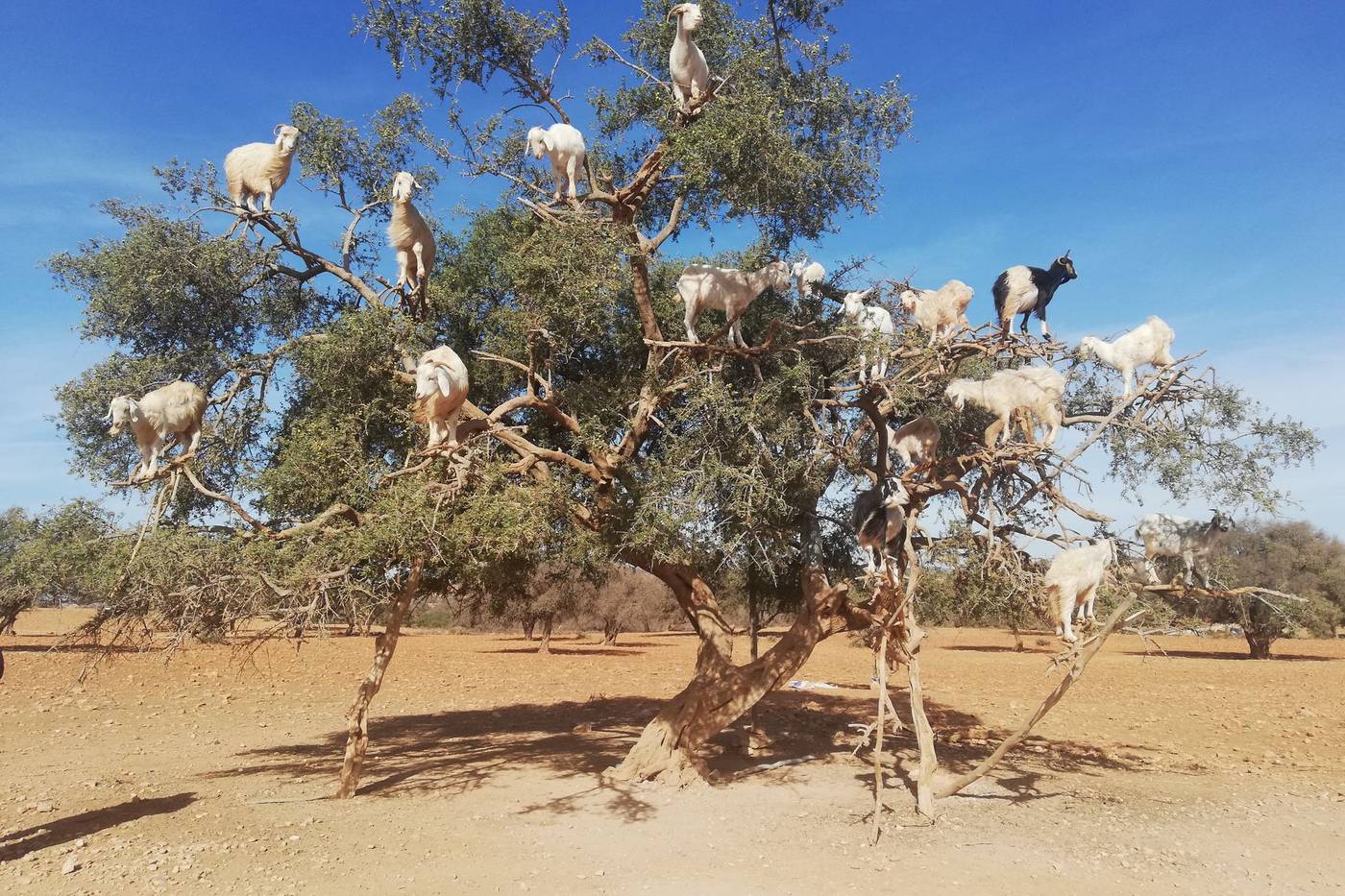
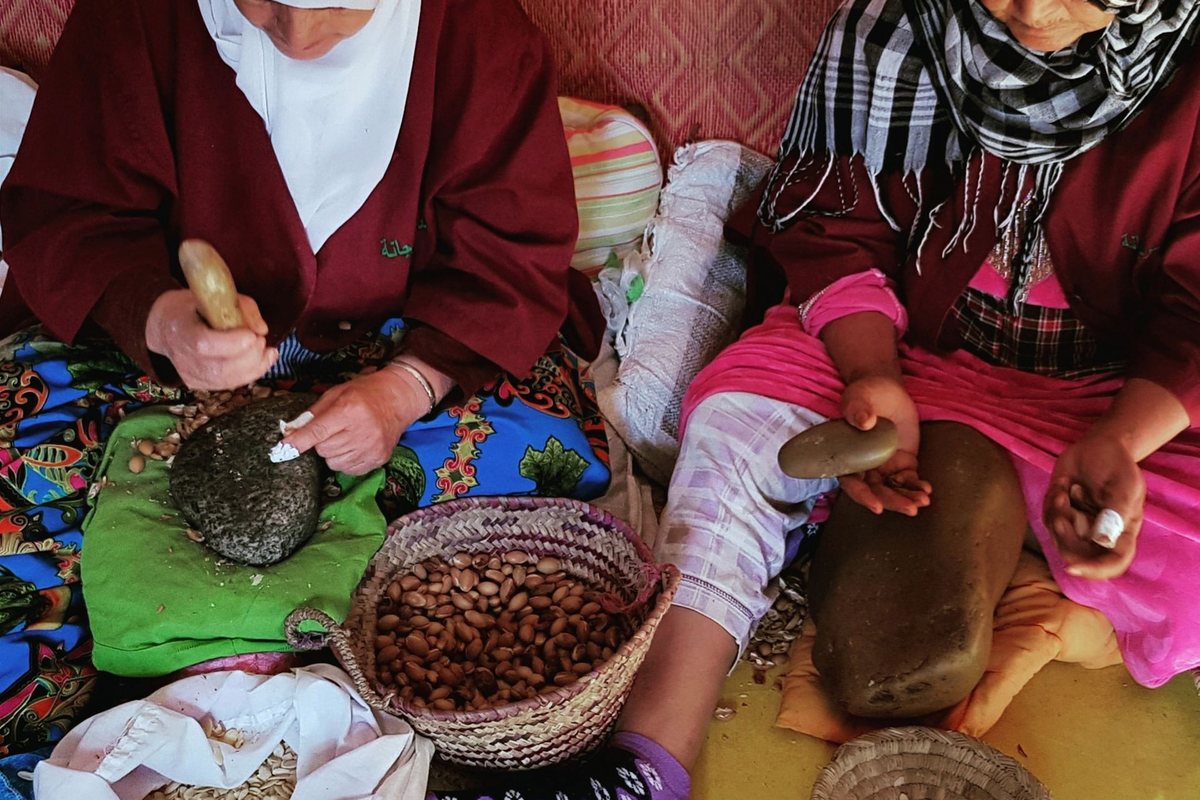
Argan oil is the fixed oil cold-pressed from the kernels inside the fruit of Argania spinosa (L.) Skeels, a thorny tree in the Sapotaceae family that is endemic to southwestern Morocco (and the Algerian province of Tindouf). The fruit is a plum-like drupe; inside it sits a hard nut, and inside the nut, one to three kernels. Traditionally the kernels are cracked by hand — usually by women, usually with stones — and pressed. That hand-cracking is the image on most argan bottles, and it is also the reason the oil is expensive: the work is slow, the yield is small, and the tree grows in a narrow strip of land that is losing about 600 ha of forest every year to deforestation and desertification.
Cosmetic oil and culinary oil are different products from the same kernel. Cosmetic argan oil is pressed from unroasted kernels; culinary argan oil is pressed from roasted kernels, which gives it a nutty flavour and a darker colour. The distinction matters beyond the kitchen: the one challenge-confirmed child allergy case in the literature found prick tests positive to roasted argan oil and negative to cosmetic (unroasted) argan oil — from one child, so it proves nothing general, but it is a reason never to treat the two grades as interchangeable. A bottle of cosmetic oil is not food, and a bottle of culinary oil is not a skin product.
Like all fixed oils, argan oil is mostly triglycerides, and the fatty acids are dominated by two: oleic acid, the monounsaturated fat, and linoleic acid, the polyunsaturated fat. The exact split varies by region, harvest and processing, so always give ranges, never a single percentage:
| Component | Range across the literature | One 2003 analysis (three oils) |
|---|---|---|
| Oleic acid | 43–49% (2023 review); cosmetic oils 39.5–50.8%, mean 46.6% (Bučar Miklavčič 2020) | 43% |
| Linoleic acid | 29–36% (2023 review); cosmetic oils 27.1–39.3%, mean 32.6% (Bučar Miklavčič 2020) | 36% |
| Palmitic acid | 11–15% (2023 review); cosmetic oils mean 13.1% | — |
| Stearic acid | 4.3–7.2% (2023 review) | — |
| Oleic + linoleic combined | 76.4–81.3% of the oil (Bučar Miklavčič 2020) | 79% |
| Total tocopherols (vitamin E) | 600–900 mg/kg (2023 review); γ-tocopherol about 69–92% of the total | γ-tocopherol mean 483 mg/kg |
| Squalene | — | 313 mg/100 g |
| Total phenolics | Extremely low in argan oil | Under 5.0 mg/kg, against 793 mg/kg in extra-virgin olive oil |
| Unsaponifiable matter | About 1% of the oil: carotenes 37%, sterols 29%, triterpene alcohols 20%, tocopherols 8%, xanthophylls 5% | — |
Two details in that table do the real work. First, argan oil is a γ-tocopherol oil: in one analysis the tocopherols ran α 69, β 4.56, γ 802 and δ 104 mg/kg — γ-tocopherol is the dominant form, where olive and sunflower oils are dominated by α-tocopherol. Second, the sterol fingerprint is what laboratories use to tell argan oil from cheaper oils: schottenol (mean 147 mg/kg) and spinasterol (mean 122 mg/kg) dominate, where olive and sunflower oils are dominated by β-sitosterol — and campesterol sits at or below 0.4% in genuine argan oil, against much higher levels in most vegetable oils. That fingerprint is the basis of the adulteration tests in the regulators section, and it is the reason a certificate of analysis for argan oil should show a sterol profile, not just a fatty-acid profile.
Tip: when a product leans on argan oil's antioxidants as its selling point, remember what the oil actually contains: plenty of γ-tocopherol and squalene, and almost no phenolics — under 5 mg/kg, against nearly 800 mg/kg in extra-virgin olive oil. Argan oil is not an olive-oil-style polyphenol oil, and a brand that sells it as one is borrowing another oil's story.
Related: Squalane: Benefits, Stability, and What the Evidence Actually Supports
Why it is in your skincare
Argan oil is in your skincare for one honest reason and several borrowed ones. The honest reason is that it is a pleasant, fatty-acid-rich emollient: it spreads easily, leaves a soft, slightly oily film that slows water loss, and coats the hair shaft so it looks shinier and feels smoother. That is the whole of its proven mechanism, and it is a real one — dry skin is, in large part, skin losing water faster than it can replace it, and an oil that slows that loss is doing useful work.
The borrowed reasons are the ones this article spends most of its length on: anti-ageing, anti-inflammatory action, eczema treatment, acne control, hair growth, stretch-mark prevention, sun protection, wound healing. Each of those has a story behind it — a cell study, a mouse study, a rat study, a lab test on cut hair, a small trial of a multi-ingredient cream — and almost none of them is a trial of argan oil on human skin for that endpoint. The mechanism stories are coherent; the human evidence for them is not there.
A dermatologist's summary of the gap is the fairest framing available. Dr Leslie Baumann, writing in her Cosmetic Conundrums column, notes that argan oil is “reputed to impart antiacne, antisebum, antiaging, moisturizing, and wound-healing activity, but clinical evidence is sparse” — and, more bluntly, that “there is a dearth of published research studies looking at the effect of argan oil–containing skin care products on aging, inflamed, or dry skin”, with the claims “based on traditional uses with only a small body of supportive clinical evidence”. That is the sentence to hold in mind through the rest of this article: traditional use is real, and it is not the same thing as a trial.
One caution belongs here, before the evidence section, because it shapes how to read the eczema claims. Argan oil is roughly 43–49% oleic acid, and Baumann notes that oleic acid “has been found to act as a penetration enhancer by disturbing the skin barrier”. That is a genuine reason to be careful about recommending neat argan oil onto actively inflamed skin — a penetration enhancer is the opposite of what a damaged barrier needs — and it is the kind of nuance the marketing never mentions. The linoleic-acid half of the oil (29–36%) supports barrier lipids; the oleic-acid half works against the barrier. Both halves are in the same bottle.
It is also worth knowing what the EU's ingredient inventory actually records for argan oil, because it is narrower than the marketing: the CosIng functions are fragrance, skin conditioning, and skin conditioning as an emollient (“softens and smoothens the skin”). No anti-ageing, moisturising, healing or UV-protection function exists for argan oil in CosIng. The database records what an ingredient is used for, not what it has been proven to do — and even on that modest standard, argan oil's listed functions stop at softening skin.
Tip: judge argan oil the way you would judge any moisturiser — by whether your skin feels better and stays comfortable after weeks of use — not by the list of conditions on the front of the bottle. The list is marketing; the moisturiser is the product.
Related: Glycerin: The Humectant in Almost Everything
What the evidence shows on skin
The fairest one-line summary of the human evidence is the one the research brief opens with: the entire human evidence base for topical argan oil is two small studies from one Moroccan research group (60 postmenopausal women, forearm skin) plus one quasi-experimental infant nappy-rash study (140 children completed, Jordan). Everything else — eczema, acne, hair growth, wrinkles on the face, sun protection, wound healing, stretch marks — is traditional use, cells, animals, cut hair, or multi-ingredient creams. That sentence does not make argan oil useless — it makes the marketing dishonest, and it sets the standard for everything that follows: a result belongs to the product that was actually tested, on the people it was actually tested on.
| Study | Design | What it found | Limit |
|---|---|---|---|
| Boucetta 2014 (hydration) | 60 postmenopausal women, 60 days, dietary argan vs olive oil; both groups applied cosmetic argan oil to the left forearm | Topical argan: TEWL down (p=0.01), water content of the epidermis up (p<0.001); oral argan: TEWL down (p=0.023), water content up (p=0.001) | Same 60 women as the elasticity paper; forearm not face; no plain-vehicle control for the topical arm |
| Boucetta 2015 (elasticity) | Same 60 women, same 60-day design | Topical argan: gross elasticity R2 up (p<0.001), net elasticity R5 up (p<0.001), biological elasticity R7 up (p=0.001), resonance running time down (p<0.001) | Elasticity on the forearm is not wrinkle depth on the face; no wrinkle endpoint measured |
| Alsatari 2023 (nappy rash) | 147 enrolled, 140 completed (70 per group), children 1–24 months, argan oil vs 1% hydrocortisone, 7 days, Jordan | Argan group approximately 0.25 times less likely to have severe grades and faster improvement (p<0.025) | Quasi-experimental, not double-blind; single region; home-visit grading; 0.25 is a modelled odds ratio |
| Dobrev 2007 (sebum) | 20 healthy volunteers, 4 weeks, twice daily, cream with saw palmetto, sesame and argan extracts | Visible sebum-regulating efficacy in 95%; casual sebum down 20%; oily-spot area down 42% | No control group, no blinding, three actives — argan's contribution unknowable |
| Avsar 2016 (wounds) | 30 adult male Wistar rats, second-degree scald burns, argan oil vs 1% silver sulfadiazine | Twice-daily argan: contraction 31% on day 7 and 76% on day 14, vs 22% and 69% for silver sulfadiazine (p<0.05) | Rats with experimental burns, not people with cuts or scars |
| Faria 2013; Sharifi 2022 (hair) | Cut human hair tresses, argan oil before or after oxidative dye damage | Less protein loss from damaged hair; oil still detectable on the fibre after washing | Tresses in a lab, not people; no growth, no scalps |
| Ácsová 2021 (sun) | 14 virgin vegetable oils, in-vitro and in-vivo (ISO method) SPF | Measured in-vivo SPF of about 3 in one study — not a sunscreen | Argan figure from the paper's table as reported in a secondary summary |
Moisturisation and water loss: the one real human trial, and it is small and single-team. Boucetta and colleagues (2014) randomised 60 postmenopausal women into two groups for 60 days — dietary argan oil (30 women) against dietary olive oil (30 women) — while both groups applied cosmetic argan oil to the left volar forearm. Oral argan oil significantly decreased transepidermal water loss (p=0.023) and significantly increased water content of the epidermis (p=0.001). Topical argan oil significantly decreased water loss (p=0.01) and significantly increased water content (p<0.001). The authors conclude that daily consumption and application “improved the skin hydration by restoring the barrier function and maintaining the water-holding capacity”. The limits belong in the same paragraph: 60 women, one team, one population (postmenopausal women), forearm not face, 60 days, no untreated-control arm for the oral comparison (the control ate olive oil) and no plain-vehicle control for the topical arm. The abstract gives p-values but no absolute water-loss or hydration values — do not invent magnitudes, and figures sometimes quoted online for this trial do not appear in the published abstracts and are not used here.
Anti-ageing and elasticity: the same 60 women, and elasticity is not wrinkles. Boucetta and colleagues (2015) used the same 60 postmenopausal women and the same 60-day design. Oral argan oil increased gross elasticity R2 (p<0.001), net elasticity R5 (p<0.001) and biological elasticity R7 (p<0.001), and decreased resonance running time (p=0.002). Topical argan oil did the same: R2 up (p<0.001), R5 up (p<0.001), R7 up (p=0.001), resonance running time down (p<0.001). The authors conclude that daily consumption and/or topical application have “an anti-aging effect on the skin demonstrated by the improvement of skin elasticity”. The honest article line is narrower than the authors' conclusion: elasticity measured by Cutometer on the forearm is not wrinkle depth on the face; no wrinkle, fine-line or photographic endpoint was measured; postmenopausal women only; 60 days; a single team; no replication by an independent group was found. “Improved measured skin elasticity in one small trial” is the fair wording — never “reduces wrinkles” or “anti-ageing proven”.
Babies and nappy rash: the second human study, and it beat a steroid (with caveats). Alsatari and colleagues (2023) ran a quasi-experimental study in Jordan on children aged 1–24 months with mild-to-severe diaper dermatitis: 147 enrolled (73 argan spinosa oil, 74 1% hydrocortisone ointment), 140 completed the study with 70 per group, healing measured on a 5-point scale on days 1, 3 and 7 by home visits, trial registration NCT04210674. Both groups improved significantly. After excluding confounders, the models showed children treated with argan oil were “approximately 0.25 times less likely to have severe DD grades and to show faster improvement than children treated with 1% hydrocortisone (p < 0.025)”. The authors conclude argan oil “is more effective than 1% hydrocortisone in healing DD and might be used as a complementary treatment”, while calling for larger trials. The limits are essential and must travel with the result: quasi-experimental design, not a double-blind randomised trial; a single region (Irbid, Jordan); a 7-day follow-up; grading by home visits; no placebo or no-treatment arm; the oil was pressed from slightly roasted kernels; and the 0.25 figure is a modelled odds ratio, not a head-count. Do not write “argan oil beats steroid cream” without all of that in the same paragraph. And the counterweight sits in the same section: an infant case of allergic contact dermatitis to argan oil has been published (Barrientos 2014, cited by title only) — patch-test before using it on a baby's broken skin.
Eczema: no trial exists. No published trial of argan oil (alone or in a formula) on eczema or atopic dermatitis in adults or children was found in the research behind this article. The nearest human evidence is the nappy-rash study above, which is irritant and contact dermatitis in infants, not atopic dermatitis. The mechanism argument is real but thin: linoleic acid supports barrier lipids, and argan oil is roughly 30–36% linoleic — but it is also roughly 43–49% oleic, and oleic acid is a penetration enhancer that disturbs the barrier. The article's line is: eczema is “plausible emollient support, untested” — and argan oil must not be presented as an eczema treatment.
Hair: no human trial; the lab work is real but narrow. Phong and colleagues (2022), in a systematic review of 22 papers on coconut, castor and argan oil for hair in skin-of-colour patients, concluded: “Argan oil does not have any significant evidence supporting its use to improve hair growth, quality, or treatment of infestation.” That is the review that settles the hair-growth question as “no significant evidence”. The nearest evidence is laboratory work on cut hair. Faria and colleagues (2013), as reported in secondary copies of the abstract, applied a conditioner with 1.0% argan oil to Caucasian hair tresses after oxidative ultra-blond dyeing and found reduced protein loss against dye alone (6 tresses per group, p≤0.05) — tresses, not people. Sharifi and colleagues (2022) pre-treated excised human hair with argan oil before oxidative damage and found significantly less protein loss, with oil still detectable on the fibre after washing and an antioxidant IC50 of 59 µg/mL — pre-treatment in a dish, not a scalp. Hair growth, thicker hair, regrowth, less hair fall: no human evidence at all, and hair growth is a drug claim under US law. The honest line: argan oil is a plausible protective and smoothing coating for colour-damaged hair, with lab support only.
Acne and oily skin: one uncontrolled multi-ingredient cream, no acne trial. Dobrev (2007) tested a sebum-control cream containing polyphenol-rich extracts of saw palmetto, sesame seeds and argan oil, applied twice daily to the face for 4 weeks in 20 healthy volunteers (16 with oily skin, 4 with combination skin, aged 17–50, in the winter months). Visible sebum-regulating efficacy was reported in 95% of them; clinical assessment scores fell 33%; casual sebum level fell 20%; the area covered with oily spots fell 42%; the number of active sebaceous glands was unchanged; the cream was well tolerated. The limits are in the same sentence as the result: no control group, no blinding, three actives (argan oil's contribution is unknowable), 20 volunteers, one centre, winter only. No clinical trial of argan oil for acne was found. The “anti-acne” reputation is traditional use — Baumann's words are that the claims are “based on traditional uses with only a small body of supportive clinical evidence”.
Comedogenicity: the “0” rating has no primary source. Argan oil is quoted online as 0 (or 0–1) on the 0–5 comedogenicity scale. No published test of argan oil's comedogenicity was found in this research — the rabbit-ear tables that originated the scale do not list argan oil, and one commercial page's claim that the rating “comes from the rabbit ear assay” names no study. Treat 0–1 as list convention, not measurement, and do not print a comedogenic rating for argan oil as a fact. Separately, aggregator pages flag argan oil as possibly feeding Malassezia, the yeast behind fungal acne — that is a secondary aggregator claim based on the oleic-acid content, not a tested fact, and it is presented here only as an untested caution for fungal-acne-prone readers. Heavy neat application can still cause breakouts by occlusion, which is a different mechanism from comedogenicity.
Sun protection: measured, and negligible. Ácsová and colleagues (2021) tested 14 virgin vegetable oils in vitro by Mansur's method and in vivo by the ISO method. The five most-promoted oils (carrot seed, coconut, raspberry seed, rosehip seed, wheat germ) gave in-vivo SPF values in the low single digits, and the authors conclude that the other oils tested “also provide no or negligible SPF values”, that earlier high figures came from not following Mansur's method strictly, and that the dilution method is “fundamentally flawed” for substances with such negligible photoprotection. Argan oil's own numbers in the paper's table, as reported in a secondary summary, give a measured in-vivo SPF of about 3 in one study — not a sunscreen. For scale, that is about 69% of UVB blocked, against about 97% for SPF 30. A 2026 in-vitro study of eleven plant oils, as reported in secondary sources, again found negligible in-vitro SPF and UVA protection and concluded plant oils “cannot replace conventional UV filters”. Argan oil is not a listed UV filter in the EU, US or Australia. A 2013 cell study (Villareal and colleagues) is sometimes cited for sun protection — it is not: B16 mouse melanoma cells treated with argan oil showed a dose-dependent decrease in melanin content and lower tyrosinase expression, a cell-culture depigmentation mechanism, not UV protection on skin. Never use argan oil as sun protection.
Wound healing: rats only. Avsar and colleagues (2016) created second-degree burns by scalding water (85 °C, 15 seconds) in 30 adult male Wistar rats in five groups, and applied argan oil 1 mL once or twice daily against 1% silver sulfadiazine once daily and a burned untreated control. Twice-daily argan oil gave wound contraction of 31% on day 7 and 76% on day 14, against 22% and 69% for silver sulfadiazine (p<0.05), with TGF-β1 mRNA 39.66- to 58.70-fold against the burn control on day 14. The authors themselves conclude: “Prospective, randomized, controlled clinical studies are needed to evaluate the safety, efficacy, and effectiveness of this treatment modality for patients with second-degree burn wounds.” Rats with experimental burns are not people with cuts, grazes or scars. Do not cite this as a wound-healing claim for a cosmetic.
Eaten, not applied: the oral lipid evidence belongs to eating it. Ursoniu and colleagues (2018) systematically reviewed 5 randomised trials with 292 participants taking oral argan oil for at least two weeks (about 25 mL a day): total cholesterol fell by a weighted mean difference of 16.85 mg/dL, LDL cholesterol by 11.67 mg/dL, triglycerides by 13.69 mg/dL, and HDL cholesterol rose by 4.14 mg/dL. The trials were small, short and Moroccan; most controls were butter, so part of the effect is swapping saturated for unsaturated fat; and secondary reporting notes that in the one head-to-head trial, LDL fell significantly with extra-virgin olive oil but not with argan oil. None of this transfers to a cream on the skin — the Boucetta skin trials are the only skin evidence, and their oral arm is a separate route. Do not write “argan oil lowers cholesterol” in a cosmetic article at all; the figures above are included only so the boundary is visible, and they describe eaten oil.
Anti-inflammatory: cells, mice and reviews only. El Monfalouti and colleagues (2010), in a review of argan oil's therapeutic potential, wrote that “a lack of clinical data constitutes a serious weakness in our knowledge about argan oil, therefore it is difficult to correlate the reported pharmacological activities to any potential clinical relevance”. No human study of argan oil measuring a skin inflammation endpoint was found. The anti-inflammatory reputation rests on the tocopherol content and on animal work. “Anti-inflammatory on your face” is not established.
Tip: when an argan product cites a study, ask what was actually tested — plain argan oil, a multi-ingredient cream, an oral dose, a rat, or a cut hair tress. In this article's research, the answer was almost never plain argan oil on the claimed endpoint in people.
Related: Centella Asiatica (Cica): The Soothing Leaf Behind the Redness Claims
What regulators say
Argan oil is one of the least restricted cosmetic ingredients anywhere — permitted by default in the EU, US, Canada, Australia and the UK, considered safe as used by the industry safety panel at 0.001–10%, and rated low-concern by the advocacy group EWG on fair data. That is the safety story, and it is short. The regulatory story that actually matters is authenticity: the oil is expensive, produced in small volumes, and famously diluted with cheaper oils, so the regulation that counts is Moroccan PGI law, the Moroccan national quality standard, and laboratory authentication — not a safety restriction, because there is not one.
| Authority | What it says | What it does not say |
|---|---|---|
| US FDA | No pre-approval for cosmetics (except colour additives); makers must substantiate safety; MoCRA (2022) added registration, listing, adverse-event reporting within 15 business days and mandatory recall | It has not approved any argan cream, or argan oil as a drug; MoCRA added no pre-market approval |
| CIR Expert Panel (industry-funded) | Group assessment of plant-derived fatty acid oils (Burnett 2017): argan oil “safe as used in the present practices of use and concentration”; listed at 0.001–10% (2012) | It is not a regulator; there is no argan-only assessment; neat 100% oil is outside the listed range |
| EU (Regulation 1223/2009) | Listed in CosIng as fragrance, skin conditioning and emollient; permitted by default, no maximum concentration; claims must meet six common criteria | No anti-ageing function listed; no SCCS opinion exists; “listed in CosIng” is not approval |
| Canada / Australia / UK | No pre-approval in any of them; Canada requires notification within 10 days of first sale and lists argan oil for topical use only, up to 10% (natural health products); the UK retains the EU regulation | None approves argan products; no Australian inventory listing was confirmed for this article |
| EU novel food | Argan oil is an authorised novel food: Commission Implementing Regulation (EU) 2017/2470 as amended by (EU) 2018/1023 — as a seasoning and in food supplements; GB entry NOVEL-16, authorised | Food authorisation is not cosmetic approval; a cream cannot borrow food-law status |
| Morocco (PGI + standard) | PGI “Huile d'argane” approved 27 April 2009, operative 25 January 2010; national quality standard NM 08.5.090 (2003) | EU registration of “Argane” (lodged October 2011) is not verified |
| EWG (advocacy) | Rates it low concern across the categories it tracks, with data availability rated Fair; no numeric score quoted | An advocacy rating, not a safety verdict; its own sources are CIR and one mouse study |
United States. The FDA's position is the one most argan marketing quietly ignores: “The law does not require cosmetic products and ingredients, other than color additives, to have FDA approval before they go on the market”, and a product intended for a therapeutic use, or to affect the structure or function of the body, is a drug, “even if it affects the appearance”. The Modernization of Cosmetics Regulation Act of 2022 (MoCRA), enacted 29 December 2022, is “the most significant expansion of FDA's authority to regulate cosmetics since the Federal Food, Drug, and Cosmetic (FD&C) Act was passed in 1938” — it adds mandatory facility registration every two years, product listing, serious-adverse-event reporting within 15 business days, safety-substantiation records and mandatory recall authority. It does not add pre-market approval. No argan cream is FDA-approved, and “FDA-approved” must never be claimed for one. Hair-growth, wound-healing and acne-treatment claims would cross the cosmetic and drug line.
The safety headline comes from CIR — with the qualifier attached. The Cosmetic Ingredient Review Expert Panel is an industry-funded expert panel, not a government regulator. Burnett and colleagues (2017), in the International Journal of Toxicology (36, Supplement 3: 51–129; final report dated 4 March 2011), concluded that Argania Spinosa Kernel Oil is “safe in the present practices of use and concentration” — as part of a group assessment of plant-derived fatty acid oils, not a dedicated argan-only assessment. The CIR safe-as-used list through February 2012 records Argania Spinosa Kernel Oil at 0.001–10%. Supporting data, as quoted in a 2017 EU cosmetic product safety report (secondary): 5% argan oil in a face serum was not an irritant (HRIPT); 5% in a face serum and 10% in a skin salve were not sensitisers (HRIPT); acute oral LD50 5,000 mg/kg (estimated). The practical point for the reader: the 0.001–10% range is 2012-era data, and neat 100% argan oil sold as a cosmetic oil is outside the concentrations in that listing — so do not present “safe as used” as covering 100% neat use without saying so.
Europe. Regulation (EC) No 1223/2009 of 30 November 2009 is the framework law, applying in full since 11 July 2013: Article 3 requires every cosmetic to be safe under normal or reasonably foreseeable use, Article 10 requires a safety assessment by the Responsible Person, Article 13 requires notification, Article 19 governs labelling with INCI names in descending order, and Article 20 prohibits misleading claims. Commission Regulation (EU) No 655/2013 lays down six common criteria every claim must meet: legal compliance, truthfulness, evidential support, honesty, fairness and informed decision-making. In the EU's CosIng database, Argania Spinosa Kernel Oil is listed with the functions fragrance, skin conditioning and skin conditioning as an emollient — no anti-ageing, moisturising, healing or UV-protection function is listed, because the database records cosmetic functions, not efficacy claims. Argan oil appears on none of the annexes that ban or restrict ingredients in the sources checked, and no EU maximum concentration exists — but that absence was established from secondary CosIng-derived sources, not from a direct live CosIng or EUR-Lex annex search, so it is stated here with that qualifier. Europe's safety committee, the SCCS, has never issued an opinion on argan oil: silence means “not reviewed”, not “proven safe”. Argan oil is not a listed UV filter in Annex VI.
Canada, Australia and the UK. Health Canada does not approve cosmetics before sale: manufacturers and importers must submit a Cosmetic Notification Form within 10 days of first sale, and notification is not approval. Separately, Health Canada's Natural Health Products Ingredients Database lists “Argan Seed Oil” as an approved herbal substance name, classified as a natural health product under Schedule 1, item 2 (an extract), for non-medicinal use “for topical use only, up to 10%” — a natural-health-product database entry, not the cosmetic Hotlist, and no Hotlist entry for argan oil was verified in the sources checked. Australia has no pre-market approval or product notification for cosmetics: the importer must register with AICIS before first import, categorise every ingredient against the Australian inventory, and lodge an annual declaration by 30 November — but a direct inventory listing for Argania Spinosa Kernel Oil was not verified in this research, so none is claimed. An Australian formulator catalogue (secondary, SkinTech Lab) states argan oil is a cosmetic ingredient in Australia “with no restriction” and “no scheduling or concentration limits”, and that hair-growth claims are therapeutic (TGA) claims. The UK retains Regulation 1223/2009 as assimilated law, so its position mirrors the EU's: permitted by default, no restriction, no maximum concentration. The UK's retained novel-food list also authorises argan oil as a food (see below).
Food: argan oil is an authorised EU novel food — and that is a different thing from a cosmetic approval. Commission Implementing Regulation (EU) 2017/2470 (the Union list of novel foods), as amended by Commission Implementing Regulation (EU) 2018/1023, lists “Argan oil from Argania spinosa” for use as a seasoning (maximum levels not specified) and in food supplements (in line with normal food use of vegetable oils). The labelling rules are exact: the designation of the novel food on the labelling of foodstuffs containing it shall be “Argan oil”, and where argan oil is used as a seasoning, the mention “Vegetable oil only for seasoning” must be used. The GB retained list is the same: entry NOVEL-16, “Argan oil from Argania spinosa”, status Authorised, applying to England, Scotland and Wales, defined as oil obtained by cold pressing of the almond-like kernels of fruits produced by Argania spinosa (L.) Skeels, where kernels may be roasted prior to pressing but with no direct contact with a flame. So an EU food supplement containing argan oil is lawful — but a cosmetic cream's claim cannot borrow food-law status, and no cosmetic claim may imply the cream is “food-grade approved”. Argan oil is not a named oil in the Codex standard for named vegetable oils (CXS 210-1999), and no Codex standard for it was found; the quality framework is Moroccan.
Authenticity: the PGI, the standard, and the lab tests. The Moroccan PGI “Huile d'argane” was approved on 27 April 2009 under Moroccan Law 25-06 (promulgated May 2008) and has been operative since 25 January 2010; it is described as the first geographical-indication registration for an African product under a national legal framework, and it is administered with AMIGHA, the Moroccan Association of the Geographical Indication of Argan Oil. An EU application for the name “Argane” as a PGI was lodged in October 2011 — EU registration was not verified in this research, so the correct wording is “PGI in Morocco since 2010; EU registration not confirmed”. The Moroccan national quality standard NM 08.5.090 (2003) sets the oil's quality specifications. Adulteration is a documented problem, not a rumour: the 2023 review states the oil's high price and limited production make it “susceptible to deliberate adulteration with vegetable oils for financial profit”, and the published detection methods exist precisely because it happens. Salghi and colleagues (2014) used triacylglycerol profiles by HPLC-ELSD to detect adulteration with sunflower, soybean and olive oil up to 5%, with a mean limit of detection of about 0.4% and a limit of quantification of about 1.3%. Ourrach and colleagues (2012) used 3,5-stigmastadiene, kaurene and pheophytin-a as markers to detect blends up to 5% with refined, sunflower and virgin olive oils, while fatty-acid analysis alone only detects adulteration above 10%. Campesterol, present in argan oil at under 0.4%, detects 2% additions of campesterol-rich oils and 5% additions of olive, apricot and hazelnut oils. No market-wide adulteration prevalence figure was verified — do not claim a share of the argan oil on the market is fake.
EWG gets one sentence, labelled. The Environmental Working Group (EWG) is an advocacy organisation, not a regulator. Its Skin Deep entry for argan oil rates it low concern across the categories it tracks — cancer, allergies and immunotoxicity, developmental and reproductive toxicity, use restrictions — with data availability rated Fair, and no numeric score quoted here. That is what EWG says; it is not a safety verdict. Note the tension honestly: EWG rates allergies and immunotoxicity LOW while published anaphylaxis cases exist — the rating reflects the thin literature, not the case reports.
Sustainability: a real forest, a real cooperative story, and a verification gap. The Arganeraie Biosphere Reserve was designated by UNESCO on 8 December 1998 — Morocco's first biosphere reserve — covering 2,560,000 ha and home to more than 3 million inhabitants. The argan forest itself is about 870,000 ha with around 20 million trees, and about 600 ha are lost every year to deforestation and desertification. The practices and know-how concerning the argan tree were inscribed on UNESCO's Representative List of the Intangible Cultural Heritage of Humanity in 2014, and the UN General Assembly proclaimed 10 May the International Day of Argania (Resolution 75/262, March 2021). The women's cooperative movement dates from the mid-1990s, driven by Prof. Zoubida Charrouf's research; secondary trade sources put the number at around 300 cooperatives directly employing over 10,000 women, and the UCFA network brings together 18 cooperatives, with the Tighanimine cooperative near Agadir, founded 2007, described as the first fair-trade argan cooperative — all of that flagged as secondary trade-source reporting, not verified fact. Fairtrade and organic (for example Ecocert) certification exists for some cooperatives — but an uncertified “ethically sourced” or “supports women's cooperatives” claim proves nothing, and no figure for the share of the retail price returning to producers was verified. The article's rule: require a named certification (Fairtrade, Ecocert, COSMOS) and a named cooperative before repeating such a claim. Argan oil is outside the scope of Regulation (EU) 2023/1115 (the EU Deforestation Regulation), which covers seven commodities — cattle, cocoa, coffee, oil palm, rubber, soya and wood — so a deforestation-free claim built on that regulation means nothing; argan is simply not in scope.
Related: Ceramides: What They Are, Why Barrier Repair Starts Here, and How to Spot a Serious Formula
The debate
The case that argan oil is genuinely useful
Argan oil has the best human evidence of any plant oil in this series, and it is not close: a randomised trial in 60 postmenopausal women showing better hydration and elasticity, and a quasi-experimental infant study in which argan oil healed nappy rash faster than 1% hydrocortisone. It is a pleasant, well-tolerated emollient that softens skin and adds shine to hair, it is permitted by default in the US, EU, Canada, Australia and the UK with no restriction anywhere, and the industry safety panel considers it safe as used. It has been pressed by hand in Morocco for centuries, and the cooperative story behind it is real. On this view, the ingredient is honest, useful and safe, and the only thing missing is the kind of large trial nobody funds for a commodity oil.
The case that the marketing has run ahead of the trials
Two small studies are the whole human evidence base, and both are narrow: 60 postmenopausal women, forearm skin, one research team, no replication; and 140 infants with nappy rash in one Jordanian region, graded by home visits, in a quasi-experimental design. There is no eczema trial, no acne trial, no hair-growth trial, no wrinkle trial, no stretch-mark trial — and the sun claim was measured at an in-vivo SPF of about 3. The “100% pure” on the bottle is a claim, not a fact, in an oil famous for adulteration. And unlike shea butter, argan oil has caused anaphylaxis — by eating it, and by putting it on the skin. On this view, argan oil is a fine moisturiser wrapped in claims it has never earned, with a real allergy risk the marketing never mentions — and the claims, not the oil, are the problem.
Where both voices agree: argan oil is a legal cosmetic, not an approved treatment, and its safety case is real but narrow — built on low reported harm, small trials and an industry-panel review. The gap both voices name is the same one: the bottle sells eczema treatment, hair growth, stretch-mark prevention and sun protection, while the research supports a moisturiser and a hair oil with two small human studies behind it. Buy it for the emollient it is, not for the medicine it is sold as — and patch-test first if you have a nut allergy.
Who should avoid it, or patch-test first
Argan oil was well tolerated in the trials that reported tolerability — the nappy-rash study reported no safety signal in 140 infants, and the industry safety panel concluded the oil is safe as used at 0.001–10%. No large human sensitisation trial for argan oil was found, so “well tolerated in small trials” is the honest ceiling, not proof of safety in everyone. And unlike the other oils in this series, argan oil has a documented allergy record that changes who should be careful. The people who need this section are the ones the trials do not cover.
- Anyone with a peanut, sesame or tree-nut allergy — patch-test first, and consider asking your allergist. Argan is a tree nut botanically (the kernel of Argania spinosa), and the allergen is described in secondary sources as a 10 kDa protein, probably an oleosin, that also occurs in peanut and sesame, and as an 11S globulin that cross-reacts with peanut, sesame and hazelnut allergens — secondary reporting, not verified against a primary allergen characterisation. The regulatory position cuts the other way: argan is not among the FDA's 12 major-allergen tree nuts (almond, black walnut, Brazil nut, California walnut, cashew, filbert/hazelnut, heartnut/Japanese walnut, macadamia, pecan, pine nut, pistachio and English/Persian walnut) and not among the EU's eight tree nuts in Regulation (EU) No 1169/2011, Annex II — so no food-style “Contains” declaration is required anywhere. But food-labelling law is not a topical-use ruling, and the anaphylaxis cases below prove the risk is real. Never present argan oil as risk-free for people with a nut allergy.
- Anaphylaxis has been reported — by eating it, and by putting it on the skin. Astier and colleagues (2010) reported anaphylaxis to argan oil after ingestion in a Moroccan man, as reported in secondary sources — the first, and defining, IgE-mediated argan allergy case, with the allergen characterised as a 10 kDa protein. de Las Marinas Alvarez and colleagues (2021) reported anaphylaxis after cutaneous application of argan oil — skin application alone triggered a systemic reaction, as reported in secondary sources. A 2023 child case report describes a 6-year-old girl with immediate urticaria after ingesting roasted argan oil, confirmed by open oral challenge at a cumulative reactogenic dose of 15 mL; she had previously had cosmetic argan oil applied to chickenpox lesions, which worsened the rash; prick tests were positive to roasted argan oil and negative to cosmetic (unroasted) argan oil, walnuts, sesame and olive oil. That roasted-versus-cosmetic difference comes from one child in a low-tier journal — do not generalise it into “cosmetic argan oil is safe for allergic people”. Allergy is rare, but documented, including by skin contact alone.
- Contact allergy is rare but real, in adults and in infants. Foti and colleagues (2014), as reported in a secondary copy, described a 50-year-old woman with eczematous scalp lesions, with intense oozing and itching, appearing 1 week after daily use of a moisturiser containing argan oil for scalp psoriasis; patch tests were positive to argan oil “as is” and at 10% in petrolatum, and a repeated open application test was positive after five applications, while olive oil was negative and ten healthy volunteers patch-tested negative. Barrientos and colleagues (2014) reported allergic contact dermatitis caused by argan oil in an infant (Contact Dermatitis 2014; 71(5): 316–317 — cited by title only; no abstract was available). Patch-test first if you have reactive skin: apply to a small area such as the inner arm, wait at least 24 hours, and stop if you develop burning, itching or a rash.
- Occupational exposure: a footnote for factory workers, not for bathroom shelves. Paris and colleagues (2016) reported occupational asthma to argan powder in a cosmetic factory, and two cases of acute hypersensitivity pneumonitis have been reported in cosmetic workers exposed to argan powders — both as reported in secondary sources, not opened. This is a workplace-powder risk, not a reason to fear a bottle of oil, but it belongs in the record.
- Anyone with acne-prone or very oily skin — heavy neat application can still cause breakouts. Argan oil is widely listed online as low or non-comedogenic, often as 0–1 on the 0–5 scale — but that number has no primary source, and no human facial comedogenicity study of argan oil was found. Separately, aggregator pages flag argan oil as possibly feeding Malassezia — an untested secondary claim based on the oleic-acid content, presented here only as a caution for fungal-acne-prone readers. And argan oil is an oil: a thick layer of neat oil can trap sebum and sweat and cause breakouts by occlusion, which is a different mechanism from comedogenicity. If your skin is oily or acne-prone, use argan oil in a light formula or on dry patches only, and stop if breakouts follow.
- Pregnant or breastfeeding — no regulator has ruled on topical argan oil in pregnancy, so do not take anyone's word for it. No trial addresses topical argan oil in pregnancy specifically, and no trial has tested argan oil against stretch marks. The nearest study is Bogdan and colleagues (2016), as reported in secondary sources: a preliminary study in 22 volunteers of a water-in-oil cream containing argan oil, which recorded improved epidermal elasticity on ultrasound — without measuring the stretch marks themselves. A 2015 review (Korgavkar and Wang, as reported in secondary sources) found olive oil and cocoa butter — argan oil's closest chemical relatives — not effective for preventing stretch marks or reducing their severity. The honest line is: a moisturiser for itchy, tight, stretching skin is a fair use; “prevents stretch marks” is not supported. Check with your obstetrician or dermatologist rather than taking anyone's word for it.
- Anyone with broken skin, an open wound or a burn — argan oil is not a wound treatment. The only wound study is in rats with experimental scald burns, and its authors call for human trials. No cosmetic should be used on an open, infected or complicated wound, and the nappy-rash result is about intact skin under a nappy, not about damaged skin. For babies specifically: the nappy-rash benefit and the infant contact-allergy case sit side by side — patch-test, and do not use argan oil on a baby's broken skin without advice.
For everyone else, the practical advice is short: patch-test, use the product daily for a few weeks before judging it, and judge it against the moisturiser you were already using — because a good moisturiser, used twice daily, is doing real work before any named ingredient is counted.
How to judge a formula
There is no regulator-set effective dose for argan oil, so no percentage on a label is “the right one”. What exists is a set of distinctions that separate a formulated product from a garnished one — and a set of label habits that separate an honest claim from a borrowed one. With argan oil, the distinctions matter more than with most ingredients, because adulteration is the central story.
Choose the grade for the job — and do not mix them up. Cosmetic argan oil is pressed from unroasted kernels; culinary argan oil is pressed from roasted kernels. A cosmetic product should contain the unroasted grade, and a bottle that does not say which grade it is has told you nothing. The roasted grade is food; the unroasted grade is the cosmetic ingredient the trials used.
Ask for the origin story, then check it. Genuine argan oil carries a Moroccan PGI (“Huile d'argane”, approved 27 April 2009, operative since 25 January 2010) and the Moroccan national quality standard NM 08.5.090 (2003). A PGI claim on a bottle should name the Moroccan PGI — an EU registration of “Argane” was applied for in October 2011 and is not verified, so a bottle that claims EU PGI status is overstating its case. The laboratory check is the sterol fingerprint: schottenol and spinasterol dominant, campesterol at or below 0.4%. Published detection methods catch dilution with sunflower, soybean and olive oil up to 5% (triacylglycerol profiles by HPLC-ELSD, with a detection limit near 0.4%), blends up to 5% by marker compounds (3,5-stigmastadiene, kaurene, pheophytin-a), and 2% additions of campesterol-rich oils by the campesterol marker — while fatty-acid analysis alone only catches adulteration above 10%. If a seller cannot show a sterol profile or a batch test, the oil's purity is a claim, not a fact.
Treat “100% pure” as a claim, not a fact. “100% pure argan oil” without a batch test or a named certification is marketing. Buy from a named source with a named certification — Fairtrade, Ecocert or COSMOS — and a named cooperative where one is claimed. An uncertified “ethically sourced” or “supports women's cooperatives” claim proves nothing, and no figure for the share of the retail price returning to producers was verified for this article, so none is quoted here. A last label trap: “MoroccanOil” is a brand, and “Moroccan oil” on a label may be a blend whose argan content is unknown — read the ingredient list, not the front of the bottle.
Buy small, keep it cool and dark, and use it within months. Baumann cites Gharby and colleagues (2014), a one-year oxidative-stability study of cosmetic argan oil: quality remained satisfactory when stored at 25 °C and protected from sunlight, but storage should not exceed 6 months to meet industrial standards, and quality was lost rapidly at 40 °C. Older sources quoted a shelf life of 3–4 months. Practical advice: buy small bottles, keep them cool and dark, and use them within months — and this is also why a “100% pure” claim needs a fresh, authenticated supply.
Read position, not just presence. Ingredients are listed in descending order above 1%, so argan oil near the top means a meaningful dose and argan oil near the end means a token presence. A hair oil that lists argan oil first is an argan product; a lotion that lists it after the fragrance has garnished rather than formulated. And remember the two sentences that carry the whole article: the research supports a named ingredient at a stated dose in a small trial, and the product on the shelf usually names neither. When a product does name both, that is the one worth trying first.
Related: Shea Butter: The Rich Emollient Behind the Moisturiser Claims — What the Evidence Actually Says · Ingredients to Look For
Alternatives worth knowing about
Argan oil is not the only route to the result shoppers are buying it for, and in some cases it is not the best-studied route. The alternatives below are the ones the research behind this article actually tested or compared — not a shopping list, and not a recommendation for any individual, but a fair account of what else was in the room when argan oil was studied.
Olive oil is the control argan oil had to beat — and it is a fair alternative in its own right. In both Boucetta trials, the control group ate olive oil while both groups applied argan oil to the forearm, and secondary summaries report the olive-oil group also improved somewhat, less than argan oil — that comparison is secondary reporting, not in the abstracts. Olive oil is cheaper, widely available, and chemically close to argan oil (oleic-dominant, with far more phenolics — 793 mg/kg against under 5 mg/kg in argan oil). If the goal is a simple fatty-acid-rich emollient, olive oil is the honest, cheaper cousin — with the same thin trial record for skin, and the same oleic-acid barrier caution.
Petrolatum is the honest comparator — and the occlusive benchmark. Petrolatum is the most effective occlusive in the penetration studies, it is cheap, it is inert, and it has the largest safety record of any skin ingredient. If the goal is simply to stop water loss from dry skin, petrolatum is the benchmark — argan oil's advantage is feel, scent, shine and a plant-derived story, not a better barrier result. A plain oil or a petrolatum ointment is not a lesser product; it is the control argan oil has to beat.
Ceramides, glycerin and squalane are the quieter, better-evidenced moisturiser ingredients. Ceramides are the lipids that hold the skin barrier together; glycerin is the benchmark humectant — it draws water into the outer skin layer; squalane is a light, stable emollient that mimics the skin's own oils. Each has its own evidence file on this site, and each sits in formulas without the heavy, greasy feel that puts some people off neat argan oil — and without argan oil's allergy record. A formula that pairs argan oil with glycerin and ceramides is a better bet than a bottle of neat argan oil alone, because the humectant brings the water and the barrier lipids hold it — the argan oil is then doing the job it is actually good at, which is sealing it in and adding shine.
A good moisturiser, used twice daily, is the baseline every argan claim has to beat. In the Boucetta trials the comparison was olive oil and a forearm with no plain-vehicle control; in the nappy-rash study the comparison was a steroid ointment. If your routine has no reliable moisturiser in it, adding one — with humectants to bring water and barrier lipids to hold it — is the step with the best-supported return, and it is the step against which any argan product should be judged. The argan oil is an addition to that baseline, not a replacement for it.
Related: Ceramides: What They Are, Why Barrier Repair Starts Here, and How to Spot a Serious Formula · Squalane: Benefits, Stability, and What the Evidence Actually Supports · Glycerin: The Humectant in Almost Everything
Frequently asked questions
Does argan oil help eczema?
Not as a treatment — no trial exists. No published trial of argan oil, alone or in a formula, on eczema or atopic dermatitis in adults or children was found in the research behind this article. The nearest human evidence is the nappy-rash study (Alsatari 2023), which is irritant and contact dermatitis in infants, not atopic dermatitis. The mechanism argument is real but thin: argan oil is roughly 30–36% linoleic acid, which supports barrier lipids — but it is also roughly 43–49% oleic acid, which acts as a penetration enhancer that disturbs the barrier. Use argan oil as a plausible emollient for dry skin, not as a substitute for prescribed eczema treatment.
Is argan oil safe if I have a nut allergy?
Patch-test first, and consider asking your allergist. Argan is a tree nut botanically, and anaphylaxis has been reported after eating argan oil (Astier 2010) and after putting it on the skin (de Las Marinas Alvarez 2021), plus a challenge-confirmed case in a 6-year-old child (cumulative reactogenic dose 15 mL). Argan is not on the FDA's 12-nut major-allergen list or the EU's eight-nut list, so no food-style allergen declaration is required — but that is labelling law, not a safety ruling. The allergen is described in secondary sources as a 10 kDa protein that cross-reacts with peanut and sesame. Allergy is rare, but documented, including by skin contact alone.
Does argan oil grow hair?
No human evidence says so. A 2022 systematic review of 22 papers concluded argan oil has no significant evidence supporting its use to improve hair growth, quality, or treatment of infestation. The nearest evidence is laboratory work on cut hair: conditioner with 1.0% argan oil (Faria 2013) and argan oil pre-treatment before oxidative damage (Sharifi 2022) both reduced protein loss from damaged hair — tresses in a lab, not people, and no growth, no scalps, no hair fall. Argan oil is a plausible protective and smoothing coating for colour-damaged hair. Hair growth is a drug claim under US law.
Can I use argan oil instead of sunscreen?
No — not a sunscreen. A 2021 study measured in-vivo SPF of about 3 in one study for argan oil, from the paper's table as reported in a secondary summary, with in-vitro values close to zero. Argan oil is not a listed UV filter in the EU, US or Australia, and a 2026 in-vitro study of eleven plant oils concluded plant oils cannot replace conventional UV filters. Use a real sunscreen.
Is argan oil safe in pregnancy — and does it prevent stretch marks?
No regulator has ruled on topical argan oil in pregnancy, and no trial addresses it specifically. On stretch marks: no trial of argan oil exists. The nearest study (Bogdan 2016, as reported in secondary sources) tested a cream containing argan oil in 22 volunteers and measured improved epidermal elasticity on ultrasound — without measuring the stretch marks themselves — and a 2015 review found olive oil and cocoa butter, argan oil's closest chemical relatives, not effective for preventing stretch marks. A moisturiser for itchy, tight, stretching skin is a fair use; preventing stretch marks is not supported. Check with your obstetrician or dermatologist.
How do I know my argan oil is real?
Look for the checks that can be verified, not the words on the front. Genuine argan oil carries the Moroccan PGI (approved 27 April 2009, operative since 25 January 2010) and the Moroccan national quality standard NM 08.5.090; the laboratory check is the sterol fingerprint — schottenol and spinasterol dominant, campesterol at or below 0.4% — and published methods detect dilution with cheaper oils down to about 2–5%. Buy from a named source with a named certification (Fairtrade, Ecocert, COSMOS). '100% pure' without a batch test or certification is a claim, not a fact. No market-wide figure for how much argan oil is adulterated was verified, so no such figure is quoted here.
Checked against FDA, EWG (advocacy), CIR (industry-funded panel), EU CosIng, UNESCO and peer-reviewed trials · Last updated 2026-11-26 · How we assess ingredients
Sources (36)
- US Food and Drug Administration. FDA Authority Over Cosmetics: How Cosmetics Are Not FDA-Approved, but Are FDA-Regulated — the law does not require cosmetic products and ingredients, other than colour additives, to have FDA approval before they go on the market
- Baumann LS. Update on argan oil. MDedge / Cutis, 'Cosmetic Conundrums' — 'there is a dearth of published research studies looking at the effect of argan oil-containing skin care products on aging, inflamed, or dry skin'; oleic acid 43-49% 'has been found to act as a penetration enhancer by disturbing the skin barrier'; shelf life not over 6 months at 25 C (SECONDARY for the Dobrev, Tichota and Gharby studies it summarises)
- Khallouki F et al. Consumption of argan oil (Morocco) with its unique profile of fatty acids, tocopherols, squalene, sterols and phenolic compounds. European Journal of Cancer Prevention 2003; 12(1): 67-75 — oleic 43%, linoleic 36%; gamma-tocopherol mean 483 mg/kg; squalene 313 mg/100 g; schottenol 147 mg/kg, spinasterol 122 mg/kg; total phenolics under 5.0 mg/kg vs 793 mg/kg in extra-virgin olive oil
- Boucetta KQ et al. The effect of dietary and/or cosmetic argan oil on postmenopausal skin elasticity. Clinical Interventions in Aging 2015; 10: 339-349 — 60 postmenopausal women, 60 days; topical argan: R2 up (p<0.001), R5 up (p<0.001), R7 up (p=0.001), RRT down (p<0.001); forearm, not face; no wrinkle endpoint
- Boucetta KQ et al. Skin hydration in postmenopausal women: argan oil benefit with oral and/or topical use. Przeglad Menopauzalny 2014; 13(5): 280-288 — 60 postmenopausal women, 60 days; topical argan: TEWL down (p=0.01), water content up (p<0.001); oral argan: TEWL down (p=0.023), water content up (p=0.001); no absolute values in the abstract
- Dobrev H. Clinical and instrumental study of the efficacy of a new sebum control cream. Journal of Cosmetic Dermatology 2007; 6(2): 113-118 — 20 healthy volunteers, 4 weeks, twice daily; cream with saw palmetto, sesame and argan extracts; casual sebum down 20%, oily-spot area down 42%; no control group, three actives
- Quality Control and Authentication of Argan Oils (2023 review). Molecules 2023; 28(4): 1818 — oleic 43-49%, linoleic 29-36%, stearic 4.3-7.2%; tocopherols 600-900 mg/kg; unsaponifiables about 1%; forest losing about 600 ha a year; PGI approved 27 April 2009, operative 25 January 2010; NM 08.5.090 (2003)
- Alsatari ES et al. Effects of argan spinosa oil in the treatment of diaper dermatitis in infants and toddlers: a quasi-experimental study. Journal of Taibah University Medical Sciences 2023; 18(6): 1288-1298 — 147 enrolled, 140 completed (70 per group), children 1-24 months; argan oil approximately 0.25 times less likely to have severe grades and faster improvement than 1% hydrocortisone (p<0.025); trial NCT04210674
- Phong C et al. Coconut, Castor, and Argan Oil for Hair in Skin of Color Patients: A Systematic Review. Journal of Drugs in Dermatology 2022; 21(7): 751-757 — 22 papers met inclusion criteria; 'Argan oil does not have any significant evidence supporting its use to improve hair growth, quality, or treatment of infestation'
- Faria PM et al. Hair Protective Effect of Argan Oil and Cupuassu Butter Post Treatment with Hair Dye. Journal of Cosmetics, Dermatological Sciences and Applications 2013; 3(3): 40-44 — conditioner with 1.0% argan oil on dyed Caucasian hair tresses reduced protein loss (n=6 per group, p<=0.05); tresses, not people (SECONDARY — primary paper not opened)
- Sharifi N et al. Argan oil as a pretreatment of human hair before exposure to oxidative damage. Journal of Cosmetic Dermatology 2022; 21(10): 5010-5017 — excised human hair pre-treated with argan oil lost significantly less protein; oil still detectable after washing; DPPH antioxidant IC50 59 ug/mL; lab study, not a trial on people's heads
- Avsar U et al. The Effects of Argan Oil in Second-degree Burn Wound Healing in Rats. Ostomy Wound Management 2016; 62(3): 26-34 — 30 adult male Wistar rats, scald burns (85 C, 15 seconds); twice-daily argan: contraction 31% on day 7 and 76% on day 14, vs 22% and 69% for 1% silver sulfadiazine (p<0.05); authors call for human trials
- Acsova A et al. The real UVB photoprotective efficacy of vegetable oils: in vitro and in vivo studies. Photochemical & Photobiological Sciences 2021; 20(1): 139-151 — 14 virgin vegetable oils; in-vivo SPF values in the low single digits; 'the other eight vegetable oils also provide no or negligible SPF values'; argan oil's in-vivo SPF of about 3 is from the paper's table as reported in a secondary summary
- Villareal MO et al. Activation of MITF by Argan Oil Leads to the Inhibition of the Tyrosinase and Dopachrome Tautomerase Expressions in B16 Murine Melanoma Cells. Evidence-Based Complementary and Alternative Medicine 2013; 2013: 340107 — dose-dependent decrease in melanin content in B16 mouse cells; cell culture, not UV protection on skin (SECONDARY reporting of the abstract)
- Astier C et al. Anaphylaxis to argan oil. Allergy 2010; 65(5): 662-663 — anaphylaxis after ingestion of argan oil in a Moroccan man; allergen characterised as a 10 kDa protein, probably an oleosin also found in peanut and sesame (SECONDARY reporting via reviews)
- de Las Marinas Alvarez MD et al. Anaphylaxis After Cutaneous Application of Argan Oil. Journal of Investigational Allergology and Clinical Immunology 2021; 31(4): 332-334 — anaphylaxis after cutaneous application of argan oil; skin application alone (SECONDARY reporting; primary letter not opened)
- Allergy to Argan Oil Confirmed by Oral Challenge Test in Children: Case Report. Asian Journal of Pediatric Research 2023 — 6-year-old girl, immediate urticaria after ingesting roasted argan oil, confirmed by open oral challenge at a cumulative reactogenic dose of 15 mL; prick positive to roasted argan oil, negative to cosmetic argan oil; one child, do not generalise
- Foti C et al. Allergic contact dermatitis caused by argan oil. Contact Dermatitis 2014; 71: 183-184 — 50-year-old woman, eczematous scalp lesions 1 week after daily use of a moisturiser containing argan oil; patch test positive to argan oil 'as is' and 10% pet., ROAT positive after five applications; ten healthy volunteers negative (SECONDARY copy)
- Barrientos N et al. Allergic contact dermatitis caused by argan oil in an infant. Contact Dermatitis 2014; 71(5): 316-317 — cited by title only; no abstract available
- Environmental Working Group. EWG Skin Deep — Argania Spinosa (Argan) Kernel Oil (ADVOCACY — EWG is an advocacy organisation, not a regulator) — low concern across cancer, allergies and immunotoxicity, developmental and reproductive toxicity and use restrictions; data availability Fair; no numeric score quoted
- El Monfalouti H et al. Therapeutic potential of argan oil: a review. Journal of Pharmacy and Pharmacology 2010; 62(12): 1669-1675 — 'a lack of clinical data constitutes a serious weakness in our knowledge about argan oil'; allergy summary as quoted in secondary sources (SECONDARY — review text not opened)
- Burnett CL et al. Safety Assessment of Plant-Derived Fatty Acid Oils as Used in Cosmetics. International Journal of Toxicology 2017; 36(Suppl. 3): 51-129 — CIR Expert Panel: Argania Spinosa Kernel Oil 'safe in the present practices of use and concentration'; group assessment, no argan-only assessment; safe-as-used list through February 2012 records 0.001 to 10% (INDUSTRY-FUNDED panel, not a regulator; SECONDARY — CIR report text not opened)
- Ursoniu S et al. The impact of argan oil on plasma lipids in humans: systematic review and meta-analysis of randomized controlled trials. Phytotherapy Research 2018; 32(3): 377-383 — ORAL argan oil, 5 trials, 292 participants: total cholesterol -16.85 mg/dL, LDL -11.67 mg/dL, triglycerides -13.69 mg/dL, HDL +4.14 mg/dL; oral doses about 25 mL/day; does NOT transfer to a cream
- EU cosmetic product safety report — Organic Argan Oil (2017, secondary) — 5% argan oil in a face serum was not an irritant (HRIPT); 5% in a face serum and 10% in a skin salve were not sensitisers (HRIPT); acute oral LD50 5,000 mg/kg (estimated); one product's dossier, not a regulatory verdict (SECONDARY)
- US Food and Drug Administration. Modernization of Cosmetics Regulation Act of 2022 (MoCRA) — 'the most significant expansion of FDA's authority to regulate cosmetics since the Federal Food, Drug, and Cosmetic (FD&C) Act was passed in 1938'; facility registration every 2 years, product listing, serious adverse events within 15 business days, safety-substantiation records, mandatory recall; no pre-market approval
- COSMILE Europe (Cosmetics Europe mirror of EU CosIng). Argania Spinosa Kernel Oil — functions FRAGRANCE FUNCTIONAL, SKIN CONDITIONING, SKIN CONDITIONING — EMOLLIENT ('Softens and smoothens the skin'); no anti-ageing, moisturising, healing or UV-protection function (SECONDARY to CosIng itself)
- US Food and Drug Administration. Guidance for Industry: Food Labeling Guide, Edition 5 (January 2025) — major-allergen list names 12 tree nuts; argan is NOT on it and was never listed; argan oil must be declared in the ingredient list (21 CFR 101.4) and must NOT be declared in a 'Contains' statement (read via search excerpts)
- Bucar Miklavcic M et al. Physicochemical, fatty acid and tocopherol composition of cosmetic argan oils. Molecules 2020; 25(19): 4396 — cosmetic argan oils from five Moroccan provinces: oleic mean 46.6%, linoleic 32.6%, palmitic 13.1%; oleic 39.5-50.8%, linoleic 27.1-39.3%; argan forest about 870,000 ha, around 20 million trees; campesterol marker detects 2% adulteration
- Health Canada. Natural Health Products Ingredients Database — Argan Seed Oil — proper name 'Argan Seed Oil'; 'Approved Herbal Substance Name'; classified as a natural health product under Schedule 1, item 2 (an extract); non-medicinal role 'For topical use only, up to 10%'
- SkinTech Lab (Australia). Argania Spinosa Kernel Oil — 'Cosmetic ingredient in Australia, with no restriction'; 'No scheduling or concentration limits'; hair-growth claims are therapeutic (TGA) claims (SECONDARY, trade source)
- European Union. Commission Implementing Regulation (EU) 2017/2470 (Union list of novel foods), consolidated text, as amended by Commission Implementing Regulation (EU) 2018/1023 — 'Argan oil from Argania spinosa': as a seasoning and in food supplements; labelling 'Argan oil' and, for seasoning, 'Vegetable oil only for seasoning' (read via search excerpts)
- Food Standards Agency (GB). Novel foods: authorised list, NOVEL-16 Argan oil — status Authorised, applies to England, Scotland and Wales; 'oil obtained by cold pressing of the almond like kernels of fruits produced by Argania spinosa (L.) Skeels' (read via search excerpt)
- UNESCO. Arganeraie Biosphere Reserve and Intangible Cultural Heritage listing — reserve designated 8 December 1998, covering 2,560,000 ha, home to more than 3 million inhabitants; argan practices inscribed on the Representative List of the Intangible Cultural Heritage of Humanity in 2014; UN General Assembly Resolution 75/262 (March 2021) proclaimed 10 May the International Day of Argania (read via search excerpts)
- WIPO. Argan oil: why it took off — PGI 'Huile d'argane' approved 27 April 2009, operative 25 January 2010, first product to receive a PGI under Morocco's Law No. 25-06; EU application for 'Argane' PGI lodged in October 2011 (registration not confirmed) (SECONDARY)
- Salghi R et al. Food Chemistry 2014; 153: 1-7; Ourrach I et al. Grasas y Aceites 2012; 63(4): 402-407; Hilali M et al. (campesterol marker) — triacylglycerol profiles by HPLC-ELSD detect adulteration with sunflower, soybean and olive oil up to 5% (LOD about 0.4%, LOQ about 1.3%); marker compounds detect blends up to 5%; fatty-acid analysis alone only above 10%; campesterol under 0.4% detects 2% campesterol-rich oils and 5% olive, apricot and hazelnut oils (read via search excerpts)
- Women's cooperatives — secondary trade sources: 'around 300 women's cooperatives in Morocco, directly employing over 10,000 women'; UCFA brings together 18 cooperatives; Tighanimine, near Agadir, founded 2007, described as the first fair trade argan cooperative in Morocco (SECONDARY trade sources — counts not verified as fact)