In this article
- What arrowroot powder is
- What the lab numbers actually say
- Where it shows up — and what is proven in each use
- What regulators say
- The debate
- Who should be cautious, or patch-test first
- How to judge a formula
- Alternatives worth knowing about
- The food side: a thickener, not skin evidence
- Frequently asked questions
Arrowroot powder is the fine white starch in natural deodorants, dry shampoo and body powders — the plant absorbent people reach for when they want talc out of the formula. The pitch is simple: a starch that soaks up oil and moisture, with a long food history and a clean regulatory record. The evidence is not simple. No clinical trial of arrowroot in any cosmetic use has ever been published — no deodorant trial, no dry-shampoo trial, no body-powder trial, no measured odour or sebum outcome in people — and no regulator or safety panel has ever assessed the ingredient itself. The only quantitative evidence is a laboratory test: native arrowroot starch absorbed 2.33 g of oil and 1.13 g of water per gram, in a centrifuge tube, not on skin or hair. The honest verdict: arrowroot is a plausible, gentle, unproven absorbent. Buy it for texture and dryness, not for proven odour control, sweat control or skin treatment — and keep loose powder away from babies' faces, because talc-free is not the same as inhalation-safe.
What arrowroot powder is
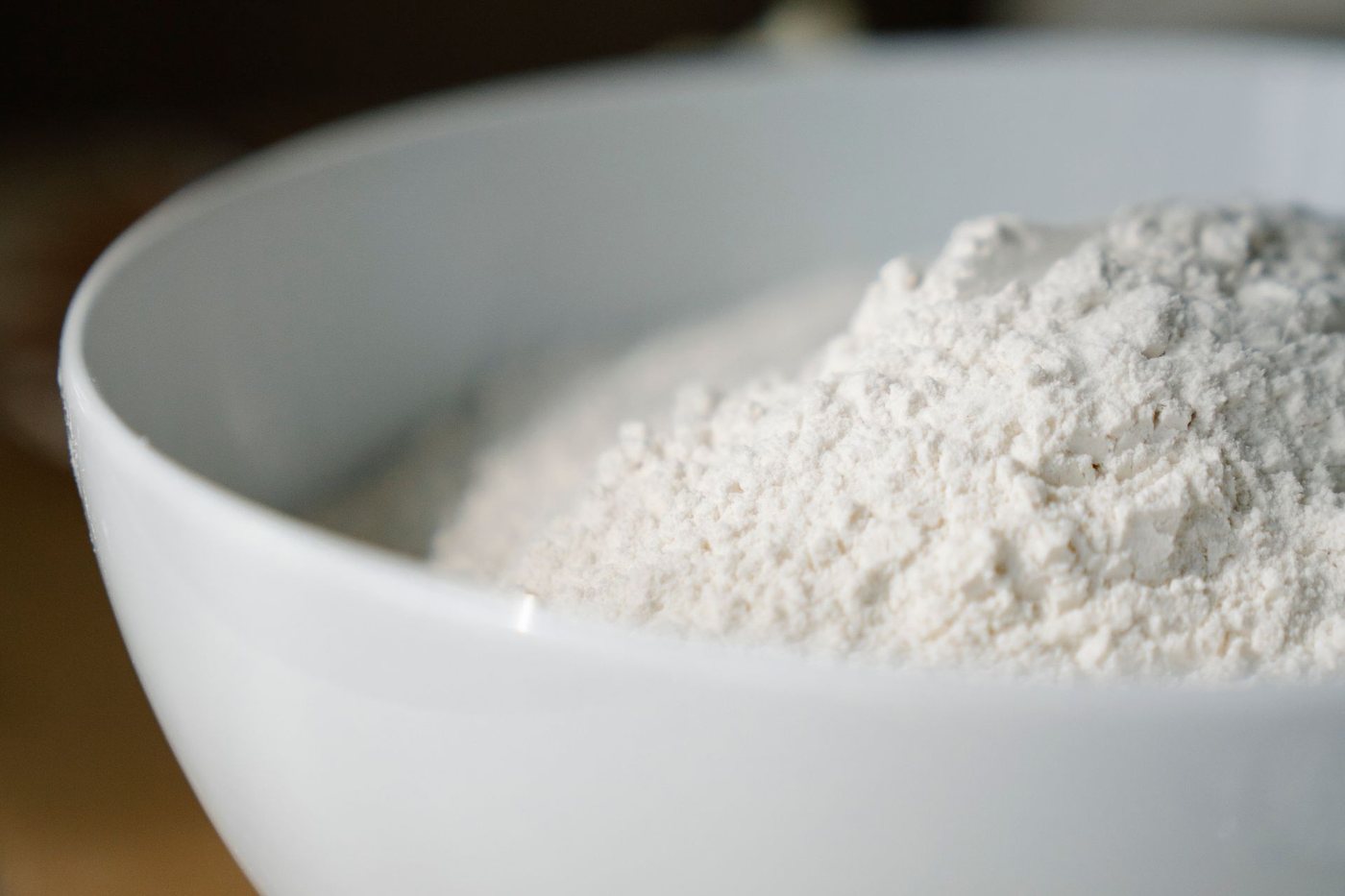
Arrowroot powder is a fine white starch made from the underground rhizomes of Maranta arundinacea L., a perennial herb in the Marantaceae family native to tropical America, from Mexico to tropical South America. The rhizomes are about 20% starch: they are washed, grated, and the starch is settled out of water and dried into the soft, silky powder sold in jars and used in kitchens and cosmetics alike. Arrowroot flour — the same material under its food name — is almost pure starch: a Sri Lankan sample measured 0.72% crude protein, 0.26% crude fat and 1.00% crude fibre, and the USDA's nutrition record for arrowroot flour gives 357 kcal, 88.2 g of carbohydrate, 3.4 g of fibre, 0.3 g of protein and 0.1 g of fat per 100 g. It has been used as a cosmetic powder for a long time: an 1883 American household book already lists arrowroot in "violet powder", a scented face and hand powder. The ingredient is old; the claims made for it are new.
Three different ingredient entries share the name, and they must not be confused. The powder in your deodorant is MARANTA ARUNDINACEA ROOT POWDER, the finely ground root — its FDA substance record carries the identifier UNII FVN346W31A, and its CosIng function, as reported by ingredient aggregators, is Skin Conditioning. A second entry, MARANTA ARUNDINACEA ROOT EXTRACT, is a different ingredient: CosIng entry #57703, function Smoothing, used mostly in wash-off masks and serums. A third entry, MARANTA ARUNDINACEA (ARROWROOT), is the umbrella page the advocacy group EWG uses for its hazard score — not an INCI name for the powder at all. The three entries have different data behind them, and this article keeps them apart throughout: when it says "arrowroot powder", it means the root powder, the first entry.
No CAS number has been verified for the root powder, and this article leaves it blank on purpose. Two numbers circulate nearby and neither belongs to it: the CAS number for starch, unmodified — any botanical source, not arrowroot specifically — and the code that looks like a CAS number on the FDA's food inventory, which is an FDA-assigned internal identifier, not a CAS number at all. The extract's CAS number was not verified in this research either. A label that prints a CAS number for arrowroot powder has borrowed one from somewhere else.
Even the basic numbers for arrowroot starch vary by sample, so this article gives ranges, never a single figure. Amylose — the straight-chain starch fraction — runs about 15–27%: a review table gives 15.21%, a Sri Lankan sample measured 24.95%, and a Chinese sample's amylose-to-amylopectin ratio of about 4:11 works out near 27%. Granules run about 10–45 micrometres across, oval to round: 44.99 by 31.44 micrometres in the Sri Lankan sample, 22–26 micrometres in the review table, 10.5 ± 2.5 micrometres in the Chinese sample. Gelatinisation — the temperature at which the granules swell and thicken — starts at about 64–75 °C depending on the sample: onset 75.02 °C in the Sri Lankan sample, 71.8 ± 0.2 °C in the Chinese sample, and 63.94 °C reported for another. The crystal pattern is A-type, and the starch gels readily: the least gelation concentration measured was 8.0%, with high viscosity — which is why cooks reach for it as a thickener. Different cultivars, growing conditions and measurement methods explain the spread, and any article that prints a single amylose or granule-size figure for "arrowroot" has picked one sample and hidden the rest.
Tip: when a label says "arrowroot", check which plant it means. "Arrowroot" is also used for East Indian arrowroot (Curcuma angustifolia), for purple or Queensland arrowroot (Canna edulis), and in English translations of Japanese sources it can mean kudzu (Pueraria). Arrowroot and cassava starch are also targets for substitution, because they cannot be told apart by eye. The label to look for is Maranta arundinacea — and the INCI name MARANTA ARUNDINACEA ROOT POWDER.
Related: Talc: What It Is, Why Asbestos Contamination Changed the Conversation, and Safer Swaps
What the lab numbers actually say
The strongest numbers attached to arrowroot powder come from a food-science laboratory, and they are the only quantitative absorption numbers for arrowroot that exist anywhere. In a 2023 study of Indonesian arrowroot starch, the native starch absorbed 2.33 ± 0.03 g of oil per gram of starch and 1.13 ± 0.20 g of water per gram. The method matters, and this article states it every time the numbers appear: one gram of starch was mixed with 10 mL of water or oil, vortexed for 20 seconds, left for an hour at room temperature, and centrifuged at 3,500 rpm for 30 minutes. That is a centrifuge tube, not a scalp and not an underarm. The numbers describe how much oil and water a gram of starch holds after spinning — they are not measurements of sebum on hair, moisture on skin, or odour in an armpit, and no study has made those measurements.
The same study tested what processing does to the numbers, and the answer cuts both ways. Heat-moisture treatment increased the starch's water absorption and decreased its oil absorption; octenylsuccinylation — a chemical modification — had the opposite pattern. So the absorption figures belong to native, unmodified arrowroot starch as tested, not to every arrowroot powder on a shelf: a processed starch can behave differently, and a deodorant or dry shampoo does not state which treatment its starch received, if any.
Comparisons with other starches exist, but none of them is a head-to-head trial. Banana starches measured in a different laboratory absorbed 1.27–1.53 g of water and 1.16–1.22 g of oil per gram — lower oil uptake than arrowroot's 2.33 g/g in its own test — but the two figures come from different labs and different methods, and presenting them as a ranking would be a comparison nobody ran. No study has measured arrowroot against cornstarch or talc for absorption, feel or safety, in a lab or on a person. The claim that arrowroot "absorbs more oil than cornstarch or talc" is therefore excluded from this article: it is a ranking with no study behind it.
The other starch studies most often cited for arrowroot tested other starches. A 2025 study of anhydrous lotion body bars found that a 2.5% starch addition gave the best balance of viscosity and ease of application, and that starches with low moisture and high oil absorption reduced the greasy feel of the bars — but the starches tested were corn, rice, tapioca, waxy corn and potato. Arrowroot was not among them. The talc-substitute precedent is the same story: guapo starch — from Myrosma cannifolia, a relative in the same family — was used in face powders as a talc substitute, with higher water absorption than talc and low acute toxicity in laboratory tests on two human dermis cell types, and sago starch body powders scored about the same as a commercial formulation in satisfaction assessments. Those are genuine results about other starches. They are not results about arrowroot, and this article does not present them as such.
Tip: when a brand quotes an absorption figure for its arrowroot product, ask what was measured — a gram of starch in a centrifuge tube, or oil on a scalp. In this article's research, the answer was always the tube.
Related: Magnesium Hydroxide: The Natural-Deodorant Mineral Behind the Milk-of-Magnesia Trick
Where it shows up — and what is proven in each use
Arrowroot powder shows up in three cosmetic jobs — natural deodorant, dry shampoo and body powder — and in each one the pattern is the same: it is used for a real physical property, and the human evidence for that job does not exist.
In deodorants, it is the absorbent. EWG's database lists arrowroot in 429 antiperspirant and deodorant entries, and the powder appears as an early ingredient in natural deodorant sticks and creams, where its job is to soak up moisture and oil and leave a dry, powdery slip. One Australian brand, Reform, states that arrowroot is 40% of its roll-on deodorant formula — a single brand's formula, not a typical level and not a safety limit, and no verified typical use concentration for arrowroot in cosmetics was found anywhere in this research. What arrowroot does not do in a deodorant is reduce sweat or kill odour bacteria: it absorbs moisture on the skin surface, and any odour benefit would come through dryness alone — unproven in people. No clinical trial of an arrowroot deodorant exists, and no study has measured odour after arrowroot deodorant use.
In dry shampoo, it is the oil-soaker. EWG lists 6 dry shampoo entries containing arrowroot, and the pitch is the lab number: a starch that holds 2.33 g of oil per gram should mop up sebum at the roots. But no study has measured sebum on hair or scalp after arrowroot use — not one. The lab figure is the whole of the evidence, and it was measured in a tube. A dry shampoo built on arrowroot may leave hair feeling drier and looking less oily; that is a texture result you can judge in the mirror, not a measured oil-removal result.
In body powders, it is the talc replacement. EWG lists 22 baby powders and 25 body powders containing arrowroot, and the appeal is obvious: a plant starch carries no asbestos question, because asbestos is a mineral contaminant and arrowroot is not a mined mineral. But the body-powder evidence for starches as a class comes from sago and guapo, not arrowroot, and the safety caution for body powders is not about the ingredient at all — it is about the form. Any fine loose powder can irritate airways if inhaled, and the American Academy of Pediatrics advises parents to avoid baby powder altogether, a warning that covers starch powders as well as talc. The caution section below deals with that in full.
Tip: judge each use on its own evidence. Arrowroot's deodorant, dry-shampoo and body-powder jobs share one ingredient and one lab number — and share the same gap: nobody has measured any of them on people.
Related: Best Deodorant Without Aluminium: What Actually Works, and What to Expect
What regulators say
Arrowroot powder is one of the least formally assessed cosmetic ingredients anywhere — permitted by default in the EU, US, Canada and the UK, with no restriction anywhere, and no safety assessment of the ingredient itself by any regulator or panel. That is the regulatory story, and it is short. The important distinction is between "not restricted" and "assessed as safe": the first is a fact about the annexes, the second would require a review that nobody has done.
| Authority | What it says | What it does not say |
|---|---|---|
| EU (Regulation 1223/2009) | Not listed in Annex II (prohibited), Annex III (restricted) or Annex V (preservatives) in the sources checked; no maximum concentration, no warning required; CosIng function Skin Conditioning (aggregator-verified; entry number not verified) | No SCCS opinion exists; "listed in CosIng" is not approval — CosIng "has informative purpose and no legal value"; "absorbent" is not the CosIng-listed function, it is the formulator's use |
| CIR Expert Panel (industry-convened) | No safety assessment of Maranta arundinacea exists | The nearest work is the 2011 corn-derived-ingredients report ("safe as used", including corn starch) and the 2015 polysaccharide-gums report (rice, corn and wheat starch safe as used) — analogies for other starches, not verdicts on arrowroot |
| US FDA (cosmetics) | No pre-approval for cosmetics (except colour additives); MoCRA (2022) added facility registration, product listing and safety-substantiation records | It has not approved any arrowroot cosmetic; MoCRA added no pre-market approval; CIR is an industry-funded panel and the FDA does not vote on its conclusions |
| US FDA (food) | SCOGS Report 115 (1979), Type 1 conclusion — no evidence of hazard at levels then current or reasonably expected; listed in FDA's food-substances inventory as a stabilizer or thickener | NOT codified in the GRAS list — the accurate wording is the SCOGS Type 1 conclusion, not a GRAS listing; the inventory code is an FDA-assigned identifier, not a CAS number; food status is not cosmetic safety evidence |
| EU food | No E-number for arrowroot starch; unmodified starch is treated as a food ingredient, not a listed additive; JECFA specifications cover modified starches only (INS 1400–1451) | The "no E-number" point rests on the JECFA record plus a secondary page; the additive list was not searched line by line |
| Canada | Cosmetics must be notified within 10 days of first sale; arrowroot was not identified on the Cosmetic Ingredient Hotlist in the change notices fetched | The Hotlist is expressly "not exhaustive"; absence was not exhaustively proven by a line-by-line search |
| UK | Assimilated Regulation 1223/2009; Responsible Person, safety report, Product Information File kept 10 years, SCPN notification | No GB-specific restriction found; no separate UK verdict exists |
| Australia | No AICIS inventory listing verified — the inventory is searchable only interactively, and no record was fetched | Do not assert an Australian inventory position from this article |
| EWG (advocacy) | Umbrella entry scores it 1 out of 10, data availability Limited, all concern categories LOW, not on Restricted or Unacceptable lists; 429 deodorant entries, 22 baby powders, 25 body powders, 6 dry shampoos | An advocacy rating, not a safety verdict; the powder itself shows Data Availability: None in EWG product listings, and the EWG VERIFIED "Restricted" flag belongs to the root extract, not the powder |
United States. The FDA's position is the one most natural-product marketing quietly ignores: "The law does not require cosmetic products and ingredients, except for color additives, to be approved by FDA before they go on the market." A cosmetic must not be adulterated or misbranded, and under the Modernization of Cosmetics Regulation Act of 2022 (MoCRA) the responsible person must register facilities, list products and keep safety-substantiation records — but MoCRA added no pre-market approval, and no arrowroot cosmetic is FDA-approved. The FDA also notes that the Cosmetic Ingredient Review panel is "an industry-funded panel of scientific and medical experts", that the FDA participates in its meetings but does not vote, and that it "may agree or disagree with CIR conclusions" — which matters here, because CIR has never reviewed arrowroot at all.
The safety headline is an absence, and it should be stated as one. No CIR safety assessment of Maranta arundinacea was found — a targeted search of the panel's site returned no entry. The nearest CIR work is on other starches: the 2011 Final Report on cosmetic ingredients derived from Zea mays (corn) concluded corn-derived ingredients, including corn starch, are "safe for use in cosmetics in the practices of use and concentration described in the assessment", with animal and clinical irritation and sensitisation data behind it; and the 2015 Polysaccharide Gums report lists rice, corn and wheat starch among ingredients previously concluded safe as used. Arrowroot is not among them. The corn-starch verdict is an analogy, not a verdict on arrowroot, and this article says so wherever the comparison appears. There is also no SCCS opinion on arrowroot, no ECHA record found, and no human patch test (HRIPT) of arrowroot powder was found at all. The formal cosmetic safety file for this ingredient is essentially empty — and the honest article line is that its clean record is an absence of findings, not a positive verdict.
Europe. Regulation (EC) No 1223/2009 of 30 November 2009 is the framework law: Article 3 requires every cosmetic to be safe under normal or reasonably foreseeable use, Article 10 requires a safety assessment by the Responsible Person, Article 13 requires notification, Article 19 governs labelling with INCI names in descending order, and Article 20 prohibits misleading claims. In the EU's CosIng database, the powder's function is Skin Conditioning — verified through aggregators, since the CosIng entry page itself could not be opened directly in this research, and the powder's entry number was not verified, so this article does not print one. It appears on none of the annexes that ban or restrict ingredients, and no EU maximum concentration exists — a position established from the sources checked, bounded by what was actually fetched. The contrast is the point: its sister entry, the root extract, is CosIng #57703 with the function Smoothing, and the two must not be mixed. CosIng itself states it "has informative purpose and no legal value" — only the Regulation and its Annexes establish whether, and under which conditions, a substance may be used. And no anti-odour or oil-absorbing function is listed for the powder in CosIng — the database records cosmetic functions, not efficacy claims.
Canada, the UK and Australia. Health Canada does not approve cosmetics before sale: manufacturers and importers must notify within 10 days of first sale, and notification is not approval. The Cosmetic Ingredient Hotlist is the prohibited and restricted list, and it is expressly "not exhaustive" — manufacturers remain responsible for compliance regardless of Hotlist status. Arrowroot does not appear in any Hotlist change notice fetched (November 2026, August 2025, February 2025, May 2024, August 2022) and was not identified on the Hotlist — but absence was not exhaustively proven by a line-by-line search of the full tables, so it is stated here with that qualifier. The UK retains Regulation 1223/2009 as assimilated law, so its position mirrors the EU's: permitted by default, no restriction, with a UK Responsible Person, a Product Information File kept for 10 years, and notification through the SCPN before sale. For Australia, no AICIS inventory listing was verified in this research — the inventory is searchable only interactively, and no record for Maranta arundinacea or arrowroot starch was fetched — so no Australian position is asserted in this article.
Food: the same material, a different regime. Arrowroot starch appears in the FDA's Substances Added to Food inventory as a stabilizer or thickener, citing the Select Committee on GRAS Substances (SCOGS) Report No. 115 from 1979. The SCOGS database gives it a Type 1 conclusion: "There is no evidence in the available information on [substance] that demonstrates, or suggests reasonable grounds to suspect, a hazard to the public when they are used at levels that are now current or might reasonably be expected in the future." But unlike most SCOGS substances, it was never codified in the Code of Federal Regulations' GRAS list — no CFR section is listed for it — so it must never be described as a GRAS listing. Two traps sit beside that fact: cornstarch and tapioca starch cite 21 CFR 182.70 and 182.90 on their inventory pages, but those sections cover substances migrating to food from cotton fabrics and from paper and paperboard used in dry food packaging, not direct addition to food, and arrowroot appears in neither list. In the EU there is no E-number for arrowroot starch at all: unmodified starch is used as a food ingredient, a thickener in the kitchen sense, not as an authorised food additive, and JECFA's specifications cover modified starches only (INS 1400–1451), with an ADI "not specified" established in 1982 for the modified starches. Food status is not cosmetic safety evidence, and it is certainly not deodorant or dry-shampoo efficacy evidence; it is included here only so the boundary is visible, and because the GRAS wording is the claim most often quoted out of context.
EWG gets one paragraph, labelled. The Environmental Working Group (EWG) is an advocacy organisation, not a regulator. Its Skin Deep entry for MARANTA ARUNDINACEA (ARROWROOT) scores it 1 out of 10 — the lowest hazard score — with data availability rated Limited and every concern category it tracks rated LOW: cancer, allergies and immunotoxicity, developmental and reproductive toxicity, and use restrictions. The numeral 1 was read from the score graphic on the page, corroborated by the aggregator SkinCarisma; the page text itself does not print the numeral. The same page lists the ingredient in 429 antiperspirant and deodorant entries in EWG's database — and, on the same page, states that it is not on EWG's Restricted or Unacceptable lists. But the evidence base behind that low score is thin, and thinner still for the powder as actually used: in EWG product listings, MARANTA ARUNDINACEA ROOT POWDER shows data availability None, and the EWG VERIFIED "Restricted" flag that appears on the root extract page — "EWG VERIFIED products cannot contain this ingredient without adequate substantiation" — belongs to the extract, not the powder. A low hazard score on limited data is not the same as a well-studied verdict, and this article does not present it as one.
The talc contrast, stated once and accurately. Talc is the reason most people reach for arrowroot, and the case against talc is real but specific. In July 2024, IARC classified talc as probably carcinogenic to humans (Group 2A) on limited human evidence for ovarian cancer, sufficient animal evidence and strong mechanistic evidence — while stating that asbestos contamination could not be excluded in most human studies and that a causal role for talc "could not be fully established". The FDA's own testing found asbestos in 9 of 52 talc cosmetics in 2019 — in a deliberately enriched sample, so not a market contamination rate — and in none of the 50 samples tested in each of 2021, 2022 and 2023. The FDA proposed a standardised asbestos-testing rule on 27 December 2024 (89 FR 105490) and withdrew it on 28 November 2025 (90 FR 54603), saying it would issue a new proposal; no mandatory federal testing standard is currently in force. Canada amended its Hotlist talc entry in May 2024 to reduce chronic inhalation and genital exposure, and added talc to Part 2 of Schedule 1 of the Canadian Environmental Protection Act (Order SOR/2026-222, in force 23 October 2026) — a listing that imposes no requirements on businesses and is not a ban. In the EU, talc is Annex III, entry 59: powdery products for children under 3 must carry the warning "Keep powder away from children's nose and mouth", and cosmetic talc must be asbestos-free. ECHA's Risk Assessment Committee recommended in July 2025 that talc be classified Carc. 1B and STOT RE 1; the European Commission's decision is pending, and Great Britain's Health and Safety Executive agrees on the lung-hazard classification but does not consider the data sufficient to support carcinogenicity classification. Talc is therefore restricted and contested — never "banned" and never "proven safe" — and arrowroot inherits none of talc's findings, and none of its evidence base either.
Related: Shea Butter: The Rich Emollient Behind the Moisturiser Claims
The debate
The case that arrowroot is a genuinely useful, gentle absorbent
Arrowroot is a simple plant starch with a coherent mechanism: it soaks up oil and water, it leaves a dry, powdery slip, and the lab numbers are respectable — 2.33 g of oil per gram of starch, measured in a peer-reviewed study. It has a long food history with a clean regulatory record: the FDA's expert committee reviewed it in 1979 and found no evidence of hazard, it is not restricted anywhere, and the advocacy group EWG gives it its lowest hazard score. It sidesteps talc's specific problems cleanly — talc's risks are geological, an asbestos contaminant in a mined mineral, and a plant starch cannot carry a mineral contaminant. It has been used in face powders since at least 1883, and its relatives guapo and sago starches have actually been tested as talc substitutes, with good results. On this view, the ingredient is honest, gentle and safe, and the only thing missing is the kind of large trial nobody funds for a commodity starch.
The case that the cosmetic claim has not been earned
Almost everything in the first story is lab or history, not human evidence. The 2.33 g/g figure comes from a centrifuge tube, not a scalp or an underarm. No study has measured sebum on hair after arrowroot dry shampoo, no study has measured odour after arrowroot deodorant, and no human patch test of arrowroot powder was found at all. The two papers most often cited for "starches work as talc substitutes" tested guapo, sago and banana starches — not arrowroot. Even the body-bar study that showed starches reduce greasy feel tested five other starches, not arrowroot. EWG's own data-availability rating is "Limited" for the whole-plant entry and "None" for the root powder as it appears in products — the low hazard score rests on very little data, not on a deep safety file. And there is no CIR safety assessment to fall back on. On this view, the ingredient is a plausible powder wrapped in claims it has never been shown to deliver, and the claims, not the starch, are the problem.
The yeast question deserves its own paragraph, because it is the sharpest sub-debate and the one where the internet is most confident. The claim that starch "feeds yeast" and worsens fungal problems in warm, damp skin folds sounds biologically plausible — yeast metabolises carbohydrates, and in a petri dish starch can feed Candida. But the only human-skin experiment, Leyden 1984, found cornstarch did not enhance Candida albicans growth on volunteers' skin, while both cornstarch and talc reduced frictional injury. That study tested cornstarch, not arrowroot, so it does not clear arrowroot specifically — but it does show the "feeds yeast" claim is not established on living skin. The opposite claim — that arrowroot keeps fungus away — appears on a commercial blog with no source at all, and this article excludes it. The honest line: the yeast concern is biologically plausible in a dish, unproven on skin, and untested for arrowroot either way; do not use starch powders on broken or infected skin, and do not claim they prevent or treat fungal infection.
The talc comparison is the reason most people reach for arrowroot, and it needs the same honesty. Arrowroot's advantage over talc is structural, not a performance claim: talc's risks are geological — asbestos contamination in a mined mineral — plus inhalation and a carcinogenicity classification that is still contested, while arrowroot is a plant starch with no asbestos association identified in any source and no carcinogenicity classification of any kind. But "talc-free" does not mean "proven safer on skin": the AAP's baby-powder warning covers fine powders generally, including cornstarch, because of inhalation risk — and arrowroot powder is equally a fine loose powder. The swap removes talc's specific problems; it does not add a proven safety file of its own.
Where both voices agree: arrowroot is a legal cosmetic ingredient with a clean regulatory record and a plausible mechanism — and an evidence file that is essentially empty where it matters. The gap both voices name is the same one: the bottle sells dryness and odour control, and the research has measured neither in people. Buy it for texture and dryness, not for proven odour control, sweat control or skin treatment — and keep loose powder away from babies' faces and from broken or infected skin.
Who should be cautious, or patch-test first
Arrowroot powder was not associated with any published case report of topical allergy in the research behind this article, and no human patch-test data for the ingredient itself exists — which means "no reported harm" is the honest ceiling, not proof of safety in everyone. The people who need this section are the ones the record does not cover, and the situations where the form itself gives a reason to pause.
- Anyone with a known allergy to arrowroot or the Marantaceae family — avoid it. The Natural Standard monograph advises avoiding arrowroot in people with a known allergy or hypersensitivity to arrowroot, its constituents, or members of the Marantaceae family. No published case report of topical allergy to arrowroot was found, but that is an absence of reports, not proof that allergy cannot happen, and there is no patch-test data to support any claim that it never causes allergy. If you know you react to arrowroot or its relatives, do not use it; if you are trying it for the first time, patch-test on the inner arm first and stop if you develop itching, redness or a rash.
- Anyone with broken, irritated or infected skin — do not use starch powders there. The yeast question is unresolved for arrowroot: no arrowroot-specific yeast study exists, and the only human-skin study in the area tested cornstarch, not arrowroot. A starch powder on broken or infected skin is an untested use, and the honest advice is to keep powders off broken skin and to see a clinician for a suspected fungal infection rather than treating it with a cosmetic powder.
- Parents and babies — the AAP's warning covers this powder too. The American Academy of Pediatrics advises parents to avoid baby powder altogether: talc-based powder may contain asbestos fibres and is not required to be labelled for them, and breathing in large amounts can cause severe lung disease. "Asbestos is not a concern in talc-free powders such as baby powder made with cornstarch. However, there is still a risk of respiratory tract irritation if cornstarch baby powder is inhaled." The same logic applies to arrowroot: no asbestos concern has been identified for it, but airborne powder can still irritate airways. Keep loose powder away from babies' faces, and do not sprinkle it directly onto a baby. Note that the AAP names cornstarch — not arrowroot — as its talc-free example.
- Pregnant or breastfeeding — no regulator has ruled on topical arrowroot, so do not take anyone's word for it. No regulator or authoritative guidance specific to topical arrowroot in pregnancy, breastfeeding or children was found in the research behind this article. Brand pages that call their own products pregnancy-safe are brand claims, not guidance. Check with your obstetrician or dermatologist rather than taking anyone's word for it.
- Anyone who needs sweat control — this ingredient does not do that job. Arrowroot absorbs surface moisture; it does not reduce sweat production, and it cannot lawfully claim to in the US, where only aluminium compounds are permitted antiperspirant actives. If you need dryness — for a presentation, a wedding, a hot climate, hyperhidrosis — a powder built on arrowroot will not deliver it, however good it feels. That is not a failure of the ingredient; it is a different job, and the product should be judged on the job it claims.
- Anyone expecting a treatment — there is no evidence arrowroot treats anything on skin. The oral evidence sometimes quoted for it — a small, uncontrolled pilot in people with irritable bowel syndrome — is not a cosmetic claim and cannot support a diarrhoea-treatment claim either; the food section below deals with it in full. Do not buy a deodorant or a dry shampoo to treat a medical problem.
For everyone else, the practical advice is short: patch-test, use the product daily for a week or two before judging it, and judge it against the product you were already using — because dryness and odour are results you can feel and smell, and a week of real use is a better test than any label claim.
How to judge a formula
There is no regulator-set effective dose for arrowroot in cosmetics, and no verified typical use concentration was found in this research — so no percentage on a label is "the right one", and any percentage quoted as typical should be treated with suspicion. What exists is a set of distinctions that separate a formulated product from a garnished one, and a set of label habits that separate an honest claim from a borrowed one.
Check the position, not just the presence. Ingredients are listed in descending order above 1%, so arrowroot near the top means a meaningful dose and arrowroot near the end means a token presence. A deodorant that lists it first or second is an arrowroot deodorant; a deodorant that lists it after the fragrance has garnished rather than formulated. But position is a proxy for intent, not for efficacy — the research supports no dose at all, because no trial exists — and the figures floating around the internet do not help: one brand says 40% of its roll-on, while a low-authority review site suggests a single-digit leave-on band, and the two cannot both be "typical". Do not state a typical concentration, and do not trust a source that does.
Check the INCI name, not just the word "arrowroot". The powder is MARANTA ARUNDINACEA ROOT POWDER. If the label says only "arrowroot extract", that is the other entry — CosIng #57703, function Smoothing — with its own EWG VERIFIED restriction flag, and it is not the powder this article is about. And watch the name traps set out in the first section: East Indian arrowroot, Queensland arrowroot and kudzu are different plants, and cassava starch can be substituted for arrowroot without anyone telling by eye. The botanical name on the label is the check; there is no verified CAS number to check against.
Read the claim, and sort it into its legal category. "Absorbs moisture" is the mechanism. "Reduces sweat" is a drug claim that only aluminium actives may make in the US. "Controls odour all day" is a claim that needs a study that does not exist. "Antifungal" or "prevents yeast" needs evidence that does not exist either — and the unsourced blog claim behind it is excluded from this article. "Talc-free" is a formulation choice, not a safety verdict: the FTC's own example of a potentially deceptive "free-of" claim is "aluminum-free on a deodorant" — a substance that was never associated with that product category in the first place. And "natural" has no legal definition for cosmetics in the US or the EU; it is a marketing description, not a safety standard. "Detox" claims deserve a flat no: arrowroot does not detoxify the body or draw out toxins, no credible source supports that, and the body has no store of toxins for a powder to draw out.
Judge it by feel, over a week, in real conditions. Dry shampoo: does your hair look and feel less oily after application, and does the powder brush out without a white cast? Deodorant: do you smell better after a week of daily use? Those are results you can judge yourself — and they are the only trials that will ever be run on your skin and hair, because the literature has run none.
Do not confuse the food and the cosmetic. Arrowroot's food record — a 1979 expert-committee review and a food-inventory listing — says nothing about leave-on skin use, inhalation, or underarm application. "It is edible, so it is safe on skin" is not a valid inference, and the food section below shows how thin the oral evidence itself is.
Related: Zinc Oxide: Broad-Spectrum Mineral Protection, the White-Cast Trade-Off, and Who It Suits · Talc: What It Is, Why Asbestos Contamination Changed the Conversation, and Safer Swaps
Alternatives worth knowing about
Arrowroot is not the only route to the result shoppers are buying it for, and in some cases it is not the best-studied route. The alternatives below are the ones the research behind this article actually tested or compared — not a shopping list, and not a recommendation for any individual, but a fair account of what else was in the room when arrowroot was studied.
Cornstarch is the closest analogue with an actual formal record. The CIR panel's 2011 corn-derived-ingredients report concluded corn starch is safe as used, with human irritation and sensitisation data behind it — the kind of review arrowroot has never had. Cornstarch is also the starch in the only human yeast study (Leyden 1984), and it is the AAP's named talc-free baby-powder example. But cornstarch is not arrowroot: different granule, different numbers, and no head-to-head comparison of the two exists. If you want the starch with the deepest file, cornstarch is it — and the file still says nothing about arrowroot.
Talc is the mineral arrowroot replaces — restricted and contested, not banned. IARC's Group 2A classification, the EU's Annex III warning for under-3 powders, Canada's May 2024 Hotlist restriction and CEPA listing, and the FDA's proposed-then-withdrawn testing rule are all set out in the regulators section above. The swap avoids talc's asbestos geology; it does not add a proven safety file. A person choosing between them is choosing between a mineral with a contested hazard file and a plant starch with almost no file at all — and that is a real choice, honestly stated, not a safety upgrade with a certificate attached.
Magnesium hydroxide is the other natural-deodorant absorbent in this guide. It is the white mineral behind the milk-of-magnesia deodorant trick, and it is also unproven as a deodorant — no clinical trial exists — but it carries a CIR assessment behind it and a safety record built on a long oral-medicine history. The two ingredients often sit in the same deodorant, and a formula that combines them is stacking hypotheses, not evidence.
Baking soda is the older alkaline deodorant active — and the one with the worse reputation for irritation. Sodium bicarbonate dissolves readily, so its alkalinity arrives all at once, and it is the ingredient most often blamed for underarm rashes in natural deodorants. Arrowroot works by a different mechanism — absorption, not pH — and the two are not interchangeable: one soaks up moisture, the other neutralises acid. If you react to baking soda deodorants, an arrowroot formula is a reasonable next experiment, not a guaranteed fix.
Zinc ricinoleate is the zinc salt from castor oil that traps odour molecules, and it is the next ingredient in this guide's order after arrowroot powder. Like arrowroot, it has no clinical trial record — the point of naming it here is not that it is proven, but that the natural-deodorant shelf offers more than one unproven mechanism, and a formula that combines them is stacking hypotheses, not evidence.
A good deodorant routine, used daily, is the baseline every arrowroot claim has to beat. Odour control is one of the few cosmetic claims you can test yourself without instruments: use the product daily, in your normal routine, for a week, and compare it honestly with what you used before. The evidence says the ingredient is unproven, not that it is useless — and a week of your own use is the only trial that will ever be run on your underarms.
Related: Magnesium Hydroxide: The Natural-Deodorant Mineral Behind the Milk-of-Magnesia Trick · Zinc Oxide: Broad-Spectrum Mineral Protection, the White-Cast Trade-Off, and Who It Suits · Shea Butter: The Rich Emollient Behind the Moisturiser Claims
The food side: a thickener, not skin evidence
Arrowroot's food record is often quoted as cosmetic proof — "it is edible, so it is safe on skin". It is not, and this section keeps the two regimes apart, in the same way the magnesium hydroxide article kept oral and topical evidence apart. The food record is worth setting out in full, because it is thinner than the marketing suggests.
As a food, arrowroot starch is a thickener and stabiliser. It gels readily — the least gelation concentration measured was 8.0%, with high viscosity — and the USDA's nutrition record for arrowroot flour gives 357 kcal, 88.2 g of carbohydrate, 3.4 g of fibre, 0.3 g of protein and 0.1 g of fat per 100 g. The regulatory food record is a 1979 expert-committee review: SCOGS Report 115 gave arrowroot starch a Type 1 conclusion — "There is no evidence in the available information on [substance] that demonstrates, or suggests reasonable grounds to suspect, a hazard to the public when they are used at levels that are now current or might reasonably be expected in the future." It is listed in the FDA's food-substances inventory as a stabilizer or thickener, with no CFR section listed — unlike most SCOGS substances, it was never codified in the GRAS list. In the EU there is no E-number for arrowroot starch: unmodified starch is treated as a food ingredient, not a listed additive, and JECFA's specifications cover modified starches only (INS 1400–1451), with an ADI "not specified" established in 1982 for the modified starches.
The only human efficacy study of arrowroot in any form is a small, uncontrolled pilot. Cooke and colleagues (2000) gave arrowroot powder to 11 adult outpatients in Leicester with long-standing diarrhoea-predominant irritable bowel syndrome — two 5 mL spoonfuls three times a day with meals for one month, then one month off. Daytime bowel movements fell by a mean of 2.95 during treatment (p=0.001) and by 1.89 one month after stopping (p=0.04); night-time frequency did not change significantly; abdominal pain improved (p=0.02). Only four patients reported less diarrhoea. One withdrew with constipation and another had an unacceptable worsening of pre-existing indigestion. The authors proposed increased faecal bulk as the mechanism and called for a randomised trial; the species of arrowroot was not named and funding was not stated. It is the only human efficacy study of arrowroot in any form — and it cannot support a diarrhoea-treatment claim, let alone any cosmetic claim.
The other human oral study is a tolerance study, not an efficacy trial. Mathew and Verghese (2026) added 100 g of commercial arrowroot powder a day to the tube feeds of 94 adults in an Indian intensive care unit (34 arrowroot, 60 control), for up to 5 days. There was no vomiting, ileus or abdominal distension in either group. New-onset diarrhoea occurred in 8.8% of the arrowroot group against 26.7% of controls — a relative risk of 0.33 with a 95% confidence interval of 0.10–1.05 and p=0.059, which is not statistically significant; a post-hoc analysis adjusted for antibiotic use gave a relative risk of 0.37 (95% CI 0.15–0.93). Hospital infections, ICU mortality and length of stay did not differ. Its value is narrow: 100 g a day for up to 5 days was tolerated in this setting. It is not a cosmetic study, and it is not proof that arrowroot treats anything.
The resistant-starch and glycaemic claims are laboratory work, not human outcomes. A 2024 study found that heat-moisture treatment (16 hours at 80 °C) and citric-acid treatment (0.6 M) increased the resistant-starch content of arrowroot starch, reduced rapidly digestible starch, and — when the resistant fraction was fermented with human colon bacteria in the lab — lowered the Firmicutes to Bacteroidetes ratio and decreased the relative abundance of Proteobacteria. Those results have not been tested in people. And no glycaemic-index test of plain arrowroot was found at all: a cookie bar containing 15% arrowroot flour, with millet and kidney beans, scored a glycaemic index of 37.6 — that is the whole recipe, not arrowroot. A separate processing study reported lower in-vitro digestibility and in-vivo glycaemic index for microwave-extracted starch versus untreated starch, but no numeric glycaemic-index values were in the abstract it was read from, so none are quoted here.
Two historical cautions belong in this section. First, the old animal-feeding literature found that unmodified cereal-grain and cassava starches were about 98% digestible, while arrowroot, white potato and sago starches showed decidedly low digestibility, varying inversely with dietary level — attributed to the outer layers of the granules and their hydrogen-bonding structure. That is old animal literature, not a modern human trial, and it cuts both ways: less energy absorbed, more undigested starch reaching the colon. Second, where arrowroot was the mainstay of infant diets — in a survey in Trinidad — the main nutritional problems were marasmus and anaemia, attributed mainly to protein and iron deficiency. The article must not recommend arrowroot as infant food. The food record, taken whole, is a thickener with a 1979 review, one uncontrolled pilot and one tolerance study — and nothing in it supports a claim about skin, hair or underarms.
Related: Talc: What It Is, Why Asbestos Contamination Changed the Conversation, and Safer Swaps · Ingredients to Look For
Frequently asked questions
Does arrowroot powder deodorant actually work?
Nobody has measured it. No clinical trial of an arrowroot deodorant exists, and no study has measured odour after arrowroot deodorant use. The only quantitative evidence is a lab test: native arrowroot starch absorbed 2.33 g of oil and 1.13 g of water per gram in a centrifuge tube — not on skin. It may leave underarms feeling drier; whether that translates into less odour is a result you can test yourself over a week, not a fact the literature supports.
Is arrowroot powder a good dry shampoo?
Unproven. No study has measured sebum on hair or scalp after arrowroot use. The lab oil-absorption figure is the whole of the evidence, and it was measured in a tube, not on hair. It is used as a dry-shampoo base because starch absorbs oil in the lab; judge it by whether your hair looks and feels less oily after use, and whether the powder brushes out without a white cast.
Is arrowroot powder safer than talc?
It avoids talc's specific problems and adds no proven safety file of its own. Talc's risks are geological (asbestos contamination in a mined mineral), inhalation-related and classification-related: IARC classified talc as probably carcinogenic (Group 2A) in 2024 on limited human evidence, with a causal role not fully established. Arrowroot is a plant starch with no asbestos association identified and no carcinogenicity classification. But no regulator or panel has assessed arrowroot itself — no CIR assessment, no SCCS opinion — and EWG's low score rests on limited data. 'Talc-free' is not a general safety verdict, and the AAP's inhalation warning applies to any fine loose powder, including arrowroot.
Does arrowroot powder feed yeast?
No arrowroot study exists, so the honest answer is that nobody knows for arrowroot. The only human-skin experiment, Leyden 1984, tested cornstarch, not arrowroot, and found Candida albicans growth on volunteers' skin was not enhanced by cornstarch or talc. The 'feeds yeast' claim is biologically plausible in a petri dish and unproven on living skin. Do not use starch powders on broken or infected skin, and do not claim they prevent or treat fungal infection.
Can I use arrowroot powder on my baby?
The American Academy of Pediatrics advises parents to avoid baby powder altogether, and its warning covers fine powders generally: talc-based powder may contain asbestos fibres and is not required to be labelled as such, and breathing in large amounts can cause severe lung disease; cornstarch powder has no asbestos concern but still carries a risk of respiratory tract irritation if inhaled. Arrowroot powder is equally a fine loose powder. Keep it away from babies' faces and do not sprinkle it directly onto a baby. The AAP names cornstarch — not arrowroot — as its talc-free example.
How do I know a product really contains arrowroot?
Look for the INCI name MARANTA ARUNDINACEA ROOT POWDER on the label, and for Maranta arundinacea in the ingredient list. 'Arrowroot' alone can mean East Indian arrowroot (Curcuma angustifolia), Queensland arrowroot (Canna edulis) or, in Japanese translations, kudzu (Pueraria) — and arrowroot is sometimes substituted with cassava starch, which cannot be told apart by eye. There is no verified CAS number to check against, so the botanical name on the label is the check.
Checked against FDA, EWG (advocacy), EU CosIng, Health Canada, IARC and peer-reviewed trials · Last updated 2026-11-28 · How we assess ingredients
Sources (42)
- Malki MKS, Wijesinghe JAAC, Ratnayake RHMK, Thilakarathna GC (2023). Characterization of arrowroot (Maranta arundinacea) starch as a potential starch source for the food industry. Heliyon 9(9):e20033 — granules predominantly oval, spherical and irregular; average length 44.99 +/- 1.27 um, width 31.44 +/- 0.58 um; amylose 24.95%; crude protein 0.72 +/- 0.02%, crude fat 0.26 +/- 0.19%, crude fibre 1.00 +/- 0.09%; least gelation concentration 8.0%; gelatinisation onset 75.02 C, peak 77.95 C, conclusion 82.43 C; A-type starch; high viscosity; high swelling power and solubility; low moisture absorbance (PEER-REVIEWED, Sri Lankan sample)
- Marta H, Rismawati A, Soeherman GP, Cahyana Y, Djali M, Yuliana T, Sondari D (2023). The Effect of Dual-Modification by Heat-Moisture Treatment and Octenylsuccinylation on Physicochemical and Pasting Properties of Arrowroot Starch. Polymers 15(15):3215 — native arrowroot starch: water absorption capacity 1.13 +/- 0.20 g/g, oil absorption capacity 2.33 +/- 0.03 g/g; method: 1 g starch + 10 mL water or oil, vortex 20 s, 1 h at room temperature, centrifuge 3500 rpm 30 min; heat-moisture treatment increased water absorption and decreased oil absorption; octenylsuccinylation had the opposite pattern (LAB test, not skin or hair — the ONLY quantitative absorption numbers for arrowroot found anywhere)
- Horstmann SW, Lynch KM, Arendt EK (2017). Starch Characteristics Linked to Gluten-Free Products. Foods 6(4):29 — Table 1: arrowroot (Maranta arundinacea): moisture 15.3%, amylose 15.21% (starch basis), protein 0.5%, lipid 0.18%, ash 0.21%, granule size 22-26 um; differs from Malki 2023 (24.95%; 45 x 31 um) and the Chinese sample (about 27% amylose; 10.5 um) — different cultivars, growing conditions and measurement methods (PEER-REVIEWED review)
- Thanyapanich N, Jimtaisong A, Rawdkuen S (2021). Functional Properties of Banana Starch (Musa spp.) and Its Utilization in Cosmetics. Molecules 26(12):3637 — banana starches: water absorption 1.27 +/- 0.12 and 1.53 +/- 0.12 g/g; oil absorption 1.22 +/- 0.11 and 1.16 +/- 0.12 g/g; usable in powder bases at up to 15% w/w with no effect on sensory texture; introduction cites guapo starch in face powders as a talc substitute and sago starch in body powders (about BANANA starch — do not present the banana numbers as arrowroot numbers)
- Kulawik-Pioro A, Fryzlewicz-Kozak B, Tworzydlo I, Kruk J, Ptaszek A (2025). The Impact of Starches from Various Botanical Origins on the Functional and Mechanical Properties of Anhydrous Lotion Body Bars. Polymers 17(13):1731 — starches tested: corn, rice, tapioca, waxy corn, potato; a 2.5% starch addition gave the best balance of viscosity vs ease of application; starches with low moisture and high oil absorption reduced greasy skin feel (arrowroot was NOT among the starches tested)
- Rincon AM, de Perez RMN, Reyes A, Romero A, Orfila L, Padilla FC et al. (2005). 'Guapo' (Myrosma cannifolia) starch: a natural product with potential use in cosmetic formulations. International Journal of Cosmetic Science 27(2) — guapo starch complied with USP and British pharmacopoeia; compared with talc, higher water absorption capacity and better flowing characteristics; 'negative local toxicity, and low acute toxicity in vitro on two human dermis cell types'; a facial transparent powder was formulated and assessed by sensorial analysis (guapo is a DIFFERENT species from arrowroot — the only head-to-head starch-vs-talc absorption comparison found, and it is not arrowroot)
- Leyden JJ (1984). Corn starch, Candida albicans, and diaper rash. Pediatric Dermatology 1(4):322-5 — 'The growth of Candida albicans experimentally inoculated onto the skin of human volunteers was not enhanced by the addition of either cornstarch powder or talcum powder... Cornstarch and talc powders were shown to minimize frictional injury experimentally induced in human volunteers' (cornstarch, NOT arrowroot — the only human study that directly tests the 'starch feeds yeast' claim)
- Environmental Working Group. EWG Skin Deep — 'What is MARANTA ARUNDINACEA (ARROWROOT)' (ADVOCACY — EWG is an advocacy organisation, not a regulator) — Data availability Limited; all listed common concerns LOW; 'This ingredient is not currently on EWG's Skin Deep Restricted or Unacceptable Lists'; listed in 429 antiperspirant/deodorant entries, 22 baby powders, 25 body powders, 6 dry shampoos; score 1 read from the score graphic (page text does not print the numeral)
- Environmental Working Group. EWG Skin Deep — MARANTA ARUNDINACEA ROOT EXTRACT ingredient page and product listings (ADVOCACY) — in EWG product listings, MARANTA ARUNDINACEA ROOT POWDER shows data availability None and concerns 'Non-reproductive organ system toxicity (low)' and 'Irritation (skin, eyes, or lungs) (low)'; the separate ROOT EXTRACT page carries the note 'Restricted: EWG VERIFIED products cannot contain this ingredient without adequate substantiation' — applies to the EXTRACT, not the powder; the extract appears in 141 antiperspirant/deodorant entries
- US Food and Drug Administration. Substances Added to Food inventory: ARROWROOT STARCH; and SCOGS database (PRIMARY, FDA database) — ARROWROOT STARCH, FDA-assigned ID 977000-09-1 (an FDA-assigned code, NOT a CAS number); technical effect STABILIZER OR THICKENER; SCOGS Report 115, 1979, Type 1 conclusion; NO 21 CFR regulation listed (the CFR column is blank — unlike most SCOGS substances, it was never codified in Part 184). Do not describe it as a GRAS listing under the Code of Federal Regulations
- USDA FoodData Central — Arrowroot flour, SR Legacy (FDC ID 170684) (PRIMARY, via corroborating secondary mirrors) — per 100 g: 357 kcal; carbohydrate 88.2 g; dietary fibre 3.4 g; protein 0.3 g; total fat 0.1 g; vitamin C 0 mg; calcium 40 mg; sodium 2 mg
- Cooke C, Carr I, Abrams K, Mayberry J (2000). Arrowroot as a treatment for diarrhoea in irritable bowel syndrome patients: a pilot study. Arquivos de Gastroenterologia 37(1):20-24 — 11 adult outpatients (6 men, 5 women, aged 23-56) with long-standing diarrhoea-predominant IBS; two 5 mL spoonfuls three times a day for 1 month; daytime bowel movements fell by a mean of 2.95 (P = 0.001) and by 1.89 one month after stopping (P = 0.04); abdominal pain improved (P = 0.02); only four patients reported less diarrhoea; one withdrew with constipation, another had an unacceptable worsening of pre-existing indigestion; authors called for a randomised trial (ORAL, uncontrolled, n=11, no placebo — cannot support a diarrhoea-treatment claim or any cosmetic claim)
- Mathew M, Verghese S (2026). Gastrointestinal Tolerance to Maranta arundinacea (Arrowroot) Powder Added to Formula Feeds in Intensive Care Unit Patients: A Nonrandomized Controlled Quasi-experimental Trial. Indian Journal of Critical Care Medicine 30(4):291-297 — 94 adults on nasogastric tube feeding (34 arrowroot, 60 control), 100 g/day arrowroot up to 5 days; no vomiting, ileus or abdominal distension; new-onset diarrhoea 8.8% vs 26.7% (relative risk 0.33, 95% CI 0.10-1.05, P = 0.059 — NOT significant); post-hoc analysis adjusted for antibiotic use gave RR 0.37 (95% CI 0.15-0.93); infections, ICU mortality and length of stay did not differ (ORAL tolerance study, not an efficacy trial and not a cosmetic study; figures via a secondary summary — primary journal page not opened)
- Tarazi-Riess H, Shani-Levi C, Lesmes U (2024). Heat-moisture and acid treatments can increase levels of resistant starch in arrowroot starch without adversely affecting its prebiotic activity in human colon microbiota. Food & Function 15:5813-5824 — heat-moisture treatment (16 h at 80 C) and citric-acid treatment (0.6 M) increased resistant-starch content, reduced rapidly digestible starch; in-vitro colonic fermentation lowered the Firmicutes to Bacteroidetes ratio and decreased relative abundance of Proteobacteria (in-vitro / lab fermentation only — not tested in people)
- Harni M, Anggraini T, Rini, Suliansyah I (2024). Effect of Microwave-Assisted Extract (MAE) on Functional Properties, Digestibility, and Glycemic Index of Arrowroot Starch (Maranta arundinacea). Food Science and Technology 12(1):71-80 — abstract read: microwave-assisted extraction reduced syneresis; in-vitro digestibility and in-vivo glycaemic index of the extracted starch decreased versus untreated starch; NO numeric GI values were in the abstract — do not quote any (a processing study on extracted starch, not a GI test of plain arrowroot flour)
- NutraSmarts — 'Arrowroot (Maranta arundinacea)' ingredient page (SECONDARY synthesis; evidence rating 'Preliminary (1 out of 5)') — no glycaemic-index test of plain arrowroot found; a cookie bar containing 15% arrowroot flour with millet and kidney beans scored GI 37.6 (whole recipe); name confusion: East Indian arrowroot = Curcuma angustifolia; purple arrowroot grown in Queensland = Canna edulis; 'arrowroot' in Japanese translations can mean kudzu (Pueraria); arrowroot and cassava starch are targets for substitution because they cannot be told apart by eye; in a Trinidad survey where arrowroot was the mainstay of infant diets, the main nutritional disorders were marasmus and anaemia (corroboration and gap-spotting only)
- IARC Monographs, Volume 136 — Talc and acrylonitrile (2024; full volume published 2025) (PRIMARY, WHO/IARC) — talc evaluated as probably carcinogenic to humans (Group 2A) on limited evidence for cancer in humans (ovarian cancer), sufficient evidence in experimental animals, and strong mechanistic evidence; asbestos contamination could not be excluded in most human studies and reporting biases could not be ruled out — 'a causal role for talc could not be fully established'; 'Talc containing asbestos' remains Group 1 and was not part of this evaluation
- FDA talc testing programme and the withdrawn testing rule (PRIMARY facts, SECONDARY verification) — FDA's 2018-2019 sampling tested 52 talc-containing cosmetic products and confirmed asbestos in 9 (enriched sample — FDA cautions this is NOT a market contamination rate); FDA tested 50 samples in each of 2021, 2022 and 2023 and detected asbestos in none; proposed standardised-testing rule 27 Dec 2024 (89 FR 105490) was withdrawn 28 Nov 2025 — no mandatory federal testing standard is currently in force (the FDA's own talc page returned an access error when fetched; facts verified via multiple independent secondary sources that agree)
- American Academy of Pediatrics — HealthyChildren.org, 'How to Choose Safer Personal Care Products: Tips for Families' (PRIMARY; last updated 31 Oct 2024) — 'Avoid using baby powder. Talc-based baby powder can contain asbestos fibers... Breathing in large amounts of talc (for example, if the powder spilled near baby's face) can lead to a severe lung disease... Asbestos is not a concern in talc-free powders such as baby powder made with cornstarch. However, there is still a risk of respiratory tract irritation if cornstarch baby powder is inhaled.' Also: 'If you want to avoid aluminum, consider a deodorant with ingredients such as baking soda or cornstarch.' (about baby powder generally, not arrowroot specifically — its value is that the inhalation warning applies to ANY fine loose powder)
- Handmade Heroes (Singapore) — 'Arrowroot Powder: What It Does in Skincare' ingredient page (SECONDARY, brand/retailer page with 12 cited sources) — rhizomes around 20% starch; lab test 2.33 g oil and 1.13 g water per gram of starch; 'The absorption figures come from starch tests in the lab, not measurements on skin or hair'; guapo starch used as talc substitute in face powders, sago starch in body powders; historical note that arrowroot went into cosmetic powders including face powders, citing an 1883 household book (Varney, Our Homes and Their Adornments, 'violet powder', p. 384) (corroboration only)
- Natural Standard (via YourCareEverywhere) — Arrowroot (Maranta arundinacea) monograph (SECONDARY, evidence-review monograph; updated 22 Mar 2017) — 'Avoid in individuals with a known allergy or hypersensitivity to arrowroot (Maranta arundinacea), its constituents, or members of the Marantaceae family'; 'The most common adverse effect of arrowroot is constipation. Upset stomach (dyspepsia) has also been reported'; 'There is limited available scientific evidence on the side effect profile of arrowroot' (a food/supplement monograph, not a cosmetic safety assessment — its allergy warning is the only formal allergy guidance found for arrowroot in any context)
- Ranganathan S, Gopalakrishnan R, Shajimon RC, Elamkuttivalapil RP, Suresh Kumar S, Abdullah M, Ravi S (2023). Formulation and Evaluation of Cosmetic Gel Using Maranta Arundinacea L. Journal of Drug Delivery and Therapeutics 13(5):60-65 — a cosmetic gel was formulated and evaluated using starch extracted from Maranta arundinacea (a gel formulation/evaluation paper in a small journal — weak evidence, not a safety or efficacy trial; do not cite it for skin benefits)
- US Food and Drug Administration. Substance Registration System (SRS / GSRS) — UNII records (PRIMARY, FDA database) — MARANTA ARUNDINACEA ROOT POWDER: UNII FVN346W31A, INCI name, substance class Concept, record status non-approved (UNII 'non-approved' means no FDA drug approval, not a safety judgement); MARANTA ARUNDINACEA WHOLE: UNII S4BQ65232F; no CAS number is listed on the record
- SkinCarisma — MARANTA ARUNDINACEA ROOT EXTRACT ingredient page; product-page ingredient analysis (SECONDARY aggregator; CosIng data via SkinCarisma) — INCI name MARANTA ARUNDINACEA ROOT EXTRACT; official function Smoothing; EU CosIng entry #57703; EWG hazard 1 out of 10 (low hazard); appears in 73 entries analysed by SkinCarisma, most often wash-off masks, serums/essences/ampoules and cleansers; for the ROOT POWDER, SkinCarisma product analysis lists the function as Skin Conditioning (e.g. Hey Humans Cedar Wood Sage deodorant). Page last reviewed 9 Oct 2026 (CosIng entry number and functions corroborated by aggregators only — the CosIng entry page itself was not opened; CosIng states it 'has informative purpose and no legal value')
- Physical and 3D Printing Properties of Arrowroot Starch Gels (2022). Foods 11(14):2140 — SEM showed mixed spherical and elongated granules, average size 10.5 +/- 2.5 um; molecular weight 3.24 x 10^7 g/mol; amylose:amylopectin ratio about 4:11; A-type crystal structure; gelatinisation temperature 71.8 +/- 0.2 C; composition 74.3% starch, 15.1% water, 0.1% fibre, 0.3% protein, 0.1% fat, 0.2% ash, 650 mg/kg total flavonoids (PEER-REVIEWED, Chinese arrowroot sample — granule size and amylose ratio differ from Malki 2023 and Horstmann 2017, reinforcing the ranges)
- Historical digestibility work — 'Biologic Utilizations of Unmodified and Modified Food Starches' (ScienceDirect; early feeding-study literature) — unmodified cereal-grain and cassava starches showed very high assimilability, roughly 98% digestibility; starches from arrowroot, white potato and sago palm showed decidedly low degrees of digestibility, varying inversely with dietary level (old animal-feeding literature, not a modern human trial — the historical basis for the 'arrowroot is slowly digested' folk claim, and it actually says digestibility was LOW)
- EU CosIng — European Commission cosmetic ingredient database (PRIMARY, framework) — CosIng is the EC database for information on cosmetic substances/ingredients in Regulation (EC) No 1223/2009; it 'has informative purpose and no legal value' and 'does not, in itself, determine [ingredients'] regulatory status. Only Regulation (EC) No 1223/2009 and its Annexes establish whether, and under which conditions, substances may be used'; a search for Maranta arundinacea returned no SCCS opinion (the CosIng search itself is interactive; the powder's entry and entry number could not be opened directly — function Skin Conditioning and the extract's entry #57703 are corroborated by SkinCarisma)
- Andersen FA et al. Safety Assessment of Cosmetic Ingredients Derived from Zea mays (Corn). International Journal of Toxicology 2011;30(3 Suppl):17S-39S (PRIMARY, peer-reviewed; CIR) — 'While safety test data were not available for most ingredients, similarities in preparation and the resulting similar composition allowed extrapolation of safety data to all listed ingredients... the CIR Expert Panel determined that corn-derived ingredients are safe for use in cosmetics in the practices of use and concentration described in the assessment' (about CORN-derived ingredients, including corn starch — the closest CIR analogue to arrowroot, NOT an assessment of arrowroot)
- CIR — Safety Assessment of Polysaccharide Gums as Used in Cosmetics (2015) (SECONDARY, via Docslib copy of the CIR report) — the Panel 'concluded that most of the polysaccharide gums are safe in the present practices of use and concentration in cosmetics'; it lists previously issued 'safe as used' conclusions for structurally similar ingredients including 'oryza sativa (rice) starch, zea mays (corn) starch, and triticum vulgare (wheat) starch'; arrowroot / Maranta starch is not mentioned; leave-on use concentrations for starches in the report run up to 45.7% (for a modified corn starch)
- JECFA — Compendium of Food Additive Specifications, Monographs 19 (82nd meeting, 2016) (PRIMARY, FAO) — specifications are given for Modified starches (INS 1400-05, 1410, 1412-1414, 1420, 1422, 1440, 1442, 1450, 1451); an ADI 'not specified' was established at the 26th JECFA (1982) for the modified starches; NO specification or INS number exists for unmodified (native) starch — it is treated as a conventional food ingredient
- Regulation (EC) No 1223/2009 — Annex III, talc entry (PRIMARY) — Annex III entry 59: Talc: Hydrated magnesium silicate; Talc; CAS 14807-96-6; EC 238-877-9; (a) powdery products intended to be used for children under 3 years of age — warning: 'Keep powder away from children's nose and mouth'; (b) other products — no restriction; asbestos is in Annex II (prohibited), so cosmetic talc must be asbestos-free (point-in-time view 03/09/2017; one secondary source gives 65 — the 59 figure comes from the regulation text itself)
- ECHA RAC opinion on talc + GB HSE response (PRIMARY via NSF / Europarl / HSE) — ECHA's Risk Assessment Committee published an opinion on 9 July 2025 recommending talc (without asbestos fibres) be classified Carc. 1B (H350) and STOT RE 1 (H372, lungs, inhalation); the European Commission will analyse the opinion and consult REACH/CLP expert groups (CARACAL, first discussion January 2026) before deciding; GB HSE's Article 37 technical report (January 2026) concludes talc meets the criteria for STOT RE 1; H372 but states 'The Agency does not consider the available data are sufficient to support classification for carcinogenicity', and no GB mandatory classification has been adopted (the RAC opinion itself was read via the NSF summary and the Commission's answer, not via ECHA's full opinion document; the HSE report was read directly)
- FDA — talc asbestos-testing proposed rule and withdrawal (PRIMARY, Federal Register as reported) — proposed rule 'Testing Methods for Detecting and Identifying Asbestos in Talc-Containing Cosmetic Products', published 27 December 2024, 89 FR 105490 (Docket FDA-2023-N-4225), under MoCRA section 3505; withdrawn 28 November 2025 (90 FR 54603), with FDA citing MAHA priorities, 'the highly scientific and technical issues addressed in public comments', and APA legal considerations, and stating it 'will issue a proposed rule to meet its statutory obligations'; FDA received 49 comments (the Federal Register documents themselves were not opened; facts as reported by three independent secondary legal/trade sources that agree on dates, FR citations and reasons)
- Health Canada. Cosmetic Ingredient Hotlist (PRIMARY) — the Hotlist is 'an administrative tool that Health Canada uses to communicate to manufacturers and others that certain substances may be prohibited or restricted for use in cosmetics' under the Food and Drugs Act / Cosmetic Regulations; 'It is not exhaustive. The general prohibition applies as soon as the potential to cause injury is identified'; cosmetics must be notified within 10 days after they first sell a cosmetic in Canada (Cosmetic Regulations s.30); arrowroot / Maranta arundinacea does not appear in any Hotlist change notice fetched (Nov 2026, Aug 2025, Feb 2025, May 2024, Aug 2022) and was not identified on the Hotlist — but absence was not exhaustively proven
- Health Canada. Changes to the Cosmetic Ingredient Hotlist (PRIMARY) — May 2024 — Talc amended: 'to help reduce chronic inhalation exposure to talc in cosmetics that may result in non-cancer lung effects (such as inflammation or fibrosis), as well as genital exposure to the population with intact ovary/ovaries which may result in ovarian cancer'; cautionary statements related to acute inhalation risks were also adjusted to include all loose powder products; November 2026 changes: Basic Violet 4, Basic Blue 7 and Polyaminopropyl biguanide added as restricted; no change notice in any period fetched mentions arrowroot or Maranta arundinacea. Supplementary (PRIMARY, Health Canada NHPD): talc entry — 'Not permitted in products intended solely for use in the genital area of those who have ovaries'; 'concentration of talc should not exceed 51% in products in loose powder form that may be used for diapering and 77% in other products in loose powder form intended for use on the face or body'
- Canada — talc added to CEPA Schedule 1 (SECONDARY) — Order SOR/2026-222 added talc to Part 2 of Schedule 1 to the Canadian Environmental Protection Act, 1999; registered and in force 23 October 2026; 'The listing does not itself impose regulatory requirements on businesses. It enables ministers to develop risk-management instruments under CEPA.' Part 2 requires ministers to prioritise pollution prevention; the final screening assessment (24 April 2021) concluded talc met CEPA's human-health criterion (inhalation and genital exposure from certain self-care products), not the environmental criteria
- US Food and Drug Administration. Small Businesses & Homemade Cosmetics: Fact Sheet (PRIMARY) — 'The law does not require cosmetic products and ingredients, except for color additives, to be approved by FDA before they go on the market. However, cosmetics must not be adulterated or misbranded'; MoCRA facility registration/product listing duties apply, with small-business exemptions; Q7 'Can I label my cosmetics natural or organic?': 'FDA has not defined the term natural and has not established a regulatory definition for this term in cosmetic labeling'; 'Choosing ingredients from sources you consider organic or natural is no guarantee that they are safe'; on CIR: 'CIR is an industry-funded panel of scientific and medical experts... FDA participates in CIR meetings, but does not vote, and we may agree or disagree with CIR conclusions'
- UK Government. 'Making cosmetic products available to consumers in Great Britain' (PRIMARY) — supports Regulation (EC) No 1223/2009 as amended by the EU Exit Regulations 2019; every product needs a Responsible Person with a UK established address; RP must keep a Product Information File (PIF) in English for 10 years after the last batch, notify OPSS before the product is made available (SCPN), and have safety checked by a qualified safety assessor; 'Use of CMRs in cosmetic products is banned. Exemptions can be requested by industry for category 2 CMRs...'
- Australia — AICIS Inventory search (PRIMARY, framework only) — 'The Australian Inventory of Industrial Chemicals (Inventory) is a searchable database of around 40,000 chemicals that are being manufactured or imported (introduced) into Australia for industrial use'; the search is interactive only; no record for Maranta arundinacea / arrowroot starch was retrieved in this session
- Deascal — Maranta Arundinacea Root Powder (SECONDARY, ingredient database) — 'Maranta Arundinacea Root Powder is derived from the dried, ground roots of the West India Arrow Root, scientifically known as Maranta arundinacea L., belonging to the Marantaceae family. This ingredient is primarily known for its skin conditioning properties in the realm of cosmetics'; 'Regarding individuals who are pregnant or breastfeeding, data and research on the topical usage of Maranta Arundinacea Root Powder during pregnancy and breastfeeding are lacking' (consistent with the absence found elsewhere)
- FTC — 'free-of' claims / Green Guides (SECONDARY + FTC publication; verified 27 Nov 2026 in the companion magnesium-hydroxide research file) — FTC requires advertising to be truthful and non-deceptive, with evidence before the ad runs; health/safety claims need 'competent and reliable scientific evidence'; FTC's Green Guides: on 'free-of' claims, a truthful claim may still be deceptive when 'the substance has not been associated with the product category' — 'Aluminum-free on a deodorant' is the example given (aluminium actives belong to antiperspirants, not deodorants); by the same logic, 'talc-free' on a deodorant or dry shampoo is a claim about an ingredient that was never a normal part of that product category in the first place
- FoodContents — STARCH, UNMODIFIED (SECONDARY) — 'Because unmodified starch retains its native granular structure and composition, it does not carry an assigned International Numbering System (INS) numeric designation separate from chemically modified starch derivatives'; 'No EFSA specific numeric ADI or E number for unmodified starch identified'; 'JECFA specifications cover modified starches; unmodified starch does not [have one]' (low-authority aggregator; used only to corroborate the absence claim, which rests primarily on the JECFA monograph)