In this article
Artificial colours are the bright synthetic dyes that make sweets pink, drinks blue and breakfast cereal orange — and they are the only food additives whose argument is almost entirely about children. They do nothing a food needs: the US Food and Drug Administration lists their purposes as enhancing colour, colouring colourless and fun foods, and helping identify flavours. No nutritional purpose is claimed for them. The best trial ever run, the 2007 Southampton study, found that mixtures of six dyes plus a preservative produced a small but real increase in hyperactivity scores in ordinary children — effect sizes of 0.12 to 0.32 — and a 2012 meta-analysis estimated that about 8 percent of children with ADHD may have symptoms related to synthetic food colours. That is a small effect in a susceptible minority, not proof that dyes cause ADHD, and the distinction matters: it is the whole reason regulators have split. The United States banned Red 3 in January 2025 under a 1960 law that makes the rat evidence legally decisive whatever its human relevance, and is pursuing a voluntary phase-out of the other six dyes. The European Union kept all six and made manufacturers print a warning about activity and attention in children. Australia and New Zealand require neither a warning nor a ban. This article lays out what the dyes are, where they hide, what the trials actually show, what each regulator did, the honest arguments on both sides — and how to spot them on a label.
What artificial colours are
An artificial colour is a synthetic dye added to food to change its colour — nothing else. The US Food and Drug Administration defines a colour additive as any substance that imparts colour, and its consumer guidance lists the purposes plainly: to enhance natural colours, to add colour to colourless and fun foods such as cake decorations, and to help identify flavours — purple for grape, yellow for lemon. No nutritional purpose is claimed for them by the FDA or by manufacturers. As the Southampton research team put it in 2008, the colours they tested "are of no nutritional value, even the small overall benefit of removing them from children's diets would come at no cost or risk to the child." That sentence is worth remembering, because it is the reason this debate is different from the debates about sugar or fat: nobody argues the dyes are doing the body any good.
In the United States the dyes are called certified colour additives. The FDA lists nine that were approved for food — FD&C Blue No. 1, Blue No. 2, Green No. 3, Red No. 3, Red No. 40, Yellow No. 5, Yellow No. 6, plus Citrus Red No. 2 and Orange B — and every batch of each one must be analysed and certified by the FDA before it can be used in a marketed product. "FD&C" means the colour is approved for food, drugs and cosmetics; "D&C" colours are approved for drugs and cosmetics only, never food. The dyes are made from petroleum-derived starting materials, which is why the 2025 phase-out plan calls them petroleum-based synthetic dyes. Colours made from natural sources — annatto, beet juice, caramel, beta-carotene, grape skin extract — are a separate class: they are exempt from batch certification, which is a testing exemption, not an exemption from approval. They still have to be approved for the use.
The names change at the border, and that is the first source of confusion. The same dye is Red 40 in the United States and Allura Red AC, or E129, in Europe. Yellow 5 is tartrazine, E102. Yellow 6 is Sunset Yellow FCF, E110. Blue 1 is Brilliant Blue FCF, E133. Blue 2 is indigotine, E132. Red 3 is erythrosine, E127. Green 3 is Fast Green FCF — and it is not authorised as a food colour in the European Union at all. Three more colours carry the EU warning but have no US food use: quinoline yellow (E104), carmoisine (E122) and ponceau 4R (E124). Citrus Red No. 2 is authorised only for the skins of mature oranges, and Orange B only for the casings and surfaces of frankfurters and sausages — two dyes with such narrow uses that most shoppers will never meet them. The table in the regulators section below sets the whole crosswalk out.
Why manufacturers use them
Manufacturers use synthetic dyes for three practical reasons: intensity, consistency and cost. A certified colour gives a strong, uniform shade that blends easily into any other shade, batch after batch, year after year. A strawberry yoghurt made with beetroot red will be pinker in one batch than the next; the same yoghurt made with Red 40 will be the same pink every time. The dyes are also stable — they survive heat, light and storage in a way that most natural pigments do not — and they are cheap per unit of colour, because a tiny amount goes a long way. That is why they cluster exactly where colour sells the product: foods aimed at children, where a bright colour is part of the appeal, and fun foods where the colour is the point.
There is also a quieter reason: colour sells the flavour before the first bite. Shoppers expect strawberry to be pink, mint to be green and orange drinks to be orange, and a colourless version of a familiar food reads as wrong or stale. The FDA's own list of purposes includes helping identify flavours, and that is not a trivial job — in a blind test, colour changes what people think they taste. None of that is a health claim. It is a marketing and manufacturing claim, and the honest question is whether the marketing benefit is worth the evidence on behaviour, which is where the concern section comes in.
Where you will find them
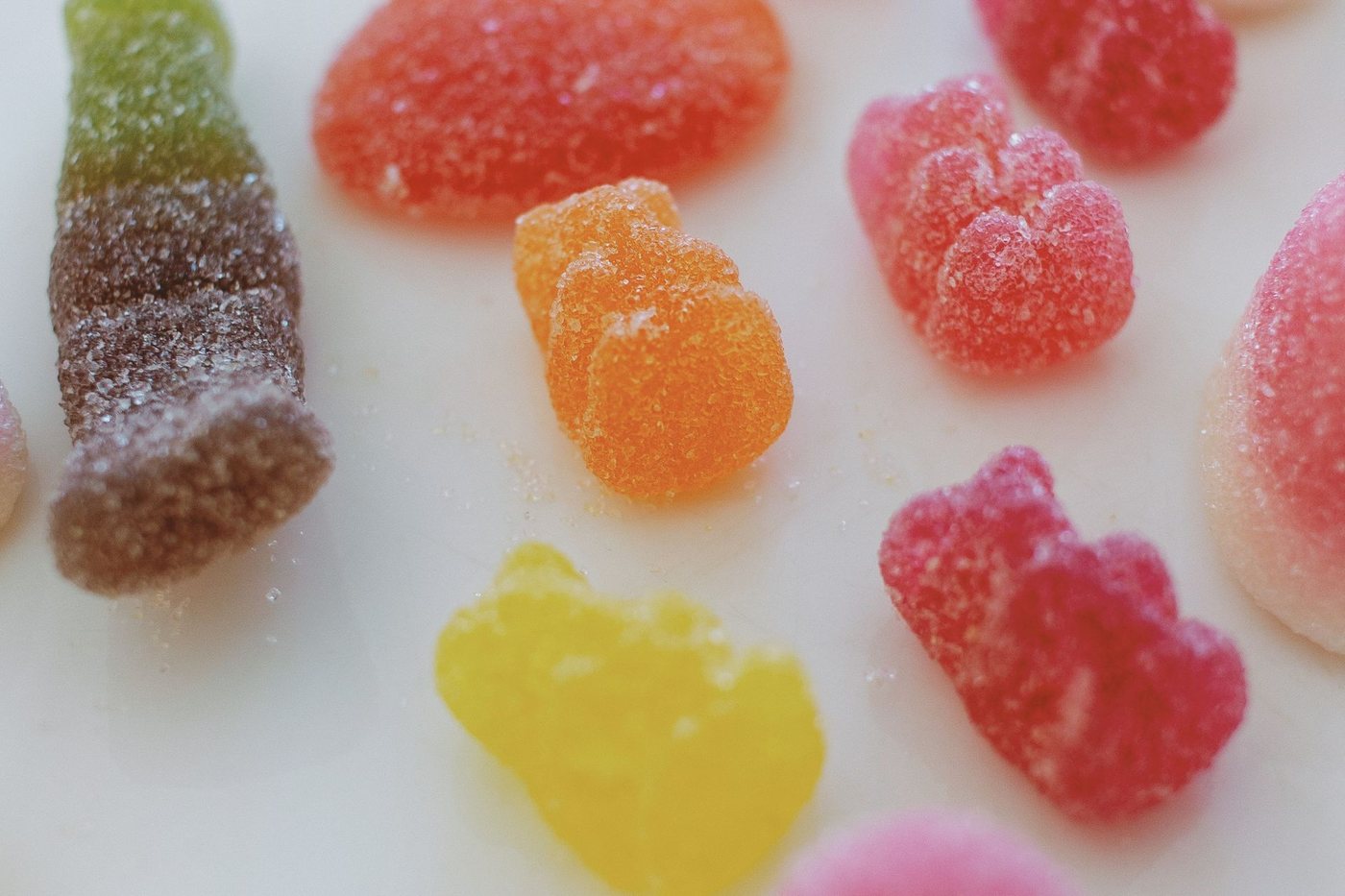
- Candy and confectionery — the single most dye-dense category: gummies, hard sweets, lollipops and coated chocolates
- Soft drinks and juice drinks — the category California's health-hazard assessment found gives children their highest dye exposures
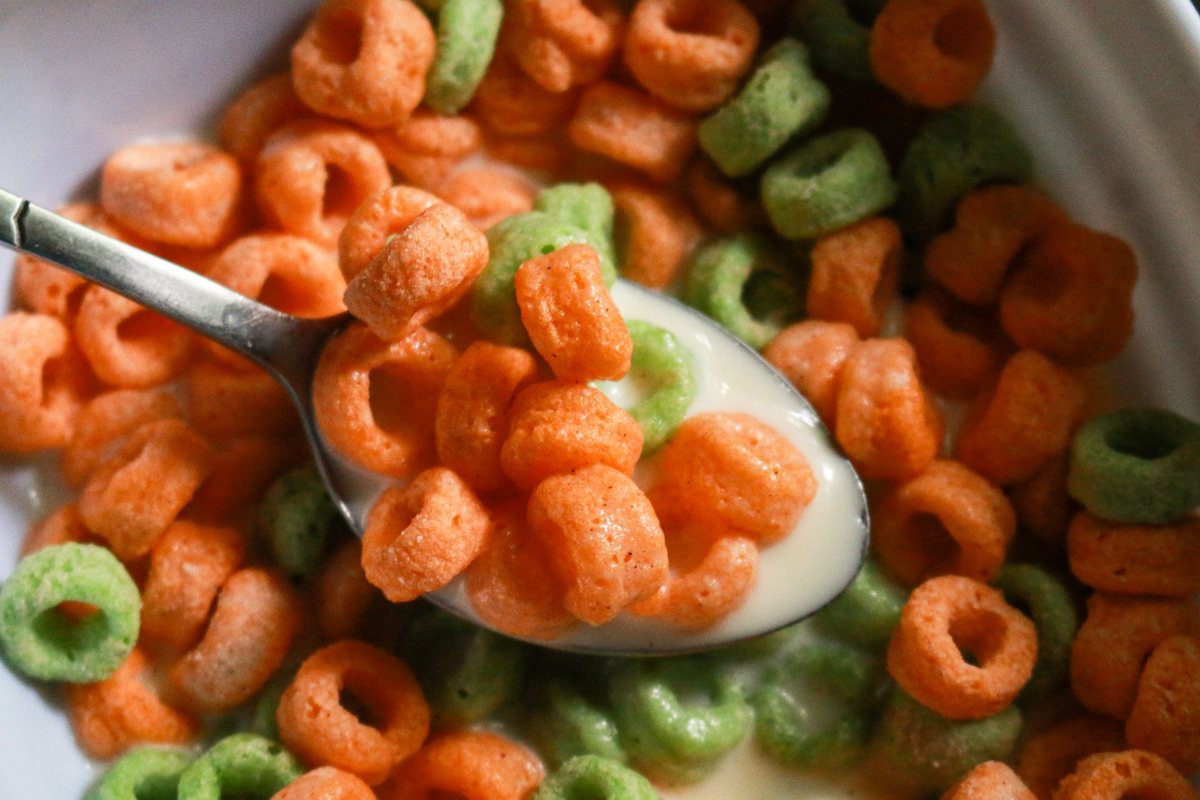
- Breakfast cereals — brightly coloured rings and flakes aimed at children, where the colour is part of the product's identity
- Baked goods, frostings and ice cream — cakes, cupcakes, cookies and frozen desserts, including the pink frosting that was Red 3's most visible home
- Ready meals and savoury snacks — coloured coatings, sauces and seasonings, where the dye is easy to miss
- Children's medicines — pain-reliever syrups and cough, cold and allergy syrups carry the highest dye levels of any medicine category measured; dyes are also in vitamins and chewable tablets
How common are they, exactly? A 2025 study in the Journal of the Academy of Nutrition and Dietetics checked the ingredient labels of 39,763 products from the top 25 US food and beverage manufacturers and found synthetic dyes in 19 percent of all products. The most common were Red 40 in 14 percent, Yellow 5 in 11 percent and Blue 1 in 11 percent. In the five categories most often marketed to children — confectionery, sugar-sweetened beverages, ready meals, breakfast cereals and baked goods — 28 percent contained dyes, against 11 percent in all other categories. Products containing dyes also had 141 percent more total sugar on average, and 264 percent more in the children's categories — a correlation, not proof that dyes cause sugar content: both cluster in ultra-processed, child-targeted foods. The medicines route matters because it is the one parents do not expect: a University of California team quantified dyes by chromatography in children's over-the-counter medicines and vitamins and found the highest levels in pain-reliever syrups and children's cough, cold and allergy syrups. No medicine in the review contained dyes above the FDA's acceptable daily intake — but that intake was not designed around behavioural effects, as the regulators section explains.
Related: Hydrogenated Fats: The Trans Fats That Raised LDL — and the Bans That Followed — another ingredient whose argument turns on dose, and whose regulators reached for bans rather than labels.
The concern: hyperactivity, cancer and allergy
There are three separate concerns about artificial colours, and they should not be blurred into one. The hyperactivity evidence is the largest and the most contested. The cancer evidence is about one dye only, Red 3, and turns on a law rather than a new finding. The allergy evidence is narrow, real, and mostly about tartrazine. Each deserves its own paragraph, because each has a different strength.
Hyperactivity is the argument the whole debate hangs on. The largest trial ever run was the Southampton study, published in The Lancet in 2007. It was commissioned and funded by the UK Food Standards Agency, run by the University of Southampton, and enrolled 153 three-year-olds and 144 eight- and nine-year-olds from the general population — not children selected for ADHD. Each child drank, in random order with wash-out weeks, a fruit-juice drink containing the preservative sodium benzoate plus one of two colour mixes, or a placebo. Mix A was tartrazine, ponceau 4R, sunset yellow and carmoisine; Mix B was sunset yellow, carmoisine, quinoline yellow and allura red. The results were small but real: in three-year-olds, Mix A produced a significantly adverse effect on the global hyperactivity score, with an effect size of 0.20, rising to 0.32 in the children who drank more than 85 percent of their drinks. In the eight- and nine-year-olds who drank at least 85 percent, Mix A gave 0.12 and Mix B gave 0.17. The authors' own interpretation was careful: "Artificial colours or a sodium benzoate preservative (or both) in the diet result in increased hyperactivity in 3-year-old and 8/9-year-old children in the general population."
What the trial did not prove matters as much as what it did. It tested mixtures plus a preservative, so it cannot say which single dye — or the preservative — was responsible. It did not show that dyes cause ADHD, and the European Food Safety Authority said so explicitly in its 2008 opinion: the study provided "limited evidence" of a small effect on the activity and attention of some children, and its conclusions "did not implicate these agents as causative agents in ADHD". EFSA also noted the effects were inconsistent across age groups, mixtures and observers, and that whether the small changes would interfere with schoolwork was unknown. The meta-analyses since then point the same way. Schab and Trinh, pooling 15 double-blind placebo-controlled trials in 2004, found an overall effect size of 0.283, falling to 0.210 when the smallest and lowest-quality trials were excluded. Nigg and colleagues, pooling 24 publications in 2012, found a parent-reported effect of 0.18, falling to 0.12 after correction for publication bias, and a teacher-reported effect of 0.07 that was not statistically significant — while attention tests gave 0.27. Their most quoted line is an estimate, not a diagnosis rate: "An estimated 8% of children with ADHD may have symptoms related to synthetic food colors." California's 2021 health-hazard assessment, reviewing 27 clinical trials, found 16 of 25 challenge studies showed some evidence of a positive association and 13 of 25 were statistically significant, and concluded that synthetic food dyes are associated with adverse neurobehavioral outcomes in some children, with children varying in sensitivity. No new large pooled meta-analysis with a headline effect size has been verified since 2021 — the literature since then mostly re-synthesises these same findings.
The cancer concern is narrower and stranger. It is about Red 3 alone. In a 1987 lifetime rat study, erythrosine at 4 percent of the diet for 128 weeks increased thyroid follicular-cell adenomas in male rats — 15 of 69 animals against 1 of 69 controls — while thyroid carcinomas were not significantly different (3 of 69 against 2 of 69) and female rats showed no effect. The mechanism is non-genotoxic and hormonal: chronic stimulation of the thyroid by elevated thyroid-stimulating hormone, a pathway rodents are far more sensitive to than humans. The effect was not seen in mice of either sex, gerbils or dogs. Erythrosine has not been classified by the International Agency for Research on Cancer — claims that it is Group 2B appear on low-quality sites and are contradicted by the classification record — and no listing in the US National Toxicology Program's Report on Carcinogens was verified. There is no human evidence that Red 3 causes cancer. The FDA's 2025 ban rests on that absence being legally irrelevant, as the regulators section explains.
The allergy concern is the oldest and the smallest. True IgE-mediated allergy to synthetic dyes is rare; most reactions are pseudoallergic — direct histamine release without IgE antibodies — and typically show as hives, swelling, flushing or asthma worsening. Tartrazine is the dye with the real record. In a 1975 double-blind crossover study, 15 percent of aspirin-intolerant patients — 6 of 40 — reacted to a tartrazine challenge and not to placebo, while none of 40 normal controls reacted. The mechanism is not cyclooxygenase inhibition, so if cross-sensitivity exists it does not work the way NSAIDs do, and the reverse — tartrazine-sensitive people reacting to aspirin — is exceedingly rare. A single published case of tartrazine anaphylaxis exists, from 1981. For Red 40, the documented reactions are hives and facial swelling, with no verified case series of IgE-mediated anaphylaxis from food use. For Blue 1, the food evidence is sparse, and the anaphylaxis cases sometimes quoted for blue dyes are patent blue V given by injection for lymph-node mapping — a different dye, not Blue 1 in food. Yellow 6 has case reports of hypersensitivity dating back to 1949, but no established prevalence. The honest summary is that dye allergy is a real but uncommon problem, concentrated in tartrazine, and that the population prevalence is low.
What regulators say
The United States moved first and furthest on Red 3. On 15 January 2025 the FDA announced an order revoking authorisation for FD&C Red No. 3 in food, including dietary supplements, and ingested drugs, published in the Federal Register the next day. Food makers must reformulate by 15 January 2027 and drug makers by 18 January 2028; products made before those dates may still be sold after them. A second FDA order followed on 5 August 2026. The legal basis is the Delaney Clause of 1960, which bars the FDA from authorising a colour additive found to induce cancer in humans or animals — and the FDA acted on a 2022 petition led by the Center for Science in the Public Interest, an advocacy group. The FDA's own caveat is part of the story and should not be cut: "Studies in other animals or in humans did not show the same effect and there is no evidence showing FD&C Red No. 3 causes cancer in humans." The rat mechanism, the FDA says, does not occur in humans, and human exposure is much lower than the rat-study doses. The revocation is a matter of statutory application, not a new finding of human risk. Red 3 had been listed for food since 1969, banned from cosmetics since 1990 on the same evidence, and the subject of a 1992 FDA announcement of intent to revoke that was never acted on "given the resources required".
Three months later came the wider plan. On 22 April 2025 the Department of Health and Human Services and the FDA announced measures to phase out all petroleum-based synthetic dyes, including working with industry to eliminate the six remaining dyes — Green 3, Red 40, Yellow 5, Yellow 6, Blue 1 and Blue 2 — by the end of 2026, revoking Citrus Red No. 2 and Orange B, and authorising four new natural colours. There is no formal agreement with food companies, only what the Health Secretary called "an understanding", and no binding rule has been issued for the six dyes. The timeline has already slipped: the FDA's own pledge tracker, updated 16 October 2026, now says the agency is working with industry to eliminate the six by the end of 2027. Orange B's revocation was finalised by order of 23 July 2026; the Citrus Red No. 2 revocation has been proposed but not finalised. Along the way the FDA approved new natural colours — galdieria extract blue, butterfly pea flower extract and calcium phosphate in May 2025, gardenia blue in July 2025, and beetroot red plus expanded spirulina uses in February 2026, when it also allowed "no artificial colors" claims on products containing no petroleum-based certified colours. The tracker also records company pledges, from General Mills removing certified colours from US cereals and school foods by summer 2026 to Tyson Foods, listed as complete by the end of May 2025.
The states moved while the federal plan stayed voluntary. California's AB 418, the California Food Safety Act, signed 7 October 2023 and effective 1 January 2027, bans Red 3 — along with brominated vegetable oil, potassium bromate and propylparaben — in any food sold in the state, with civil penalties up to 5,000 dollars for a first violation and 10,000 dollars for each subsequent one. California's AB 2316, signed 28 September 2024 and effective 31 December 2027, removes Red 40, Yellow 5, Yellow 6, Blue 1, Blue 2 and Green 3 from public school food. West Virginia's HB 2354 banned the same seven dyes from school meals from 1 August 2025 and was due to ban them statewide from 1 January 2028 — but on 23 December 2025 a federal court granted the colour manufacturers' trade association a preliminary injunction halting enforcement of the statewide ban, finding the law likely unconstitutionally vague; the school-meals ban is unaffected. Utah, Virginia, Arizona and Texas have all enacted school-food dye laws, and at least 30 states considered additive or dye bills in the 2025 legislative year. None of this is a federal ban on the six dyes: only Red 3 and Orange B have had their authorisations revoked.
| US name | EU name / E number | US status (Nov 2026) | EU status |
|---|---|---|---|
| FD&C Red No. 40 | Allura Red AC / E129 | Permitted; voluntary phase-out | Permitted; warning label |
| FD&C Yellow No. 5 | Tartrazine / E102 | Permitted; voluntary phase-out | Permitted; warning label |
| FD&C Yellow No. 6 | Sunset Yellow FCF / E110 | Permitted; voluntary phase-out | Permitted; warning label |
| FD&C Blue No. 1 | Brilliant Blue FCF / E133 | Permitted; voluntary phase-out | Permitted; no warning |
| FD&C Blue No. 2 | Indigotine / E132 | Permitted; voluntary phase-out | Permitted; no warning |
| FD&C Green No. 3 | Fast Green FCF / no E number | Permitted; voluntary phase-out | Not authorised |
| FD&C Red No. 3 | Erythrosine / E127 | Revoked — out of food 15 Jan 2027, out of drugs 18 Jan 2028 | Cocktail and candied cherries only |
| Orange B | — | Revoked (order Jul 2026) | Not authorised |
| Citrus Red No. 2 | — | Revocation proposed Jul 2026; still listed | Not authorised |
Europe chose the label. Regulation (EC) No 1333/2008, adopted 16 December 2008, requires any food containing one of six colours — tartrazine, quinoline yellow, sunset yellow, carmoisine, ponceau 4R or allura red — to carry the statement "[name or E number of the colour(s)]: may have an adverse effect on activity and attention in children", in force since 20 July 2010. It is a labelling requirement, not a ban: all six remain authorised, and in practice many manufacturers reformulated to avoid carrying the warning — which is why the same brand can look different on a European shelf. EFSA re-evaluated the six in 2009 and lowered the acceptable daily intakes for quinoline yellow (to 0.5 mg per kg of body weight per day), sunset yellow (to a temporary 1, later raised to 4 in 2014) and ponceau 4R (to 0.7), while leaving tartrazine at 7.5, carmoisine at 4 and allura red at 7. Erythrosine is the strictest case in Europe: authorised only for cocktail and candied cherries, with an acceptable daily intake of 0 to 0.1 mg per kg of body weight per day. Two corrections are worth making, because both are widely misstated: Red 40 is not banned in the European Union, and Green 3 is not authorised there at all.
The United Kingdom kept the European approach after Brexit: the Food Standards Agency commissioned the Southampton study, advised voluntary withdrawal of the six colours in April 2008, and the retained Regulation 1333/2008 still carries the warning requirement in Great Britain, with all six colours still approved and none banned. Australia and New Zealand took a third path. Under the Food Standards Code, colours are declared by class name and number — "Colour (102)" for tartrazine — and colourings permitted to a maximum level are subject to a combined cap of 290 mg per kg in food or 70 mg per litre in beverages. There is no Southampton-style warning in Australia or New Zealand, and erythrosine is permitted only in preserved cherries such as maraschino, cocktail and glacé cherries, at a maximum of 200 mg per kg.
The debate
The case that dyes should go
Dyes add nothing a food needs — no flavour, no nutrition, no preservation — so even a small harm is a bad trade. The Southampton trial was a proper randomised, double-blind, placebo-controlled trial in ordinary children, not a selected group, and it found a statistically significant increase in hyperactivity scores. The meta-analyses since then keep finding the same small signal in parent reports and attention tests, and California's two-year assessment of 27 trials found an association in 64 percent of the challenge studies. The acceptable daily intakes were set from studies 35 to 70 years old that were never designed to detect behavioural effects, so the safety numbers themselves are the wrong tool for this question. And the rat tumours behind the Red 3 ban are not the point — the point is that a colour with no function does not need the benefit of the doubt. The European answer, a warning label, lets shoppers decide; the American answer, a ban on Red 3 and a voluntary phase-out of the rest, follows the same logic. When the upside is a brighter sweet, the burden of proof should sit with the dye, not the child.
The case that the evidence does not justify bans
The effect sizes are small — 0.12 to 0.32 in the Southampton trial, 0.12 after publication-bias correction in the largest meta-analysis — and teacher ratings, the measure closest to school performance, did not confirm the parent ratings. The big trial tested mixtures plus a preservative, so no single dye has been shown to do anything on its own, and no dose-response relationship has been established. The FDA's own advisory committee met in March 2011 and voted 8 to 6 against warning labels and 11 to 3 that a causal relationship between certified colour additives and hyperactivity in the general population had not been established. EFSA reached the same conclusion in 2008 and left the acceptable daily intakes unchanged. The Red 3 ban proves the other side's point rather than refuting it: the FDA said plainly there is no evidence Red 3 causes cancer in humans, and banned it anyway because a 1960 law leaves no room for human relevance. And the replacements are not risk-free either — natural colours fade, cost more, and carry their own allergy cases. Banning a dye because it is unnecessary is a preference, not a scientific conclusion, and preferences should be labelled as such.
The position this site takes follows the size of the evidence, not either slogan. The strongest case for removing the dyes is the asymmetry: the benefit is cosmetic and the cost of removal is nothing to the child, since the dyes have no nutritional value. The strongest case for the sceptics is about proof rather than preference: the behavioural signal is small, inconsistent across observers, and tied to mixtures rather than single dyes, and no study shows dyes cause ADHD. Both stories are true at the same time, because the debate is really about which question matters — whether a small, real effect in a susceptible minority is enough to act on when the ingredient does nothing useful, or whether action should wait for proof of a specific dye, a specific dose and a clinically meaningful harm. The regulators have answered that question three different ways — ban, warning, neither — and none of them is obviously wrong, because they are answering a values question with the same evidence.
Who should avoid them
- Children with ADHD or behaviour that worsens after dyed foods — the evidence points to a susceptible minority, and a trial removal of dyes is the only way to find out whether a particular child is in it; the meta-analysis estimate is about 8 percent of children with ADHD
- Parents of young children who eat a lot of dyed food — exposure concentrates in the foods marketed to children, and the Southampton effects were found in ordinary three- and eight-year-olds, not only in children with ADHD
- People with aspirin sensitivity — tartrazine (Yellow 5) is the one dye with a documented cross-sensitivity signal, with 15 percent of a selected aspirin-intolerant group reacting in a 1975 challenge study; the mechanism is not the same as aspirin, and the population prevalence is low
- Anyone who has reacted to a dyed food or medicine — hives, swelling or asthma worsening after a brightly coloured food, drink or syrup is worth noting and discussing with a clinician, and Yellow 5 is the dye to name first
- People in states with school-food dye laws — California, West Virginia, Utah, Virginia, Arizona and Texas have all restricted dyes in school meals, so school canteens are already a dye-reduced environment in those states
- Anyone who simply prefers colour-free food — no nutritional case can be made for the dyes, so avoiding them costs nothing nutritionally; the trade-off is a duller colour and, sometimes, a higher price
How to spot them on a label
In the United States, certified colours must be named in the ingredients statement — Red 40, Yellow 5, Yellow 6, Blue 1, Blue 2, Green 3 — and Yellow 5 has a special rule: it is the only certified colour that must always be declared by its full name, FD&C Yellow No. 5, in foods. The same by-name rule applies to drugs, where prescription labelling must also carry the warning that the product "may cause allergic-type reactions (including bronchial asthma) in certain susceptible persons" and that sensitivity "is frequently seen in patients who also have aspirin hypersensitivity". Colours made from natural sources may be listed collectively as "artificial color" or "color added", which is a trap for the careful reader: "artificial color" on a US label can mean a natural colour, while the certified dyes are named individually. A product listing "Red 40" is telling you exactly what it contains; a product listing "color added" is telling you almost nothing.
- Red 40, Yellow 5, Yellow 6, Blue 1, Blue 2, Green 3 — the certified dyes, named individually on US labels; Yellow 5 always by its full name
- FD&C Yellow No. 5 (tartrazine) — the dye with the by-name rule and the drug warning; if you react to dyes, this is the first name to learn
- "Color added" or "artificial color" — usually a natural-source colour such as annatto, beet juice or caramel; not a certified dye, but not specific either
- E102, E104, E110, E122, E124, E127, E129, E132, E133 — the European numbers; the six Southampton colours (E102, E104, E110, E122, E124, E129) carry the warning about activity and attention in children
- "Colour (102)" and similar — the Australian and New Zealand form: class name plus the name or number, with no behaviour warning
- Check medicines too — dyes are in children's syrups, chewables and vitamins, where they are listed among the inactive ingredients; the highest levels measured were in pain-reliever and cough, cold and allergy syrups
- Check the products that carry them most — candy, soft drinks and juice drinks, brightly coloured cereals, frostings and ice cream first
Alternatives: what replaces them
The straightforward replacement is a colour from a natural source, and the industry has been moving that way — the FDA approved six new natural colour options between May 2025 and February 2026, including galdieria blue, gardenia blue, beetroot red and expanded spirulina uses. The palette is familiar: beetroot red for pink and red, turmeric and curcumin for golden yellow, annatto for yellow-orange, spirulina extract for blue — the only common natural blue — beta-carotene for yellow-orange, paprika oleoresin for coral red, and anthocyanins from berries and red cabbage for red and purple. The honest position is that no single natural colour matches a synthetic dye on all of intensity, heat stability, light stability, pH stability and cost, so manufacturers blend several and accept a duller colour or a shorter shelf life. Beetroot red degrades above about 70 degrees and turns brownish-yellow above pH 6.5. Turmeric fades in light and in alkaline conditions. Spirulina fades on heating and in acidic drinks. Beta-carotene oxidises in oils and light, though it is the one alternative with a genuine nutritional role, as a provitamin A nutrient.
Natural does not mean risk-free, and two colours prove it. Annatto, the most widely used natural yellow-orange colour, has documented hypersensitivity: in a 1978 study, 26 percent of 56 patients with chronic hives challenged with annatto extract reacted, and a 1991 case report describes anaphylaxis to annatto within 20 minutes, with a positive skin test and IgE to a protein band in the dye — the allergen is probably a residual seed protein, not the pigment. Carmine is the sharper correction: it is insect-derived, from the female cochineal insect, not a plant colour at all, and it is the only food colour with confirmed IgE-mediated anaphylaxis. Since 5 January 2011 the FDA has required carmine and cochineal extract to be declared by name on food and cosmetic labels, after they had previously been allowed to hide as "color added" or "natural red". A product coloured with beetroot or turmeric is a reasonable swap for a synthetic dye; a product coloured with annatto or carmine is a swap of one allergy risk for another, and the label should say which.
Related: Added Sugars: The Sweetener Hiding in Plain Sight — and Why the Numbers Disagree — the numbers behind the sugar limits, and why Australia's label only shows total sugars.
Frequently asked questions
What are artificial colours?
Artificial colours are synthetic, petroleum-derived dyes that the US Food and Drug Administration lists as certified colour additives — nine were approved for food, of which Red 3 has now had its authorisation revoked and Orange B likewise. They add colour only: the FDA lists their purposes as enhancing natural colour, adding colour to colourless and fun foods, and helping identify flavours. They have no nutritional function, and every batch must be analysed and certified by the FDA before use.
Do food dyes cause ADHD?
No study has shown that food dyes cause ADHD. The best trial, the 2007 Southampton study, found that mixtures of six dyes plus a preservative produced a small but statistically significant increase in hyperactivity scores in children from the general population, with effect sizes of 0.12 to 0.32. A 2012 meta-analysis estimated that about 8 percent of children with ADHD may have symptoms related to synthetic food colours. The honest reading is a small effect in a susceptible minority, not a cause of the condition.
Is Red 40 banned in Europe?
No. Red 40, known in Europe as Allura Red AC or E129, is authorised in the European Union. Foods containing it — and five other colours — must carry the warning that the colour may have an adverse effect on activity and attention in children. That labelling rule, in force since 20 July 2010, is the EU's control; it is not a ban. Many manufacturers reformulated to avoid carrying the warning, which is why the same product can look different on a European shelf.
Why did the FDA ban Red 3?
Because of the Delaney Clause, a 1960 law that bars the FDA from authorising a colour additive found to induce cancer in humans or animals. High doses of erythrosine caused thyroid tumours in male rats in a 1987 lifetime study, through a hormonal mechanism. The FDA itself says that mechanism does not occur in humans, that there is no evidence Red 3 causes cancer in humans, and that human exposure is much lower than the rat doses. The ban is a matter of law, not a new finding of human risk. Food makers must remove Red 3 by 15 January 2027 and drug makers by 18 January 2028.
Are artificial colours banned in the United States?
Only two of the nine certified food colours have had their authorisations revoked: Red 3, out of food from 15 January 2027 and out of ingested drugs from 18 January 2028, and Orange B, whose revocation was finalised in July 2026. A proposal to revoke Citrus Red No. 2 is pending. The other six — Red 40, Yellow 5, Yellow 6, Blue 1, Blue 2 and Green 3 — are still permitted, and the April 2025 phase-out plan is voluntary, with the FDA's own tracker now aiming for the end of 2027. Several states have gone further for school meals, and California bans Red 3 in all food from 1 January 2027.
How can I tell if a food contains artificial colours?
In the United States, certified colours must be named in the ingredients list — Red 40, Yellow 5, Yellow 6, Blue 1, Blue 2, Green 3 — and Yellow 5 must always be declared by its full name, FD&C Yellow No. 5. Colours made from natural sources may be listed collectively as color added or artificial color. In the European Union and the United Kingdom, look for the E number (E102, E110, E129 and the rest) and, for six colours, the warning about activity and attention in children. In Australia and New Zealand, the label reads Colour followed by the name or number, for example Colour (102).
Checked against the FDA's Red No. 3 revocation and April 2025 phase-out announcement, Regulation (EC) No 1333/2008, the McCann 2007 Lancet trial, the Nigg 2012 meta-analysis, the OEHHA 2021 assessment and the Dunford 2025 prevalence study · Last updated 2026-11-10 · How we assess ingredients
Sources (36)
- US Food and Drug Administration — "FD&C Red No. 3": revocation orders of 16 January 2025 and 5 August 2026; effective dates 15 January 2027 (food) and 18 January 2028 (ingested drugs); Delaney Clause basis; rat thyroid tumours via a male-rat hormonal mechanism; no evidence of human cancer risk; history (1969 listing, 1990 cosmetics denial, 1992 intent to revoke, 57 FR 16702)
- US Food and Drug Administration — "HHS, FDA to Phase Out Petroleum-Based Synthetic Dyes in Nation's Food Supply" (press release, 22 April 2025): the six announced actions; the six dyes and the end-of-2026 target; Citrus Red No. 2 and Orange B revocations to be initiated; four natural colours to be authorised; NIH partnership; request to remove Red No. 3 sooner
- US Food and Drug Administration — "Tracking Food Industry Pledges to Remove Petroleum Based Food Dyes" (updated 16 October 2026): Orange B revocation finalised; Citrus Red No. 2 revocation proposed; six-dye elimination target now "by the end of 2027"; natural colours approved; company pledges including General Mills, Nestlé, Mars, Hershey, Consumer Brands Association, Walmart, Tyson Foods and the American Bakers Association
- US Food and Drug Administration — "FDA Approves Gardenia (Genipin) Blue Color Additive While Encouraging Faster Phase-Out of FD&C Red No. 3" (press release, 14 July 2025): gardenia blue approval; the three May 2025 approvals; letter to manufacturers to accelerate the Red No. 3 phase-out; "about 40 percent of the food industry has committed to a voluntary phase-out"
- US Food and Drug Administration — "Summary of Color Additives for Use in the United States in Foods, Drugs, Cosmetics, and Medical Devices": the nine certified food colours with 21 CFR sections, approval years and EEC numbers; Parts 73/74/81/82 structure
- US Food and Drug Administration — "Color Additives Questions and Answers for Consumers": purposes of colour additives (enhance colour, colourless and fun foods, identify flavours); the nine certified colours; exempt examples (annatto, dehydrated beets, caramel, beta-carotene, grape skin extract); batch certification
- California Legislative Information — AB 418 bill text (Chapter 328): approved 7 October 2023; effective 1 January 2027; four substances with CAS numbers (brominated vegetable oil 8016-94-2; Red dye 3 16423-68-0); civil penalties up to $5,000 for a first violation and $10,000 for each subsequent violation
- Venable — "Update: California Enacts Color Additive Ban" (AB 2316, 3 October 2024): signed 28 September 2024; six dyes; effective 31 December 2027; California public schools K–12
- West Virginia Legislature — HB 2354 enrolled text: passed 14 March 2025; school-meals ban from 1 August 2025 listing the seven dyes; statewide amendments effective 1 January 2028; preliminary injunction of 23 December 2025 halting enforcement of the statewide ban, school-meals ban unaffected
- Haynes Boone — "Survey of State Legislation Enacted to Prohibit or Limit Food Additives and Color Additives" (as of July 2026): Arizona HB 2164 (signed 14 April 2025, effective 1 January 2027); Texas SB 314 (passed 27 May 2025, 2026–27 school year) and SB 25 (effective 1 September 2025); Utah HB 402 (signed 27 March 2025, effective 7 May 2025); Virginia HB 1910/SB 1289 (effective 1 July 2027); at least 30 states considered additive or dye bills in 2025
- Regulation (EC) No 1333/2008, Annex V: the six Southampton colours and the mandatory warning "[name or E number of the colour(s)]: may have an adverse effect on activity and attention in children"
- CMS — "Compulsory warnings on colours in food and drink" (2010, updated 29 May 2026): Regulation 1333/2008 in effect 20 July 2010; the six Southampton colours; exact warning wording; drinks over 1.2% alcohol exempt; conspicuous, legible and indelible
- European Food Safety Authority — "EFSA updates safety advice on six food colours" (press release, 12 November 2009): acceptable daily intakes lowered for E104, E110 and E124; unchanged for E102, E122 and E129; tartrazine intolerance note; Southampton study did not substantiate a causal link for individual colours
- European Food Safety Authority — "Sunset Yellow: EFSA sets ADI" (15 July 2014): temporary acceptable daily intake of 1 replaced by 4 mg/kg body weight per day (NOAEL 375, uncertainty factor 100); agreement with JECFA's 2011 evaluation; exposure well below the new intake
- EFSA ANS Panel — "Scientific Opinion on the re-evaluation of Erythrosine (E 127)" (EFSA Journal 2011;9(1):1854): acceptable daily intake of 0–0.1 mg/kg body weight per day confirmed; authorised exclusively for cocktail and candied cherries; intake reachable by 30 g of cocktail cherries at 200 mg/kg
- Commission Regulation (EU) No 232/2012 (16 March 2012): E104 acceptable daily intake lowered from 10 to 0.5 mg/kg body weight per day; E124 lowered from 4 to 0.7; Annex II use levels amended accordingly
- GOV.UK / Food Standards Agency — "Approved additives and E numbers": Great Britain operates under assimilated Regulation (EC) No 1333/2008; colours list includes E102, E104, E110, E122, E124, E127, E129, E132 and E133; the six Southampton colours remain approved, none banned
- Australia New Zealand Food Standards Code — Schedule 16: Allura Red AC (129) among "colourings permitted to a maximum level"; erythrosine absent from that list, consistent with its Schedule 15-only permission
- Australia New Zealand Food Standards Code — Schedule 15: erythrosine (127) permitted only in preserved cherries (maraschino, cocktail, glacé) at 200 mg/kg
- McCann D, Barrett A, Cooper A, et al. (2007). Food additives and hyperactive behaviour in 3-year-old and 8/9-year-old children in the community: a randomised, double-blinded, placebo-controlled trial. The Lancet 370(9598):1560–1567: 153 three-year-olds and 144 eight/nine-year-olds; Mix A and Mix B compositions; effect sizes 0.20 (3-year-olds, Mix A), 0.32 (over 85% subgroup), 0.12 and 0.17 (8/9-year-olds at 85% or more); authors' interpretation that artificial colours or sodium benzoate (or both) increased hyperactivity
- EFSA Panel on Food Additives, Flavourings, Processing Aids and Food Contact Materials (2008). Assessment of the results of the study by McCann et al. (2007) on the effect of some colours and sodium benzoate on children's behaviour. EFSA Journal 660:1–54: "limited evidence" of a small effect on activity and attention in some children; findings "cannot be used as a basis for altering the ADI"; did not implicate the agents as causative agents in ADHD; mixture limitation; re-analysis note
- Nigg JT, Lewis K, Edinger T, Falk M (2012). Meta-analysis of attention-deficit/hyperactivity disorder or attention-deficit/hyperactivity disorder symptoms, restriction diet, and synthetic food color additives. Journal of the American Academy of Child & Adolescent Psychiatry 51(1):86–97.e8: 24 publications; parent reports g = 0.18 falling to 0.12 after publication-bias correction; teacher reports g = 0.07, not significant; attention tests g = 0.27; "An estimated 8% of children with ADHD may have symptoms related to synthetic food colors"
- Schab DW, Trinh NH (2004). Do artificial food colors promote hyperactivity in children with hyperactive syndromes? A meta-analysis of double-blind placebo-controlled trials. Journal of Developmental & Behavioral Pediatrics 25(6):423–434: 15 double-blind placebo-controlled trials; overall effect size 0.283, falling to 0.210 when the smallest and lowest-quality trials were excluded
- Miller MD, Steinmaus C, Golub MS, et al. (2022). Potential impacts of synthetic food dyes on activity and attention in children: a review of the human and animal evidence. Environmental Health 21:33 (peer-reviewed version of the California OEHHA 2021 assessment): 27 clinical trials, 25 challenge studies; 16 of 25 (64%) showed some evidence of a positive association, 13 of 25 (52%) statistically significant; acceptable daily intakes based on studies 35 to 70 years old not designed to detect behavioural effects
- California Office of Environmental Health Hazard Assessment — "Report Links Synthetic Food Dyes to Hyperactivity and Other Neurobehavioral Effects in Children" (press release, 16 April 2021): "Evidence shows that synthetic food dyes are associated with adverse neurobehavioral outcomes in some children"; children vary in sensitivity; highest exposures usually from juice drinks and soft drinks; common exposures to Red No. 3 from a few foods may exceed the existing acceptable daily intake; ADHD diagnosis rate 6.1% to 10.2% over 20 years as background context
- Dunford EK, Galligan TM, Taillie LS, Musicus AA (2025). All the Colors of the Rainbow: Synthetic Dyes in US Packaged Foods and Beverages in 2020. Journal of the Academy of Nutrition and Dietetics 125(9):1207–1217.e9: 39,763 products from the top 25 US manufacturers; 19% contained at least one synthetic dye; Red 40 in 14%, Yellow 5 in 11%, Blue 1 in 11%; 28% of the top children's categories against 11% elsewhere; products with dyes had 141% more total sugar on average, 264% more in children's categories
- WHO/JECFA monograph 719, Erythrosine (Food Additives Series 28): Borzelleca et al. 1987 — thyroid adenomas in male rats at 4% of diet, 15/69 against 1/69 controls; carcinomas 3/69 against 2/69, not significantly different; females no effect; acceptable daily intake reductions to 0–0.6 mg/kg body weight
- US Code of Federal Regulations, Title 21, §74.705 (FD&C Yellow No. 5, foods): "Foods for human use that contain FD&C Yellow No. 5, including butter, cheese, and ice cream, shall specifically declare the presence of FD&C Yellow No. 5 by listing the color additive as FD&C Yellow No. 5 among the list of ingredients"
- US Code of Federal Regulations, Title 21, §74.1705 (FD&C Yellow No. 5, drugs): oral, nasal, rectal, vaginal and eye-area drugs must declare FD&C Yellow No. 5 by name; prescription labelling must carry the warning that it "may cause allergic-type reactions (including bronchial asthma) in certain susceptible persons" and that sensitivity "is frequently seen in patients who also have aspirin hypersensitivity"
- Settipane GA, Chafee FH, Postman IM, Levine MI (1975). Significance of tartrazine sensitivity in aspirin-intolerant individuals. Journal of Allergy and Clinical Immunology: 15% (6/40) of aspirin-intolerant individuals had significant adverse reactions to tartrazine challenge and not to placebo; 0/40 normal controls reacted
- Malan E, et al. (1990). Tartrazine sensitivity. American Family Physician 42(5):1347–1350: urticaria and asthma exacerbation as the main manifestations; cross-sensitivity in aspirin-sensitive patients "may also occur"; mechanism "obscure" and "pseudoallergic"
- California OEHHA — Appendix E to the 2021 health effects assessment (Lehmkuhler et al. 2020 data): dyes quantified by chromatography in US children's over-the-counter medicines and vitamins; highest levels in pain-reliever syrups and children's cough, cold and allergy syrups; dyes measured included Yellow 5, Yellow 6, Red 40, Blue 1 and Blue 2
- Canadian Medical Association Journal (2011). "US panel rejects calls for warning labels on link between food dyes and hyperactivity." CMAJ 183(9):E533–E534: FDA Food Advisory Committee, 30–31 March 2011; voted 13–1 for more research and 8–6 against warning labels; "a causal relationship … has not been established"; Center for Science in the Public Interest 2008 petition context
- Fatima S, et al. (2025). Protecting developing brains: urgent need to regulate synthetic food dyes in children's diets. Annals of Medicine & Surgery 87(10):6918–6919: 2025 commentary summarising OEHHA (27 trials, 64% association, 52% significant) and Nigg 2012 (8%); cites Damotharan et al. 2024 on oxidative-stress mechanisms for tartrazine and Allura Red
- Nish WA, Whisman BA, Goetz DW, Ramirez DA (1991). Anaphylaxis to annatto dye: a case report. Annals of Allergy 66(2):129–131: anaphylaxis to annatto — urticaria, angioedema and severe hypotension within 20 minutes; strong positive skin test to annatto; IgE specific to a protein band in the dye
- Mikkelsen H, Larsen JC, Tarding F (1978). Hypersensitivity reactions to food colours with special reference to the natural colour annatto extract (bixin). Archives of Toxicology Supplement 1:141–143: 26% of 56 challenged chronic-urticaria patients reacted to annatto; "natural food colours may induce hypersensitivity reactions as frequent as synthetic dyes"