In this article
High fructose corn syrup is the sweetener in most American soft drinks, and it is also the most argued-about sweetener in the world — denounced as the engine of the obesity epidemic by its critics, defended as no different from ordinary sugar by its makers and by the US regulator. The argument turns on a number so small it fits in a single sentence: HFCS-55, the grade in soft drinks, is about 55 percent fructose, while table sugar is exactly 50 percent fructose. Five percentage points. The critics say those five points matter because fructose is handled differently from glucose — it goes straight to the liver, it does not trigger insulin, and in trials at high doses it builds visceral fat and worsens insulin sensitivity. The defenders say the five points do not matter, because head-to-head trials of HFCS against sucrose at ordinary intakes find no difference at all, and because the only trials that show fructose-specific harm used pure fructose at a quarter of a person's daily energy — a dose no soft drink delivers. Both sides are describing real evidence, and both are partly right: fructose is not glucose, but HFCS-55 is barely different from sucrose. This article lays out the trials with their doses and their sizes, the regulators' positions, and the 2025–2026 politics that put HFCS back in the headlines — so you can decide for yourself, and so you know what a "cane sugar" label actually changes.
What high fructose corn syrup is
High fructose corn syrup starts as corn starch — a chain of glucose molecules joined together. The starch is broken down into individual glucose molecules, giving corn syrup, which is essentially 100 percent glucose. Enzymes are then added to convert some of that glucose into fructose, a second simple sugar. The US Food and Drug Administration's own description puts it plainly: "HFCS is 'high' in fructose compared to the pure glucose that is in corn syrup." The name is relative to corn syrup, not to sugar — and despite the name, HFCS is not high in fructose compared with table sugar at all.
There are two common grades, both named in the US regulation, 21 CFR 184.1866: HFCS-42, containing approximately 42 percent fructose, used mainly in processed foods, cereals, baked goods and some beverages; and HFCS-55, containing approximately 55 percent fructose, used primarily in soft drinks. A third grade, HFCS-90, at about 90 percent fructose, exists in small quantities for specialty uses and for re-blending with lower-fructose syrups. The split between the grades is approximate, and it matters to say so: on a dry-weight basis, HFCS-55 is about 55 percent fructose, 42 percent glucose and 3 percent other saccharides, so the round "55/45" split you will see quoted is a loose shorthand, not an exact composition.
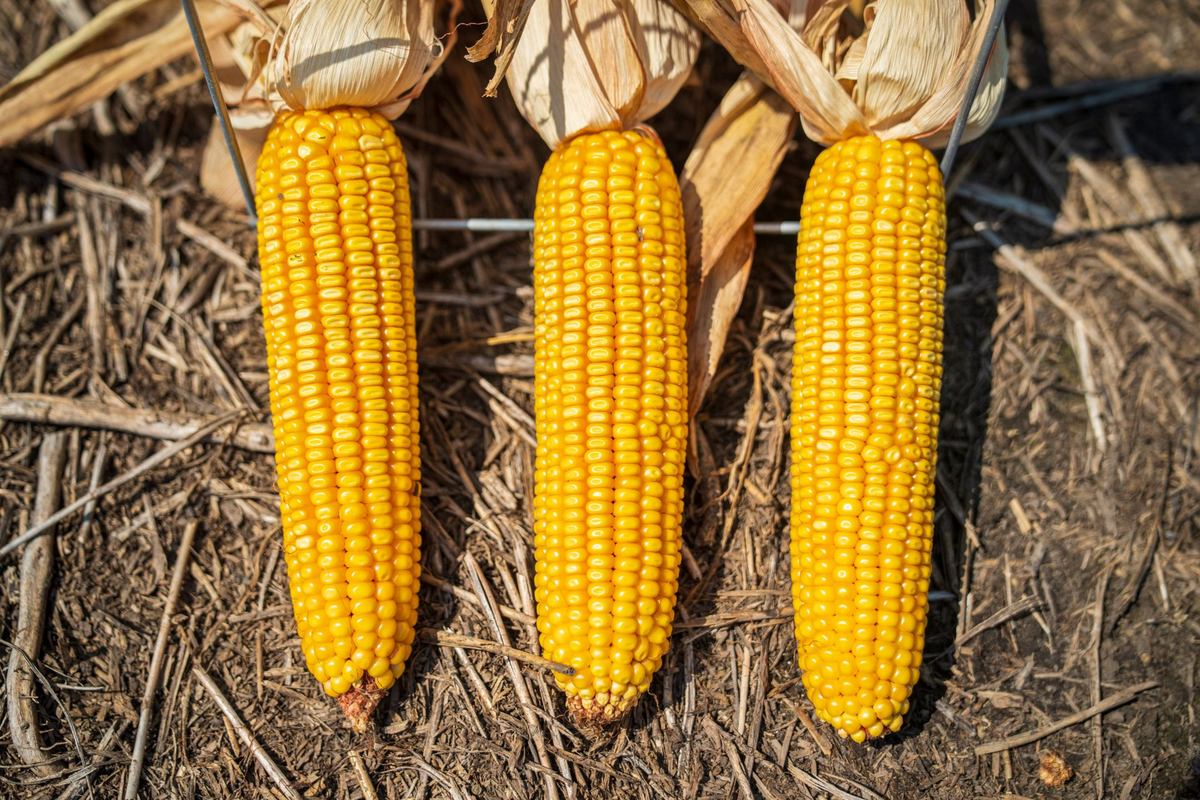
The comparison that decides the whole debate is with sucrose. Table sugar is made of the same two simple sugars, glucose and fructose, joined by a chemical bond into a single molecule in an exact one-to-one ratio — 50 percent fructose, 50 percent glucose. HFCS-55 is 55 percent fructose and the rest glucose, with no chemical bond joining them, plus water. Once you eat sucrose, stomach acid and gut enzymes rapidly break its bond, so by the time either sweetener reaches your bloodstream the difference is five percentage points of fructose and a glass of water. Honey, for comparison, is also roughly one-to-one fructose to glucose. That is the entire chemical case for "no worse than sugar" — and the entire case against it is that five points, delivered as free fructose rather than bound fructose, might still matter at the scale of a population drinking soft drinks every day.
Why manufacturers use it
Manufacturers in the United States reached for HFCS for practical reasons, and the standard explanation — repeated in dietitian and trade commentary, though not itself a fetched policy finding — is that it was cheaper than sucrose there: abundant domestic corn, sugar import restrictions and tariffs, and a sweetener that is sweeter than sucrose, so less of it is needed. It is a liquid, so it pumps easily through factory lines, and it is stable in acidic drinks, where sucrose inverts — breaks apart — in the acid of a cola. Those are manufacturing reasons, not health reasons, and they explain why HFCS became the default sweetener of the American soft-drink industry in the 1980s.
But the story since then runs the other way. US deliveries of HFCS peaked at 65.9 pounds per person in 1999 and have fallen steadily ever since, reaching 39.5 pounds per person in 2021, according to the US Department of Agriculture's Economic Research Service. Total corn sweeteners fell from 85.7 pounds per person in 1999 to 53.0 pounds in 2023, while refined sugar rose to 68.4 pounds per person in 2023 and overtook corn sweeteners back in 2011. HFCS is in long decline in the United States — any article that presents it as still rising is describing the 1990s, not today. The decline is part of why the 2025–2026 politics around it is striking: the ingredient is being debated at the top of American politics just as Americans are using less of it than at any time in a generation.
Where you will find it
- Soft drinks — the signature use: HFCS-55 is the sweetener in most American soft drinks, and the product where the dose is highest
- Processed foods, cereals and baked goods — HFCS-42 in breakfast cereals, breads, biscuits and snack bars
- Canned fruit, jams and jellies — where it sweetens and preserves, including the specialty HFCS-90 uses
- Sauces and condiments — ketchup, barbecue sauce, salad dressings and marinades
- Flavoured yoghurt, candy and ice cream — sweetened dairy and confectionery, alongside granola and energy drinks
- Imported products in Australia — the main place Australian shoppers meet HFCS, since local soft drinks are chiefly sweetened with cane-derived sucrose
In Australia the formulation difference is measurable: a 2017 study in the Medical Journal of Australia found Australian soft drinks had, on average, 0.96 grams per 100 millilitres more glucose and 0.97 grams per 100 millilitres less fructose than American drinks, with total sugars similar across regions. For Australian readers, then, this article is mostly about imported products and the American debate — not about the local soft-drink aisle.
Related: Added Sugars: The Sweetener Hiding in Plain Sight — and Why the Numbers Disagree — the numbers behind the sugar limits, and why Australia's label only shows total sugars.
The concern: fructose, the liver, and the obesity question
The argument against HFCS began with a paper that is still cited in almost every discussion of it. In 2004, Bray, Nielsen and Popkin showed in the American Journal of Clinical Nutrition that consumption of HFCS in the United States had risen by more than 1,000 percent between 1970 and 1990 — "far exceeding the changes in intake of any other food or food group" — and that HFCS by then represented more than 40 percent of the caloric sweeteners added to foods and beverages, and was the sole caloric sweetener in American soft drinks. Their most conservative estimate put average intake at 132 kilocalories a day for all Americans aged two and over, with the top 20 percent of sweetener consumers taking in 316 kilocalories a day from HFCS. Their conclusion was careful — "the increase in consumption of HFCS has a temporal relation to the epidemic of obesity, and the overconsumption of HFCS in calorically sweetened beverages may play a role in the epidemic of obesity" — but the design is the caveat: this is a population-level association, HFCS availability plotted against obesity prevalence over time. It cannot show that HFCS caused obesity in any individual, and the authors presented it as a hypothesis, not a proven causal link.
The mechanism behind the hypothesis is real, and it is about the liver. Fructose absorbed from the gut goes almost entirely to the liver through pathways distinct from glucose, and its first metabolic steps are insulin-independent: fructose is largely metabolised without requiring insulin secretion and without raising blood glucose. A small but significant share of it is converted in the liver into fat through de novo lipogenesis, and fructose also raises blood uric acid. That is the finding of a 2010 review by Tappy and Lê — and the same review carries the qualifier that decides how much weight it deserves: "There is however only limited evidence that fructose per se, when consumed in moderate amounts, has deleterious effects." The mechanism exists. Whether ordinary intakes trigger it is the open question.
The trial most often quoted for harm is a small one with a very large dose. In 2009, Stanhope and colleagues gave overweight and obese volunteers drinks sweetened with either pure fructose or pure glucose, providing 25 percent of their energy requirements, for ten weeks. Both groups gained about the same weight, but visceral fat — the fat around the organs — rose significantly only in the fructose group, fasting glucose and insulin rose and insulin sensitivity fell by about 17 percent on fructose but not on glucose, and LDL cholesterol rose about 14 percent in the fructose group. The trial had 32 participants. Its message is that fructose is not glucose at high doses. Its limit is that neither arm was HFCS or sucrose: it compares pure fructose with pure glucose, and 25 percent of energy from a single sugar is far above what HFCS-55 delivers over sucrose in a real diet.
The strongest human evidence about sugary drinks does not single out HFCS at all. A 2025 systematic review and dose-response meta-analysis by Della Corte and colleagues, covering 29 prospective cohorts and 541,288 people, found that each additional 12-ounce serving of a sugar-sweetened beverage a day was associated with a 25 percent higher risk of type 2 diabetes (relative risk 1.25), while added sugar overall showed no association (relative risk 0.99) and fructose on its own showed none either. The finding supports "sugary drinks raise diabetes risk" — but those drinks are HFCS-sweetened in the United States and sucrose-sweetened elsewhere, so it says nothing about whether HFCS drinks are worse than sucrose drinks. The beverage form matters more than the sweetener in it.
What regulators say
The United States permits HFCS without a numeric limit and has not changed that position. Under 21 CFR 184.1866, HFCS is generally recognised as safe, affirmed in a final rule of 23 August 1996, and may be used in food "with no limitation other than current good manufacturing practice". The FDA's questions-and-answers page states: "We are not aware of any evidence… that there is a difference in safety between foods containing HFCS 42 or HFCS 55 and foods containing similar amounts of other nutritive sweeteners with approximately equal glucose and fructose content, such as sucrose, honey, or other traditional sweeteners." The agency's advice is to limit all added sugars, including HFCS and sucrose alike.
One label claim deserves a careful telling. In July 2008, an FDA official wrote to the Corn Refiners Association that the agency "would not object to use of the term 'natural'" for HFCS made by a specific process, in which enzymes are fixed to a column with the synthetic fixing agent glutaraldehyde but the agent does not come into contact with the starch. The letter was a process-specific, non-binding communication, not a ruling — the FDA later told a court it was an informal communication that "does not provide a binding agency determination", and in 2015 it removed HFCS and "natural" references from a warning letter. The FDA has never established a formal definition of "natural". Do not read "FDA says HFCS is natural" as a settled ruling; it was a narrow letter, later walked back in enforcement practice.
Europe treats HFCS differently in kind, not just in degree: it is not an E-numbered food additive at all. It is a sugar ingredient, governed by Council Directive 2001/111/EC, which requires the label "glucose-fructose syrup" where glucose predominates and "fructose-glucose syrup" where fructose predominates, when fructose exceeds 5 percent on a dry-matter basis. Its production was long capped by the Common Agricultural Policy — the isoglucose quota was about 0.72 million tonnes against 13.5 million tonnes for sugar — until the quotas ended on 30 September 2017. No HFCS-specific safety opinion from the European Food Safety Authority was found; the relevant EFSA position is its 2022 opinion on dietary sugars, which concluded that no tolerable upper intake level could be set, that added and free sugars should be "as low as possible", and that the evidence for a causal link with obesity and dyslipidaemia was of moderate certainty, with low certainty for non-alcoholic fatty liver disease and type 2 diabetes and very low certainty for hypertension.
The World Health Organization's 2015 guideline recommends reducing free sugars to less than 10 percent of total energy — a strong recommendation — with a further reduction below 5 percent as a conditional recommendation. HFCS added by a manufacturer counts as free sugars. At 2,000 kilocalories a day, 10 percent is about 50 grams of free sugars and 5 percent is about 25 grams — the same arithmetic used in this site's added-sugars guide. Two absences matter for honesty: the FAO/WHO expert committee, JECFA, has no HFCS-specific evaluation or intake limit that could be found — do not cite one — and in Australia, HFCS is a sugar rather than a scheduled food additive under the Food Standards Code, so there is no FSANZ permission or parts-per-million limit to cite, no authoritative Australian intake figure, and the nutrition panel shows total sugars only. The claim sometimes seen online that HFCS is illegal in Australia was not verified and appears false: it is a permitted sugar ingredient, simply uncommon there.
The debate
The case that HFCS and fructose are a particular problem
The case starts with the liver. Fructose is metabolised there through pathways glucose never uses, without needing insulin, and part of it is turned into fat — and in the one trial that fed people pure fructose at a quarter of their energy for ten weeks, visceral fat rose, insulin sensitivity fell by about 17 percent, and LDL cholesterol rose about 14 percent, while the glucose group saw none of that. Add the history — American HFCS consumption rose more than tenfold between 1970 and 1990, in lockstep with the obesity epidemic, and by 2004 the heaviest sweetener consumers were taking in 316 kilocalories a day from HFCS alone — and the population evidence: each extra sugary drink a day is associated with a 25 percent higher risk of type 2 diabetes in a meta-analysis of more than half a million people. Add the politics of 2025: the US government's own child-health assessment says HFCS intake "may play a significant role in childhood obesity, type 2 diabetes, and nonalcoholic fatty liver disease". A sweetener that the liver handles differently, consumed in drinks that carry the strongest diabetes evidence in nutrition, does not need to be proven worse than sugar gram-for-gram to be worth cutting.
The case that HFCS is no worse than sucrose
The case starts with five percentage points. HFCS-55 is 55 percent fructose; sucrose is 50 percent. The calories are the same, the sweetness is similar, and the bond in sucrose is broken in the stomach before either sugar reaches the blood. Head-to-head, the two are indistinguishable: in a 2008 trial, 34 men and women ate three isocaloric meals with sucrose- or HFCS-sweetened drinks and their 24-hour glucose, insulin, leptin, ghrelin and triglyceride profiles were similar; in a 2016 trial, 267 people took 18 percent of their calories from HFCS or sucrose for ten weeks and the effects on metabolic-syndrome components were minimal, mixed and not clinically significant, with no difference between the sugar groups. Meta-analyses agree that dose, not the sugar's name, is what matters: pure fructose showed no effect on body weight below 100 grams a day, and in isocaloric trials fructose had no overall effect on body weight (mean difference −0.14 kilograms across 31 trials and 637 participants). The 2004 paper that started the scare is an ecological association — group data extrapolated to individuals — and the trial that showed fructose-specific harm used pure fructose at 25 percent of energy, a dose no soft drink delivers. The lead authors of the "no difference" reviews have documented funding from the Corn Refiners Association, which their critics cite and which should be disclosed — but the funding does not change the dose arithmetic, and a 2014 review concluded there is "no justification to replace fructose with glucose in the diet".
The position this site takes follows the size of the evidence, not either slogan. The strongest case for caution is about sugary drinks as a category, whatever sweetens them: the diabetes evidence is real, it is dose-related, and it is the largest human dataset in this article. The weakest case is for alarm about HFCS as a uniquely dangerous molecule: the trials that compare it directly with sucrose, at ordinary intakes, find nothing to distinguish them, and the trials that show fructose-specific harm use pure fructose at doses far above the five-point gap. Both of those stories are true at the same time, and the reason they coexist is that the debate is really about which comparison matters — pure fructose against pure glucose, or HFCS-55 against sucrose — and nobody has run a trial of HFCS against sucrose on hard outcomes such as diabetes itself. What should worry a careful reader most is not the five points but the dose: US deliveries of HFCS still run at about 40 pounds per person a year, and the evidence that sugary drinks raise diabetes risk does not care which sugar is in the can.
Who should avoid it
- People who drink several sugary drinks a day — the dose where the evidence is strongest is the beverage dose: each extra daily serving is associated with a 25 percent higher risk of type 2 diabetes, whichever sugar is in it
- People with type 2 diabetes or prediabetes — the sugary-drink link is the best-evidenced harm in this article, and it applies to sucrose-sweetened drinks just as much as HFCS-sweetened ones
- People with non-alcoholic fatty liver disease — the fructose-to-fat pathway in the liver is the mechanism the evidence points to, though EFSA rates the certainty for fatty liver disease as low
- Parents choosing drinks for children — the 2025 US child-health assessment says HFCS intake "may play a significant role in childhood obesity, type 2 diabetes, and nonalcoholic fatty liver disease", and the WHO's 10 percent free-sugars limit applies to children too
- People cutting ultra-processed food as a principle — HFCS is the emblematic ingredient of the 2025–2026 debate, and avoiding it usually means avoiding the processed foods that carry it
- People watching total sugars rather than one sweetener — swapping HFCS for cane sugar barely changes the fructose load, so the useful change is less sugar altogether, not a different sugar
How to spot HFCS on a label
HFCS is easy to spot once you know its names, and it usually sits in the middle of the ingredients list, since lists are ordered by weight and it is used in moderate amounts. In the United States the name is "high fructose corn syrup". In Europe and on imported products it is "glucose-fructose syrup" where glucose predominates, or "fructose-glucose syrup" where fructose predominates — the label follows whichever sugar is in the greater proportion, when fructose exceeds 5 percent on a dry-matter basis. "Isoglucose" is the European agricultural term for the same product, not a label term.
- High fructose corn syrup — the US name; if it appears, the product contains HFCS, most often in soft drinks
- Glucose-fructose syrup / fructose-glucose syrup — the European and import name; the same product under the sugars directive
- Glucose syrup / corn syrup — related but different: plain corn syrup is essentially all glucose, with no fructose converted; it is not HFCS
- Check the products that carry it most — soft drinks first, then cereals, baked goods, sauces, canned fruit and confectionery, especially imports
- Check the same brand twice — a brand can sweeten one product with HFCS and another with cane sugar, and the American and Australian versions of the same drink are often sweetened differently
- What "no HFCS" usually means — cane or beet sugar instead, which is near-identical in fructose load and calories; the label change is about sourcing, not about the sugar dose
Alternatives: what replaces it
The like-for-like replacement for HFCS is cane or beet sugar — sucrose — the sweetener American soft drinks used before the 1980s and the one Australia, Europe and Mexico still use. Coca-Cola's 2025 cane-sugar version is the highest-profile example: it is an additional product, not a recipe change, and the company's chief executive described it as an "'and' strategy and not an 'or' strategy", with the classic formula unchanged. Nutritionally the swap changes almost nothing — 50 percent fructose against 55 percent, the same calories — so it is a change of sourcing and politics, not of sugar dose. The company's chief financial officer also noted a supply constraint: "There is only a certain amount of cane sugar available in the United States", so a full American switch is not feasible in the short term.
Glucose syrup, or plain corn syrup, is less sweet and is used where lower sweetness is wanted, since no fructose is converted. Honey is roughly half fructose and half glucose, like sucrose. Non-nutritive sweeteners such as stevia and monk fruit cut the calories entirely, and are covered in this site's added-sugars guide, which also covers the World Health Organization's 2023 conditional guideline on non-sugar sweeteners. What follows is general trade knowledge rather than a researched comparison: no peer-reviewed head-to-head comparison of these sweeteners was found in the research for this article. The simplest alternative of all needs no label reading: water and unsweetened drinks carry no sweetener at all, and they are the only swap that changes the dose rather than the name on the label.
Frequently asked questions
What is high fructose corn syrup?
High fructose corn syrup is a liquid sweetener made from corn starch. Enzymes convert some of the glucose in corn syrup into fructose, giving two common grades: HFCS-42, about 42 percent fructose, and HFCS-55, about 55 percent fructose. Table sugar is exactly 50 percent fructose and 50 percent glucose, bonded together. The name 'high fructose' is relative to corn syrup, which is almost entirely glucose — not relative to sugar.
Is high fructose corn syrup worse than sugar?
At equal amounts, the regulators and the head-to-head trials say no detectable difference. The US Food and Drug Administration says it is not aware of any evidence of a safety difference between HFCS-42 or HFCS-55 and sucrose, honey or other sweeteners with similar glucose and fructose content. A one-day trial of 34 people and a ten-week trial of 267 people both found no difference between HFCS and sucrose on blood sugar, insulin, lipids or appetite. The fructose gap between HFCS-55 and sucrose is five percentage points — small, and pure fructose behaves differently from glucose only at doses far above what that gap delivers.
Does high fructose corn syrup cause obesity or diabetes?
No trial proves that it causes either. The 2004 paper that started the argument showed that US HFCS consumption rose more than tenfold between 1970 and 1990 while obesity rose too — a population-level association, not proof of cause in individuals. A 2009 trial found that pure fructose, at 25 percent of energy for ten weeks, raised visceral fat and lowered insulin sensitivity compared with pure glucose — but that dose is far above ordinary intakes, and neither arm was HFCS or sucrose. The strongest human evidence is about sugary drinks as a category: a 2025 meta-analysis of 541,288 people found each extra 12-ounce sugary drink a day was associated with a 25 percent higher risk of type 2 diabetes, while added sugar overall showed no association — so the beverage form matters more than which sweetener is in it.
Is high fructose corn syrup banned anywhere?
No. No US state bans it — California's 2023 food-additives law covers four other additives and never included HFCS — and the European Union never regulated it as an additive at all, since it is a sugar ingredient there. The REAL Sugar Act, introduced in the US House in September 2026, would ban HFCS in food sold in the United States, but it is a bill, not a law: it has not passed a committee, the Senate, or been signed. In February 2026 the US health secretary said the FDA would review a citizen petition asking it to re-evaluate processed refined carbohydrates including HFCS — a review, not a ban or a rule change.
Is high fructose corn syrup used in Australia?
Rarely in locally made products. Australian soft drinks are chiefly sweetened with cane-derived sucrose, and HFCS appears mainly in imported products. It is a permitted sugar ingredient under the Australia New Zealand Food Standards Code — the claim sometimes seen online that it is illegal in Australia is not true — but no authoritative Australian intake figure for HFCS exists, and Australian labels show total sugars only, with no separate added-sugars line.
How do I avoid high fructose corn syrup?
Look for 'high fructose corn syrup', 'glucose-fructose syrup' or 'fructose-glucose syrup' on the ingredients list, most often on soft drinks and imported processed foods, cereals, baked goods, sauces and confectionery. In Australia, look for 'glucose-fructose syrup' or 'glucose syrup' on imports; local products overwhelmingly list 'sugar'. Remember that swapping to a cane-sugar version barely changes the sugar dose — a 55 percent fructose syrup and a 50 percent fructose sugar are near-identical — so cutting sugary drinks matters far more than swapping sweeteners.
Checked against the FDA's HFCS questions and answers, 21 CFR 184.1866, the WHO 2015 sugars guideline, EFSA's 2022 sugars opinion and USDA ERS delivery data · Last updated 2026-11-08 · How we assess ingredients
Sources (30)
- US Food and Drug Administration — "High Fructose Corn Syrup Questions and Answers": HFCS is derived from corn starch, with enzymes converting some glucose to fructose; HFCS-42 is mainly used in processed foods, cereals and baked goods and HFCS-55 primarily in soft drinks; the FDA is "not aware of any evidence… that there is a difference in safety between foods containing HFCS 42 or HFCS 55 and foods containing similar amounts of other nutritive sweeteners with approximately equal glucose and fructose content, such as sucrose, honey, or other traditional sweeteners"
- US Code of Federal Regulations, Title 21, §184.1866 — High fructose corn syrup (checked directly): a sweet, nutritive saccharide mixture containing either approximately 42 or 55 percent fructose, prepared by partial enzymatic conversion of glucose to fructose using an insoluble glucose isomerase preparation; the product containing more than 50 percent fructose (dry weight) is prepared through concentration; used in food "with no limitation other than current good manufacturing practice"; final rule 61 FR 43450, 23 August 1996
- World Health Organization (2015). Guideline: Sugars intake for adults and children (WHO/NMH/NHD/15.3): free sugars should be reduced to less than 10% of total energy intake (strong recommendation), with a further reduction below 5% as a conditional recommendation; free sugars include monosaccharides and disaccharides added by a manufacturer, plus sugars in honey, syrups and fruit juices — HFCS added by a manufacturer counts as free sugars
- European Food Safety Authority NDA Panel (2022). Tolerable upper intake level for dietary sugars. EFSA Journal 20(2):7074 — abstract and summaries: no tolerable upper intake level could be set; added and free sugars should be "as low as possible"; moderate certainty for a causal link with obesity and dyslipidaemia, low certainty for non-alcoholic fatty liver disease and type 2 diabetes, very low certainty for hypertension; the 337-page opinion itself was not read, so only its abstract-level conclusions are cited
- Bray GA, Nielsen SJ, Popkin BM (2004). Consumption of high-fructose corn syrup in beverages may play a role in the epidemic of obesity. American Journal of Clinical Nutrition 79(4):537–543: HFCS consumption rose by more than 1,000% between 1970 and 1990 and represented more than 40% of caloric sweeteners added to foods and beverages; average intake 132 kcal a day, 316 kcal a day for the top 20% of sweetener consumers; the paper presents a temporal association with the obesity epidemic as a hypothesis, not a proven causal link
- Stanhope KL et al. (2009). Consuming fructose-sweetened, not glucose-sweetened, beverages increases visceral adiposity and lipids and decreases insulin sensitivity in overweight/obese humans. Journal of Clinical Investigation 119(5):1322–1334: 32 overweight or obese subjects consumed glucose- or fructose-sweetened beverages providing 25% of energy for 10 weeks; visceral fat rose significantly only on fructose, insulin sensitivity fell by about 17% and LDL cholesterol rose about 14% on fructose; both groups gained similar weight; the comparator is pure fructose versus pure glucose, not HFCS versus sucrose
- White JS et al. (2008). Twenty-four-hour endocrine and metabolic profiles following consumption of high-fructose corn syrup-, sucrose-, fructose-, and glucose-sweetened beverages with meals. American Journal of Clinical Nutrition 88(6):1733S–1737S: in 34 subjects, 24-hour glucose, insulin, leptin, ghrelin and triglyceride profiles were similar between days that sucrose or HFCS was consumed; sucrose and HFCS "do not have substantially different short-term endocrine/metabolic effects"
- Tappy L, Lê KA (2010). Fructose and metabolic diseases: new findings, new questions. Nutrition 26:1044–1049: fructose is nearly completely metabolised in the liver through pathways distinct from glucose, insulin-independent, with de novo lipogenesis converting part of it to fat and raising uric acid; "There is however only limited evidence that fructose per se, when consumed in moderate amounts, has deleterious effects"
- Livesey G, Taylor R (2008). Fructose consumption and consequences for glycation, plasma triacylglycerol, and body weight: meta-analyses and meta-regression models of intervention studies. American Journal of Clinical Nutrition 88(5):1419–1437: no significant change in body weight at intakes below 100 g of fructose a day; fructose below 50 g a day had no significant postprandial effect on triacylglycerol; the trials studied crystalline or pure fructose, excluding HFCS
- Sievenpiper JL et al. (2012). Effect of fructose on body weight in controlled feeding trials: a systematic review and meta-analysis. Annals of Internal Medicine 156(4):291–304: 31 isocaloric trials (637 participants) — fructose had no overall effect on body weight (mean difference −0.14 kg); 10 hypercaloric trials — fructose added 0.53 kg, which the authors say may have been attributable to excess energy rather than fructose itself; trials evaluating HFCS were excluded from this meta-analysis
- Rippe JM, Angelopoulos TJ (2016). Sugars, obesity, and cardiovascular disease: results from recent randomized control trials. European Journal of Nutrition 55(Suppl 2):S45–S53: "Data from many randomized control trials (RCTs) do not support linkages between sugar consumption at normal levels within the human diet and various adverse metabolic and health-related effects"; the authors have documented funding from the Corn Refiners Association, which is disclosed in the article
- Angelopoulos TJ, Lowndes J, Sinnett S, Rippe JM (2016). Fructose containing sugars at normal levels of consumption do not effect adversely components of the metabolic syndrome and risk factors for cardiovascular disease. Nutrients 8(4):179: randomised, double-blind trial, 267 people, 18% of calories from HFCS or sucrose for 10 weeks as part of a usual weight-maintenance diet; effects on metabolic-syndrome components were "minimal, mixed and not clinically significant", with no difference between sugar groups; the paper's own funding statement was not checked, and the Rippe group's Corn Refiners Association funding history is disclosed in the article
- White JS, Foreyt JP, Melanson KJ, Angelopoulos TJ (2013). Lack of evidence for high fructose corn syrup as the cause of the obesity epidemic. International Journal of Obesity 37(6):771–773: Bray et al.'s temporal association is "an example of an ecologic fallacy in which group data are extrapolated to individuals"; "a number of research trials have demonstrated no short-term differences between HFCS and sucrose in any metabolic parameter or health related effect measured in human beings"; the paper discloses research grants and consulting fees from the Corn Refiners Association; its citation of American Medical Association and Academy of Nutrition and Dietetics conclusions is second-hand
- Della Corte KA et al. (2025). Dietary sugar intake and incident type 2 diabetes risk: a systematic review and dose-response meta-analysis of prospective cohort studies. Advances in Nutrition 16(5):100413: 29 cohorts; each additional 12-ounce serving a day of sugar-sweetened beverages was associated with a relative risk of 1.25 for type 2 diabetes (18 cohorts, 541,288 people, moderate certainty), while added sugar overall showed a relative risk of 0.99 (null) and fructose 0.98 (null); the finding concerns sugary drinks as a category, not a HFCS-versus-sucrose comparison
- US Department of Agriculture, Economic Research Service (2023). "How sweet it is: Deliveries of caloric sweeteners for food and beverage use are on the rise": total caloric sweetener deliveries peaked at 153.7 pounds per capita in 1999; HFCS deliveries "have been steadily decreasing since topping out at 65.9 pounds in 1999", reaching 39.5 pounds per capita in 2021, while refined sugar deliveries rose to 69.8 pounds in 2021
- US Department of Agriculture, Economic Research Service. "Corn sweeteners availability declined over the last two decades": availability of total corn sweeteners fell from 85.7 pounds per person in 1999 to 53.0 pounds in 2023, while refined sugar availability reached 68.4 pounds per person in 2023, surpassing corn sweeteners in 2011; deliveries and availability are different series and are not mixed in this article
- Varsamis P et al. (2017). The sugar content of soft drinks in Australia, Europe and the United States. Medical Journal of Australia 206(10):454–455: "Soft drinks in Australia are chiefly sweetened with sugar cane-derived sucrose… overseas, they are predominantly sweetened with high fructose corn syrup (United States) or sucrose-rich sugar beet (Europe)"; Australian drinks had mean total glucose 0.96 g/100 mL higher and total fructose 0.97 g/100 mL lower than US drinks, with total sugars similar
- Foodwatch (Catherine Saxelby; published 2015, updated 27 November 2025). "High fructose corn syrup (HFCS) – 10 things I've learned about it" (secondary/Australian dietitian commentary): HFCS-42 and HFCS-55 uses, the 55/42/3 dry-basis composition of HFCS-55, HFCS-90 for specialty uses, and "HFCS is not widely used in foods in Australia and New Zealand, which mainly use cane sugar, but you may see it occasionally in imported products"
- Environmental Working Group (EWG) — Food Scores, ingredient: High Fructose Corn Syrup (advocacy organisation, not a regulator): the HFCS ingredient page is a product search, not a headline rating — 36,105 product listings contain HFCS and 6,158 of them scored 10, the worst score, on the day fetched; EWG's product-page language treats HFCS as an added sugar of concern alongside honey, sugar and dextrose, not as a uniquely toxic additive; no standalone EWG ingredient score for HFCS was found
- The White House / Make America Healthy Again Commission (May 2025). Make Our Children Healthy Again: Assessment: "This substantial intake, particularly of high fructose corn syrup and other added sugars, may play a significant role in childhood obesity, type 2 diabetes, and nonalcoholic fatty liver disease (NAFLD)"; 63% of the US population aged 2 and older derives more than 10% of daily calories from added sugars; a policy assessment, not a regulatory finding, and criticised in legal commentary for selective citation
- Food Dive (19 February 2026). "FDA to review ultraprocessed ingredients, but regulation unlikely": HHS Secretary Kennedy said on 60 Minutes the administration will "act on" former FDA Commissioner David Kessler's August 2025 citizen petition calling for re-evaluation of processed refined carbohydrates including HFCS — a commitment to review a petition, with Kennedy adding "I'm not saying that we're going to regulate ultraprocessed food"; no FDA determination, GRAS revocation or rule has followed
- Rep. Nancy Mace (3 September 2026). "Rep. Nancy Mace Introduces Bill To Kick High-Fructose Corn Syrup Out Of The American Food Supply" (REAL Sugar Act): the bill would amend the Food, Drug, and Cosmetic Act to prohibit food containing HFCS from entering interstate commerce, with two years for manufacturers to reformulate and a report to Congress from HHS within three years; introduced in the House only — no committee passage, Senate companion or vote was found, and HFCS is not banned
- Coca-Cola cane-sugar version (July–October 2025) — reported via Food Digital and Agri-Pulse: Coca-Cola confirmed an additional US cane-sugar product, not a recipe change; CEO James Quincey: "This is really an 'and' strategy and not an 'or' strategy. We are going to continue to use a lot of the corn syrup that we do now"; single-serve 12-ounce glass bottles launched in select US markets in autumn 2025; CFO John Murphy: "There is only a certain amount of cane sugar available in the United States"; Coca-Cola's own statement calls HFCS "safe" with "about the same number of calories per serving as table sugar"
- FDA 2008 "natural" letter to the Corn Refiners Association — reported via Foley (2009) and FoodNavigator: in July 2008 the FDA said it "would not object to use of the term 'natural'" for HFCS made by the process described by Archer Daniels Midland; the FDA later told a court the letter "is an informal communication and does not provide a binding agency determination", and in July 2015 said it would revise a warning letter to remove HFCS/"natural" references; the letter itself was not available as a primary text for this article
- Council Directive 2001/111/EC of 20 December 2001 relating to certain sugars intended for human consumption: where the sugar products contain fructose in proportions greater than 5% on a dry matter basis, they are labelled "glucose-fructose syrup" or "fructose-glucose syrup" to reflect whether glucose or fructose is in greater proportion; HFCS is a sugar ingredient under this directive, not an E-numbered food additive
- End of EU sugar and isoglucose production quotas, 30 September 2017 — Starch Europe (industry association): EU sugar and isoglucose production quotas ended after nearly 50 years; the isoglucose quota was 0.72 million tonnes against 13.5 million tonnes for sugar, and isoglucose was restricted to about 4% of total EU sugars production; Starch Europe predicted production could triple, which was not verified in this article
- California AB 418 (California Food Safety Act; signed 7 October 2023, effective 1 January 2027): bans four additives in food sold in California — brominated vegetable oil, potassium bromate, propylparaben and Red Dye No. 3; HFCS was never in the bill, and no US state ban on HFCS was found
- Food Standards Australia New Zealand — Australia New Zealand Food Standards Code, Compilation November 2025: the Code's definition of "sugars" (Standard 1.1.2) includes starch hydrolysate and glucose syrups; HFCS is a sugar, not a scheduled food additive, so there is no FSANZ permission or limit for it to cite, and the Nutrition Information Panel shows total sugars only
- Joint FAO/WHO Expert Committee on Food Additives (JECFA) database (searched): no HFCS-specific ADI, specification or safety evaluation for HFCS or glucose-fructose syrup was located — recorded as an absence, not a positive finding; do not cite a JECFA position on HFCS
- Sievenpiper JL et al. (2014). Fructose vs. glucose and metabolism: do the metabolic differences matter? Current Opinion in Lipidology 25(1):8–19: in 20 controlled feeding trials (344 participants), fructose in isocaloric replacement for glucose may increase total cholesterol, uric acid and postprandial triglycerides, but "does not appear to be any worse than glucose in its effects on other aspects of the lipid profile, insulin, or markers of nonalcoholic fatty liver disease"; "In the absence of clear evidence of net harm, there is no justification to replace fructose with glucose in the diet"; the paper's own conflict disclosures were not checked