In this article
- What benzalkonium chloride is
- Why it is used everywhere
- Where you will find it
- The concern: one irritant, three delicate surfaces
- What regulators and reviewers say
- The debate
- Who should avoid it, or ask first
- How to spot benzalkonium chloride on a label
- Alternatives: the same job, without this preservative
- Frequently asked questions
Benzalkonium chloride is the preservative you are most likely to meet without ever noticing it: it keeps multi-dose eye drops sterile, nasal sprays uncontaminated, alcohol-free hand sanitisers antibacterial, and water-based cosmetics from growing microbes. It is also, unusually, an ingredient whose harm is not disputed in principle — only in degree. It kills microbes by breaking apart their membranes, and human cells have membranes too. On the eye it destabilises the tear film and damages the corneal surface, with effects that grow with dose and duration. On skin it is a strong irritant and a possible, if uncommon, allergen. In the nose it slows the cilia that clear mucus. Regulators have responded not with bans but with caps and deferrals: the EU allows it as a cosmetic preservative only up to 0.1%, and the US FDA, asked to judge it as a hand-sanitiser active, deferred its verdict and left it on the market pending more data. That split — permitted, capped, and still under review — is the honest summary of this ingredient. Whether it matters for you depends almost entirely on where it touches you, how often, and for how long.
What benzalkonium chloride is
Benzalkonium chloride — shortened to BAC or BAK, and sometimes sold under the older trade name ADBAC — is not a single molecule. It is a mixture of closely related chemicals: a positively charged nitrogen atom carrying a benzyl group, two methyl groups, and one alkyl chain that varies in length, usually 12, 14 or 16 carbons long. That structure makes it a cationic surfactant: the charged head is attracted to the negatively charged surfaces of bacterial cells, and the fatty tail wedges into their membranes, breaking them apart and leaking their contents. It is broad-spectrum at the concentrations used in products — bactericidal at around 1% in disinfectant testing and yeasticidal at around 0.2% — but it is not reliably effective against mycobacteria, and it is inactivated by soap, by hard water and by organic matter, which is why a disinfectant that works on a clean bench can fail on a dirty one. The mixture has been in use since the 1930s, which makes it one of the oldest synthetic antimicrobials still in everyday products, and one of the most widely distributed: the same chemistry preserves a bottle of eye drops, sanitises a hospital floor and conditions hair, because a molecule that disrupts membranes is useful in all three jobs.
The chain-length detail matters more than it looks. Shorter and longer chains differ in antimicrobial strength, in irritation and in how they behave in a formulation, and commercial benzalkonium chloride is a blend whose exact composition varies by supplier. That is one reason regulators write their limits the way they do — the EU's rinse-off hair-product rule, for example, caps the shorter-chain (C14 or shorter) homologues separately — and one reason two products both listing "benzalkonium chloride" need not behave identically. It is also why the ingredient's many names cause confusion on labels: the same family appears as benzalkonium chloride, benzalkonium bromide, benzalkonium saccharinate, alkyl dimethyl benzyl ammonium chloride, and, in drug products, simply as BAK. Benzethonium chloride is a cousin, not the same ingredient, and behentrimonium or cetrimonium chloride are different quaternary ammonium compounds with their own rules; a label that says "quat-free" is usually aiming at this whole family, while a label that names only benzalkonium chloride is naming one member of it.
Tip: Do not confuse benzalkonium chloride with benzoyl peroxide, the acne treatment, or with benzyl alcohol, a different preservative and fragrance ingredient. The shared "benz-" beginning is chemistry, not kinship: benzyl groups are common building blocks, and the three ingredients have entirely different safety profiles.
Why it is used everywhere
The honest case for benzalkonium chloride is a practical one, and it is strong. Any product that is opened repeatedly and used over weeks — a multi-dose eye drop, a nasal spray, a pump bottle of sanitiser — needs something that stops bacteria and fungi from growing in it, because a contaminated eye drop can cause a serious eye infection and a contaminated nasal spray can deliver bacteria straight to damaged mucosa. Benzalkonium chloride does that job at very low concentrations, it is cheap, it is stable, and it has decades of manufacturing history behind it. For eye drops in particular, it also does something its replacements struggle with: it keeps the bottle sterile across months of daily use without requiring single-dose packaging, which would cost more, create more plastic waste and be harder for people with limited dexterity to handle. That is why, despite decades of toxicity research, it remains the most commonly used ophthalmic preservative, and why regulators have been reluctant to remove it outright: the alternative to a preserved multi-dose bottle is not always a preservative-free bottle, and for some patients it is no bottle at all.
Its second job explains its presence in products that are not preserved in the usual sense. As a cationic surfactant it conditions hair, reduces static and helps other ingredients spread and stay mixed, so it appears in shampoos, cleansers and deodorants at concentrations where its antimicrobial effect is secondary. Its third job is as an active ingredient in its own right: in alcohol-free hand sanitisers and antibacterial soaps it is the chemical doing the killing, typically at 0.13% in products whose labels can be checked on the shelf. That triple role — preservative, conditioner, active — is why avoiding it takes more than scanning for one function. A product can be "preservative-free" in its marketing and still contain benzalkonium chloride as a conditioning agent, and a product can list it near the end of a cosmetic ingredient list at a fraction of a percent while listing it first, as the active, on a drug label at a higher concentration. The dose and the job, not just the name, decide what the exposure means.
Where you will find it
- Eye drops and contact-lens solutions — the commonest ophthalmic preservative, in prescription glaucoma, allergy and steroid drops as well as over-the-counter lubricants and red-eye drops; also in some contact-lens care solutions
- Nasal sprays — the preservative in many steroid sprays for allergic rhinitis and in decongestant sprays, where it sits alongside the active drug for the life of the bottle
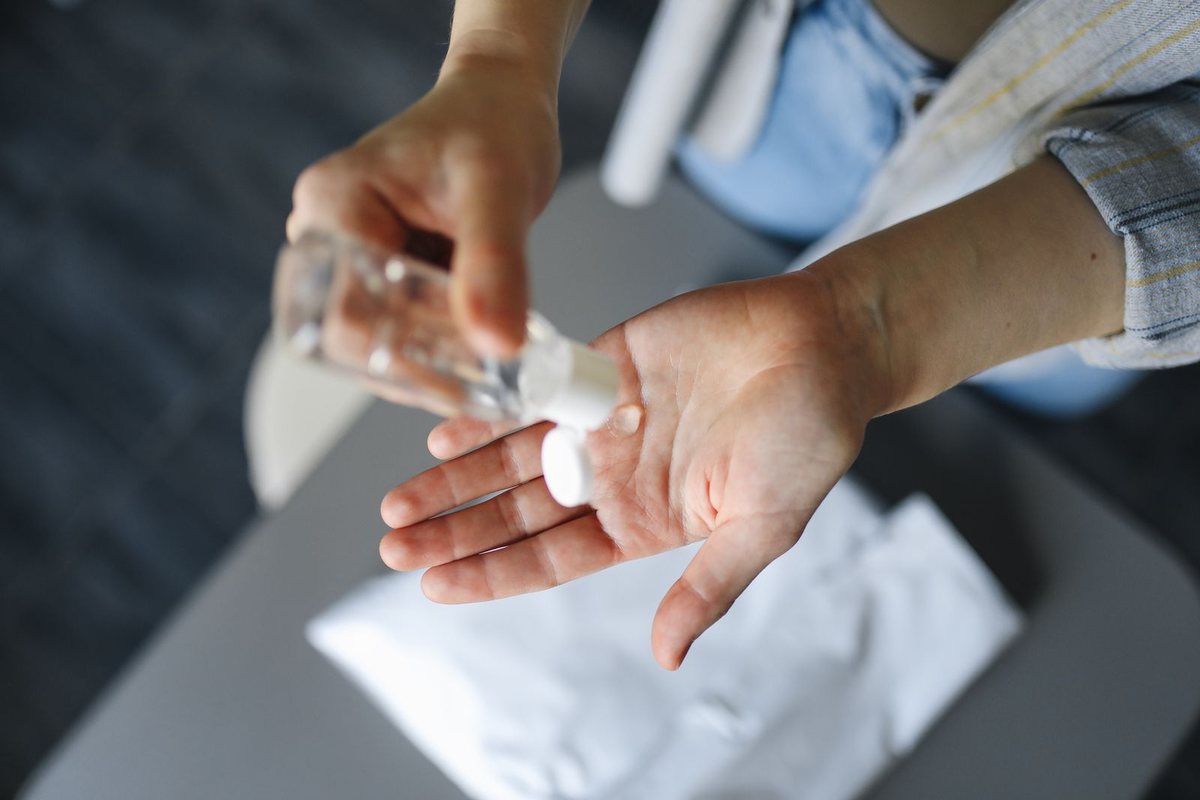
- Alcohol-free hand sanitisers and antibacterial soaps — the active ingredient, commonly at 0.13%, marketed for people who cannot use alcohol-based products or who want a leave-on, non-drying formula
- Disinfectant sprays, wipes and surface cleaners — at much higher concentrations than in cosmetics, as the main biocidal agent for hospitals, food premises and homes
- Cosmetics and toiletries — deodorants, skin and hair cleansing products, mouthwashes and toothpastes, where it acts as preservative, antimicrobial, antistatic or deodorant agent
- Throat and mouth products — gargles and lozenges, where it is the antiseptic, and in some swimming-pool and athlete's-foot preparations
Related: Methylisothiazolinone (MI): The Preservative That Became 'Allergen of the Year' — the other preservative whose allergy epidemic rewrote the rules, and a useful comparison: MI's problem was allergy at tiny doses, while benzalkonium chloride's problem is irritation at ordinary ones.
The concern: one irritant, three delicate surfaces
The concern with benzalkonium chloride is not mysterious, and it is not a single claim. It is the same mechanism, applied to three surfaces that were not designed to be disinfected. The eye, the inside of the nose and broken or eczematous skin are all thin, wet, living membranes — exactly the kind of membrane a cationic surfactant disrupts. The research on each surface tells a slightly different story, and keeping them separate is what makes the evidence readable.
On the eye, the evidence is the strongest and the most consequential. A 2010 review in Progress in Retinal and Eye Research by Baudouin and colleagues, synthesising laboratory, animal and clinical studies, concluded that benzalkonium chloride — described as weakly allergenic but highly toxic — causes tear-film instability, loss of the goblet cells that produce the mucus layer of tears, conjunctival squamous metaplasia and cell death, disruption of the corneal epithelium barrier and damage to deeper ocular tissues, through inflammatory reactions, oxidative stress and direct interaction with the lipid components of the tear film and cell membranes. The effects were dose- and time-dependent, which is the detail that decides who should worry: a person using one preserved drop briefly is not in the same position as a glaucoma patient using several preserved drops a day for years, and the review advised using benzalkonium-free solutions whenever possible, especially for people with the greatest exposure, with pre-existing ocular surface disease, or with symptoms linked to the eye surface. A 2025 laboratory study of human corneal epithelial cells sharpened the picture further, finding concentration-dependent, cumulative toxicity, with rapid membrane disruption and irreversible barrier failure at or above the concentration where the molecules cluster into micelles, and ongoing mitochondrial suppression below it. That study does not by itself prove harm in patients, but it explains why the clinical pattern — dryness, burning, redness and worsening dry-eye disease in long-term users — looks the way it does, and why switching to preservative-free drops measurably improves ocular surface symptoms in the trials that have tested it.
On skin, the picture is irritation first and allergy second — and the order matters. Benzalkonium chloride is an established irritant: it reddens and dries skin, and healthcare workers who handle disinfectants and antiseptics containing it, and people with eczema or a damaged skin barrier, are the groups most likely to develop irritant contact dermatitis from it. Whether it is also a true allergen — a substance the immune system learns to react to — has been argued for twenty years. A Mayo Clinic review of patch testing from 2000 to 2012 found benzalkonium chloride among the most frequent allergens in its standard series in the 2001–2005 and 2006–2010 periods, with the rate of allergic reactions rising across the study and at least a third of reactions judged clinically relevant. A Melbourne centre, patch-testing 7,390 patients between 2003 and 2019, found a lower and more qualified signal: 108 patients (1.5%) had a positive reaction, but only 26 (0.4%) had a reaction judged clinically relevant, with eye drops the commonest source (30.8%), followed by topical antiseptics (26.9%), cosmetics (15.4%), disinfectants (11.5%), hand sanitisers (11.5%) and hand washes (7.7%), and a fifth of the relevant cases in healthcare workers — plus a marked rise in positives since 2017 that the authors could not fully explain. Against both series stands a 2004 review arguing that benzalkonium chloride is at most an extremely rare allergen, except perhaps in the eye, and that many supposed allergies are irritant reactions misread on patch tests, which are notoriously hard to interpret for a strong irritant tested at 0.1%. A large German-language network analysis of 42,898 patients tested between 1996 and 2006 found morphologically positive reactions rare, at 0.6% to 1.5%. The practical upshot is not that one side is lying: it is that patch-test positivity for this ingredient is common enough to take seriously and ambiguous enough that only a dermatologist, judging the reaction's shape and its relevance to the patient's actual exposures, can call it allergy rather than irritation.
In the nose, the evidence is smaller and more mixed — and that mixture is itself informative. Laboratory work consistently shows that benzalkonium chloride slows or stops cilia, the tiny hairs that sweep mucus and trapped particles out of the nasal cavity, and a 2000 review in the Journal of Allergy and Clinical Immunology concluded from animal and human laboratory data that it promotes ciliostasis and reduced mucociliary transport, partially masked in real noses by dilution in mucus, and recommended considering benzalkonium-free steroid formulations for patients complaining of nasal burning, dryness or irritation. The human trials, though, are split. A small randomised trial published in 2003 compared a benzalkonium-free budesonide spray with a benzalkonium-containing mometasone spray in 20 people with perennial allergic rhinitis over two weeks: the change in nasal clearance favoured the benzalkonium-free spray significantly, while both sprays improved quality of life and were well tolerated, and the authors cautioned that two weeks might not reflect longer treatment. A separate study in healthy volunteers found that benzalkonium chloride at 0.1 mg/mL caused immediate nasal smarting or pain and increased glandular secretion, but that tolerance to the smarting developed with repeated use and that ten days of frequent exposure did not change the nose's exudative response to histamine. Read together, the nasal literature says something modest and honest: benzalkonium chloride probably impairs mucus clearance a little, the effect is partly hidden by the nose's own defences, and for most short-term users it will not be noticeable — but for a person using a steroid spray daily for years and complaining of burning or dryness, the preservative is a reasonable suspect to eliminate first.
Beyond the body, two further concerns are worth naming without overstating them. The first is environmental: the International Labour Organization's chemical safety card classifies benzalkonium chloride as very toxic to aquatic life, and a 2018 study of the alga Pseudokirchneriella subcapitata found growth-inhibiting effect concentrations at or below 0.1 mg/L, which under the UN classification makes it very toxic to the aquatic environment. That is a property of the concentrated substance, not of a rinsed-off cosmetic at 0.1%, but it is why disinfectant use and disposal — the high-concentration, high-volume end of this ingredient's life — is the part of the story with an environmental footprint. The second is antimicrobial resistance: laboratory and experimental-community studies show that exposure to benzalkonium chloride can select for bacteria carrying efflux pumps and resistance genes that also reduce susceptibility to antibiotics, and a bioreactor study found that benzalkonium chloride exposure coselected for antibiotic-resistant bacteria through mobile genetic elements. A 2022 review of 212 benzalkonium chloride studies, however, found that the clinical relevance of those findings was generally neither reported nor established, and that strains with raised tolerance often remained susceptible to the concentrations actually used in products. The mechanism is demonstrated; a demonstrated harm to patients from ordinary product use is not.
What regulators and reviewers say
The European Union's position is the clearest, and it is a cap, not a verdict on safety in the abstract. Under Regulation (EC) No 1223/2009, benzalkonium chloride, bromide and saccharinate appear in Annex V, the positive list of permitted preservatives, at a maximum concentration of 0.1% as benzalkonium chloride for preservative use, and in Annex III entry 65 for rinse-off hair products at up to 3% as benzalkonium chloride, with the shorter-chain homologues (C14 or shorter) capped at 0.1% and a label warning to avoid contact with the eyes. The industry body Cosmetics Europe, summarising the position, states that subject to those conditions the use of the substance in cosmetics is safe — a statement that is accurate about the regulatory conclusion and that should be read as an industry summary of a regulator's decision, not as the decision itself. The US Cosmetic Ingredient Review's much older assessment points the same way: its 1989 final report concluded that benzalkonium chloride is safe as an antimicrobial agent at concentrations up to 0.1%, that it is a skin and eye irritant above 0.1%, and that it is not a sensitiser in people with normal skin at 0.1%, though it may sensitise people with diseased skin. That report is now more than three decades old, and its 0.1% line is best read as the origin of the number the EU still uses, not as a fresh review of the eye and nasal evidence that has accumulated since.
The US Food and Drug Administration's position is different in kind, and it is the part of this story most often misreported. For hand sanitisers and antiseptic washes, the FDA has not declared benzalkonium chloride safe and effective — and it has not banned it either. In its September 2016 final rule on consumer antiseptic washes, the agency found 19 active ingredients not generally recognised as safe and effective, and deferred benzalkonium chloride, benzethonium chloride and chloroxylenol to allow more data. In its December 2017 final rule on healthcare antiseptics, it found two dozen ingredients not generally recognised as safe and effective, and deferred six — benzalkonium chloride among them. And in its April 2019 final rule on consumer antiseptic rubs, it found 28 actives not generally recognised as safe and effective, and again deferred benzalkonium chloride, this time alongside ethanol and isopropanol, with a December 2020 guidance confirming that products with those three actives could remain on the market while data were gathered. "Deferred" is a regulatory status, not a compliment: it means the evidence submitted was not enough for a final finding in either direction. A sanitiser listing 0.13% benzalkonium chloride is therefore on the market lawfully under a deferred decision, and any article that calls it "FDA-approved" is overstating the position, just as any article that calls it "FDA-banned" is inventing one.
The advocacy database EWG Skin Deep (labelled here as an advocacy source, not a regulator) takes the hazard side of the same evidence: in its product profiles, it rates benzalkonium chloride's allergies and immunotoxicity concern high, its use restrictions moderate and its non-reproductive organ-system toxicity moderate, with data availability limited, and in some profiles it additionally flags irritation of skin, eyes or lungs as high. EWG's profile is a hazard ranking — it scores what a substance can do in principle, drawing on the same irritation and sensitisation literature described above — while the EU and FDA positions are risk assessments, which ask what it does at a real dose in a real product. The difference between those two questions is the whole debate in miniature, and it is why a reader can find benzalkonium chloride described as both "high concern" and "safe at 0.1%" without either source being dishonest: they are answering different questions.
The debate
The case for caution
The case for caution starts from a simple observation: this is an ingredient designed to destroy membranes, placed daily onto the eye, into the nose and onto damaged skin, at concentrations chosen for microbes rather than for human tissue. The eye evidence is not a single alarming study but a consistent pattern across laboratories, animals and patients, with damage that grows with dose and time — exactly the pattern you would expect from cumulative exposure, and exactly the pattern that makes a glaucoma patient on four preserved drops a day the person most at risk. The skin evidence shows a rising patch-test signal in two independent centres, and the nasal evidence shows a real, if small, impairment of the nose's own clearance mechanism. Add the aquatic toxicity and the laboratory resistance signal, and the precautionary conclusion writes itself: where a preservative-free or alternatively preserved option exists — and for eye drops and nasal sprays it increasingly does — there is no good reason to keep exposing delicate surfaces to a known irritant, and the burden of proof should sit with keeping it, not with removing it.
The case for reassurance
The case for reassurance starts from the same facts and reads the doses. The eye damage appears at sustained, repeated exposure, not from a bottle used briefly; the skin allergy signal, even at its highest, is a fraction of a percent of patch-tested patients, most of whom were tested because they already had dermatitis, and a careful review argues that much of it is irritancy misread as allergy. The nasal impairment is small, partly masked by mucus, and did not stop either spray in the head-to-head trial from improving patients' quality of life. The resistance signal comes from laboratories and bioreactors, not from patients harmed by their hand sanitiser. And the alternative is not free of risk: unpreserved multi-dose products can become contaminated, single-dose packaging costs more and wastes more, and the preservatives that replace benzalkonium chloride have their own, less-studied profiles. On this view, the EU's 0.1% cap and the FDA's deferral are proportionate: keep the useful preservative, cap the cosmetic dose, demand better data for drug uses, and reserve preservative-free options for the people with the heaviest or most sensitive exposures.
The position this site takes follows the exposure rather than either slogan: benzalkonium chloride at cosmetic concentrations, used briefly on intact skin, is a minor concern for most people; benzalkonium chloride in eye drops used several times a day for years, or in a nasal spray used daily by someone already complaining of burning and dryness, is a genuine reason to ask about a preservative-free alternative. The ingredient is not secretly poisoning ordinary users, and it is not harmless because it is legal. It is a useful, irritating chemical whose risk concentrates exactly where its use concentrates — on the eye, in the nose, and on damaged skin — and the sensible response is to match the product to the exposure: preservative-free where the exposure is heavy or the surface is already damaged, and ordinary products elsewhere, without panic in either direction.
Who should avoid it, or ask first
- People using preserved eye drops several times a day, long-term — especially glaucoma patients and people with dry-eye disease or other ocular surface disease, the groups the 2010 review singled out for benzalkonium-free options; ask your prescriber before switching, since the drug itself matters more than its preservative
- People with eczema, dermatitis or a damaged skin barrier — the group most likely to develop irritant reactions and the group in whom the older safety assessment allowed that sensitisation may occur; patch testing can separate irritation from allergy if reactions keep recurring
- Healthcare workers with hand dermatitis — repeated exposure to disinfectants, antiseptics and sanitisers containing benzalkonium chloride is an occupational pattern, and a fifth of the clinically relevant cases in the Melbourne series were healthcare workers
- Daily nasal-spray users with burning, dryness or irritation — the 2000 review's own recommendation: consider a benzalkonium-free formulation first when those symptoms appear, rather than assuming the steroid is the cause
- People who have reacted to a product and cannot identify the culprit — benzalkonium chloride hides behind several names and several functions, so it is worth checking whether the eye drop, the spray, the sanitiser and the cleanser share it before concluding the reaction is to something else
- Contact-lens wearers using preserved care solutions — lenses can absorb and concentrate the preservative against the eye surface; preservative-free or hydrogen-peroxide-based care systems avoid that route
How to spot benzalkonium chloride on a label
- Benzalkonium Chloride — the standard INCI and drug-label name; on a drug label it appears as the active ingredient with its percentage (commonly 0.13% in alcohol-free sanitisers)
- BAK / BAC — the abbreviations used in ophthalmic literature and sometimes on patient information; BAK is the commoner abbreviation in eye-care writing
- Alkyl Dimethyl Benzyl Ammonium Chloride (ADBAC) — the chemical family name, used on disinfectant and industrial labels; "alkyl" covers the C8–C18 chain range
- Benzalkonium Bromide / Benzalkonium Saccharinate — sister salts regulated alongside the chloride in the EU entries; the same family, a different counter-ion
- Its usual companions — in eye drops, the active drug itself (timolol, latanoprost, antihistamines) plus disodium edetate as a stabiliser; in sanitisers, water, propylene glycol and fragrance; in cosmetics, phenoxyethanol or other preservatives alongside it, since preservative systems are usually blends
- What it is not — benzethonium chloride (a cousin quat, separately deferred by the FDA), cetrimonium or behentrimonium chloride (conditioning quats with their own limits), and benzyl alcohol (a different preservative); a product free of benzalkonium chloride may still contain another quat
Related: Phenoxyethanol: The Everyday Preservative Behind the Baby-Product Debate — the preservative most often used instead of benzalkonium chloride in cosmetics, with its own, very different argument about babies, France and the SCCS.
Alternatives: the same job, without this preservative
The honest alternative depends on the product, because benzalkonium chloride does three jobs and no single replacement does all three. For eye drops, the cleanest swap is preservative-free single-dose units, which remove the preservative question entirely and are the option the eye literature recommends most consistently for heavy or sensitive users; the trade-off is cost, plastic waste and handling, and for some drugs no preservative-free version exists, in which case drops preserved with newer alternatives such as Polyquad or Purite show lower cytotoxicity in laboratory studies, though their long-term effects in dry-eye patients are less fully investigated. For nasal sprays, preservative-free steroid formulations exist for several products, and the 2003 budesonide-versus-mometasone trial is the study to cite when asking a prescriber whether one is available for your drug. For hand hygiene, the simplest swap is also the oldest: soap and water, or an alcohol-based sanitiser, both of which avoid quaternary ammonium compounds entirely — noting that alcohol brings its own drying effect, which is why some people sought alcohol-free sanitisers in the first place. For cosmetics, the common replacements are phenoxyethanol (capped at 1% in the EU, with its own debate about babies), sodium benzoate and potassium sorbate, often in combination, and the label check is the same as for every preservative on this site: read the full ingredient list, because the replacement's name will be there in the same small print, and its profile deserves the same sceptical reading.
Frequently asked questions
Is benzalkonium chloride safe in eye drops?
At the low concentrations used in eye drops it is an effective preservative, but it is also the most-studied source of preservative toxicity on the eye surface. A 2010 review in Progress in Retinal and Eye Research concluded that benzalkonium chloride causes tear-film instability, loss of goblet cells, conjunctival inflammation and corneal barrier disruption, with effects that grow with dose and duration — and advised using benzalkonium-free drops whenever possible, especially for people with existing ocular surface disease or heavy, long-term use. A single bottle used briefly is a different exposure from several preserved drops a day for years, which is why glaucoma patients are the group most often switched to preservative-free options.
Is benzalkonium chloride an allergen, or just an irritant?
Both descriptions have evidence behind them, and the argument is about proportions. It is unquestionably an irritant: it damages cell membranes by design, which is how it kills microbes. Whether it is also a true contact allergen is contested. A Mayo Clinic series from 2000 to 2012 found it among the most frequent allergens in its standard patch-test series, with at least a third of reactions judged relevant; a Melbourne centre found 1.5% of 7,390 patch-tested patients positive but only 0.4% with a clinically relevant reaction; and a 2004 review argued it is at most an extremely rare allergen and that many supposed allergies are irritant reactions misread as allergic. If you react, a dermatologist's patch testing — not the label alone — is what separates irritation from allergy.
Why is benzalkonium chloride still in hand sanitisers if the FDA has not approved it?
Because the FDA deferred its decision rather than banning it. In its April 2019 final rule on consumer antiseptic rubs, the FDA found 28 actives not generally recognised as safe and effective, but deferred benzalkonium chloride — along with ethanol and isopropanol — to allow more safety and effectiveness data to be submitted. Alcohol-free sanitisers listing 0.13% benzalkonium chloride therefore remain on the market under that deferred status, not under a final FDA finding that the ingredient is safe and effective.
Is benzalkonium chloride banned in the European Union?
No. The EU lists benzalkonium chloride, bromide and saccharinate as approved preservatives in Annex V of the Cosmetics Regulation, with a maximum concentration of 0.1% as benzalkonium chloride for preservative use, and separately restricts them in rinse-off hair products under Annex III entry 65 at up to 3% with a 0.1% cap on the shorter-chain (C14 or shorter) homologues and an 'avoid contact with eyes' warning. The EU position is a capped permission, not a ban — and it is stricter than the concentrations used in some drug products, such as 0.13% in hand sanitisers, which are regulated as drugs rather than cosmetics.
Does benzalkonium chloride cause antibiotic resistance?
In laboratories and experimental microbial communities, yes, it can select for bacteria with reduced susceptibility to antibiotics, mainly through efflux pumps that expel both the disinfectant and antibiotics, and through resistance genes carried on mobile genetic elements. But a 2022 review of 212 benzalkonium chloride studies concluded that the clinical relevance of those findings was generally neither reported nor established, and that strains with raised benzalkonium chloride tolerance often remained susceptible to the concentrations actually used in products. The resistance concern is real as a mechanism and unproven as a demonstrated harm from normal product use.
What can I use instead of products preserved with benzalkonium chloride?
It depends on the product. For eye drops, ask your prescriber or pharmacist about preservative-free single-dose units or drops preserved with newer alternatives such as Polyquad or Purite, which show lower cytotoxicity in laboratory studies. For nasal sprays, preservative-free formulations exist for several steroid sprays — the 2003 trial that compared a benzalkonium-free budesonide spray with a benzalkonium-containing mometasone spray is the study most often cited for asking. For hand hygiene, alcohol-based sanitisers and plain soap and water avoid the ingredient entirely; for cosmetics, look for products preserved with phenoxyethanol, sodium benzoate or potassium sorbate instead, and check the full ingredient list, since benzalkonium chloride also appears as a conditioning and antistatic agent, not only as a preservative.
Checked against Regulation (EC) No 1223/2009 Annexes III and V, the FDA consumer antiseptic rub final rule (2019), Baudouin et al. 2010, Wentworth et al. 2016, and the EWG Skin Deep database (an advocacy source) · Last updated 2026-11-03 · How we assess ingredients
Sources (14)
- Cosmetics Europe (COSMILE) — Benzalkonium Chloride ingredient page: functions (antimicrobial, antistatic, deodorant, preservative, surfactant-dispersing); occurrence in cosmetics (deodorants, skin and hair cleansing agents, mouth waters, toothpaste) and other products (eye drops, contact lens liquids, medical disinfectants, gargling solutions, throat lozenges); states the substance is expressly approved and/or restricted under Annex III of Regulation (EC) No 1223/2009 after SCCS assessment and that, subject to the conditions imposed, its use in cosmetics is safe; notes Annex V defines permitted preservatives and their maximum concentrations
- Baudouin C, Labbé A, Liang H, Pauly A, Brignole-Baudouin F — Preservatives in eyedrops: the good, the bad and the ugly. Progress in Retinal and Eye Research, 2010;29(4):312–334: benzalkonium chloride, the most frequently used preservative, has consistently demonstrated toxic effects in laboratory, experimental and clinical studies — tear film instability, loss of goblet cells, conjunctival squamous metaplasia and apoptosis, disruption of the corneal epithelium barrier and damage to deeper ocular tissues; effects are dose- and time-dependent; authors advise using benzalkonium-free solutions whenever possible, especially with the greatest exposure, pre-existing ocular surface disease, or ocular-surface side effects
- Effects of Benzalkonium Chloride, a Preservative in Topical Drugs, on the Barrier Function of Human Corneal Epithelial Cells. Translational Vision Science & Technology, 2025;14(11):16: benzalkonium chloride induces concentration-dependent, cumulative toxicity in human corneal epithelial cells, causing rapid membrane disruption and irreversible barrier failure at or above its critical micelle concentration, with ongoing sub-CMC toxicity through mitochondrial suppression at lower doses
- Wentworth AB, Yiannias JA, Davis MDP, Killian JM — Benzalkonium Chloride: A Known Irritant and Novel Allergen. Dermatitis, 2016;27(1):14–20 (Mayo Clinic): patch testing to benzalkonium chloride 0.1% aqueous from 2000 to 2012; from 2001 through 2005 and 2006 through 2010 it was among the top 10 most frequent allergens in the standard series; the rate of allergic patch test results increased across periods; more than half of reactions in each period were graded as macular erythema, with at least one third of all reactions deemed relevant; irritancy rates were consistently low
- Contact allergy and allergic contact dermatitis from benzalkonium chloride in a tertiary dermatology center in Melbourne, Australia. Contact Dermatitis (single-centre retrospective study, 1 January 2003 – 31 December 2019): 7,390 patients patch tested with benzalkonium chloride; 108 (1.5%) positive, 21 reactions clinically relevant (0.3%) plus 5 doubtful reactions deemed relevant, for 26 relevant reactions (0.4%); common sources ophthalmic drops (30.8%), topical antiseptic preparations (26.9%), cosmetics (15.4%), disinfectant solutions (11.5%), hand sanitizers (11.5%), hand washes (7.7%); one fifth of patients with relevant reactions were health care workers; a dramatic increase in positive reactions since 2017
- Basketter DA, Marriott M, Gilmour NJ, White IR — Strong irritants masquerading as skin allergens: the case of benzalkonium chloride. Contact Dermatitis, 2004;50(4):213–217: review concluding benzalkonium chloride is a significant skin irritant but, on predictive test results and clinical data, at most an extremely rare allergen except perhaps in the eye, with many supposed cases of allergic contact dermatitis likely arising from misinterpretation of patch test data; it should not normally be regarded as a significant skin sensitizer
- A comparison of nasal clearance after treatment of perennial allergic rhinitis with budesonide and mometasone. Otolaryngology – Head and Neck Surgery, 2003;128(2):220–227: parallel randomised study, 10 subjects per arm, comparing budesonide spray without benzalkonium chloride (Rhinocort AQUA) with mometasone spray with benzalkonium chloride (Nasonex) over 2 weeks; the change in nasal clearance favoured budesonide significantly; both treatments improved quality of life and were well tolerated; authors note effects after 2 weeks might not reflect longer treatment
- Is the use of benzalkonium chloride as a preservative for nasal formulations a safety concern? A cautionary note based on compromised mucociliary transport. Journal of Allergy and Clinical Immunology, 2000;105:39–44: animal and human in vitro data suggest benzalkonium chloride promotes ciliostasis and reduction in mucociliary transport, possibly partially masked by absorption and dilution in respiratory mucus; use of benzalkonium-free glucocorticosteroid formulations should be considered, particularly in patients complaining of nasal burning, dryness or irritation
- US Food and Drug Administration — Safety and Effectiveness of Consumer Antiseptic Rubs; Topical Antimicrobial Drug Products for Over-the-Counter Human Use, Final Rule (published 12 April 2019, effective 13 April 2020): 28 actives found not generally recognized as safe and effective for consumer antiseptic rubs; rulemaking on benzalkonium chloride, ethanol and isopropanol deferred to allow additional safety and effectiveness data; the rule covers rub-on/leave-on products such as hand sanitizers, not consumer antiseptic washes, healthcare antiseptics or first-aid antiseptics
- Cosmetic Ingredient Review Expert Panel — Safety Assessment of Alkonium Clays as Used in Cosmetics (final report, 2016), summarising the Panel's earlier benzalkonium chloride conclusion: benzalkonium chloride is safe up to 0.1% (the upper limit of human irritation and sensitization assays); the 1989 final report on benzalkonium chloride concluded it is safe as an antimicrobial agent at concentrations up to 0.1%, is a skin and ocular irritant above 0.1%, and is not a sensitizer to normal humans at 0.1% but may be to individuals with diseased skin
- International Labour Organization / World Health Organization — International Chemical Safety Card 1584, Benzalkonium Chloride (July 2006): quaternary ammonium compounds, benzyl-C8-18-alkyldimethyl chlorides, CAS 63449-41-2; corrosive to the eyes, skin and respiratory tract; strong solutions (above 10%) are corrosive; very toxic to aquatic organisms, and it is strongly advised not to let the chemical enter the environment; UN GHS classification includes very toxic to aquatic life
- Ecotoxicity of disinfectant benzalkonium chloride and its mixture with antineoplastic drug 5-fluorouracil towards alga Pseudokirchneriella subcapitata. PeerJ, 2018;6:e4986: benzalkonium chloride caused concentration-dependent growth inhibition of the alga, with effective concentrations and no-effect concentration at or below 0.1 mg/L, which under the UN classification makes it very toxic to the aquatic environment
- Maillard J-Y — Impact of benzalkonium chloride, benzethonium chloride and chloroxylenol on bacterial antimicrobial resistance. Journal of Applied Microbiology (review of several thousand articles, 230 retained, 212 concerning benzalkonium chloride): 78% of studies used minimum inhibitory concentration to measure efficacy; 85% defined resistance as less than a 10-fold increase in MIC; benzalkonium chloride exposure raised MIC/MBC, often associated with efflux, and at times changed antibiotic susceptibility profiles; the clinical relevance of these findings was generally neither reported nor addressed, and several studies reported strains with elevated MIC remaining susceptible to the in-use benzalkonium chloride concentration
- EWG Skin Deep cosmetics database (advocacy source) — product profile for a hand sanitizer listing benzalkonium chloride 0.13% as the active ingredient: benzalkonium chloride concerns rated high for allergies/immunotoxicity, moderate for use restrictions, low for neurotoxicity and endocrine disruption, moderate for non-reproductive organ system toxicity, with data availability limited