In this article
- What high-intensity sweeteners are
- Why manufacturers use them
- Where you will find them
- The daily limits: what an ADI is, and why the numbers disagree
- Aspartame: the PKU rule and the 2023 cancer verdict
- Weight, diabetes and metabolic health: the trial–cohort split
- The gut microbiome: a real signal, an unresolved question
- Sucralose: heat, and a lab finding about an impurity
- Saccharin: the rat-cancer story that was resolved
- Acesulfame potassium: the least-studied of the big four
- Steviol glycosides (stevia): purified extracts, not the leaf
- Monk fruit: the 'natural' sweetener with the thinnest file
- Advantame and neotame: the ultra-potent pair
- Dental health: what is and is not established
- What regulators say
- The debate
- Who should avoid them
- How to spot them on a label
- Alternatives: what replaces them
- Frequently asked questions
High-intensity sweeteners are the most reviewed food additives in use: eight of them, each with its own daily limit, each re-examined by Europe's food safety agency in 2024–2026 — and in every case the limit was kept or raised, not lowered. Aspartame carries the loudest headline (the WHO's cancer agency called it "possibly carcinogenic" in 2023) and the clearest answer (the WHO's food-additives committee, Europe's agency and the FDA all kept its limit; a 70 kg adult would need more than 9–14 cans of diet drink a day to exceed it), plus the one hard rule in the group: anyone with phenylketonuria must avoid it entirely. The real debate is not about poisoning — it is about usefulness: trials show sweeteners help weight only a little (under a kilogram), only in the short term, and only when they replace sugar, while large observational studies link higher use to slightly more diabetes, heart disease and cancer — small associations from one French cohort, and judged unlikely to be causal by regulators. A 120-person trial found saccharin and sucralose worsened blood-sugar responses for two weeks, reversibly; two smaller trials found nothing. And the "natural" options are not the safe harbour they look like: stevia's limit is one toddlers can exceed, and monk fruit got its first international limit in June 2026, a temporary one that proposed uses would exceed four-fold for children. None of this makes sweeteners dangerous at normal intakes. It makes them what the WHO guideline says they are: a tool with no proven long-term benefit for weight, best used sparingly, not as a daily habit.
What high-intensity sweeteners are
The US Food and Drug Administration's definition is the plainest one: "High-intensity sweeteners are used as sugar substitutes because they are many times sweeter than sugar but contribute only a few to no calories." That is the whole idea — sweetness without the sugar, and without the energy that comes with it. Six are approved in the US as food additives: saccharin, aspartame, acesulfame potassium (acesulfame K, or Ace-K), sucralose, neotame and advantame. Two further types are used under GRAS notices — "generally recognized as safe" — rather than as food additives: certain steviol glycosides from the stevia leaf, and extracts from monk fruit (Siraitia grosvenorii, also called luo han guo).
They are not one ingredient. They are eight different chemicals, with different structures, different fates in the body, and different daily limits — and the article that treats them as a single thing called "artificial sweetener" is already wrong. Saccharin, discovered in 1879, is the oldest; advantame, approved by the FDA in 2014, is the newest. Some are excreted unchanged; aspartame is broken down completely into three ordinary dietary components before it ever reaches the blood. Some are heat-stable; aspartame is not.
| Sweetener | EU number | Sweetness vs sugar | What it is |
|---|---|---|---|
| Saccharin | E954 | 300–500× | Oldest (1879); not metabolised, excreted unchanged |
| Aspartame | E951 | ~200× | Dipeptide; breaks down to phenylalanine, aspartic acid and methanol; not heat-stable |
| Acesulfame K | E950 | ~200× | Absorbed and excreted unchanged; heat-stable; usually blended |
| Sucralose | E955 | ~600× | Chlorinated sucrose; poorly absorbed, mostly excreted unchanged |
| Neotame | E961 | 7,000–13,000× | Aspartame derivative; resists breakdown to phenylalanine — no PKU warning |
| Advantame | E969 | ~20,000× (FDA) / ~37,000× (EFSA) | Aspartame derivative; poorly absorbed, mostly excreted in faeces; no PKU warning |
| Steviol glycosides | E960a–d | 150–300× | Purified glycosides only — not whole leaf or crude extract |
| Monk fruit extract | — (no EU authorisation) | 100–250× (FDA); 250–400× (FSANZ) | Sweetness from mogrosides, chiefly mogroside V |
One caution belongs with that table: the advantame figures disagree between the two authorities that published them — the FDA lists about 20,000 times sweeter than sucrose, while EFSA's 2013 opinion describes approximately 37,000 times. Both are verified from their sources; the discrepancy is unresolved. The monk fruit range depends on the mogroside content — the FDA's and Australia and New Zealand's figures describe different grades, not a contradiction.
Tip: "high-intensity" is a technical term, not a marketing one — it means the sweetener is used in tiny amounts because it is so much sweeter than sugar. Sugar alcohols such as erythritol and xylitol, and rare sugars such as allulose, are not high-intensity sweeteners and are not covered here.
Why manufacturers use them
Manufacturers use high-intensity sweeteners for one reason: they deliver sweetness without sugar's calories, and without the bulk sugar would add. A diet soft drink sweetened with aspartame and acesulfame K tastes sweet at a fraction of the energy of the sugared version. That is the entire commercial logic — and it is also why the health question is not "are they sweet?" but "what do they do besides sweeten?"
Blending is the second reason. Each sweetener has a flavour flaw on its own — saccharin has a bitter, metallic aftertaste; acesulfame K is bitter at higher doses; aspartame fades on heating. The classic diet-drink pair, aspartame plus acesulfame K, exists because the two mask each other's aftertaste; they are even sold as a single salt, aspartame-acesulfame salt (E962). A product that lists two or three sweeteners is not being extra-sweetened; it is being made to taste acceptable.
The third reason is stability. Sucralose and acesulfame K survive heat, so they go into products aspartame cannot — though, as the sucralose section explains, surviving heat and being safe after prolonged heating are two different claims. Neotame and advantame are used in such tiny amounts — micrograms rather than milligrams — that their daily limits look very different from aspartame's in milligrams per kilo, and direct comparisons of those limits are meaningless without accounting for potency.
Where you will find them
The eight sweeteners turn up in overlapping but different places:
- Diet and zero soft drinks — the biggest single source, usually aspartame, acesulfame K or sucralose, often blended. The WHO's worked example puts 200–300 mg of aspartame in a can of diet soft drink.
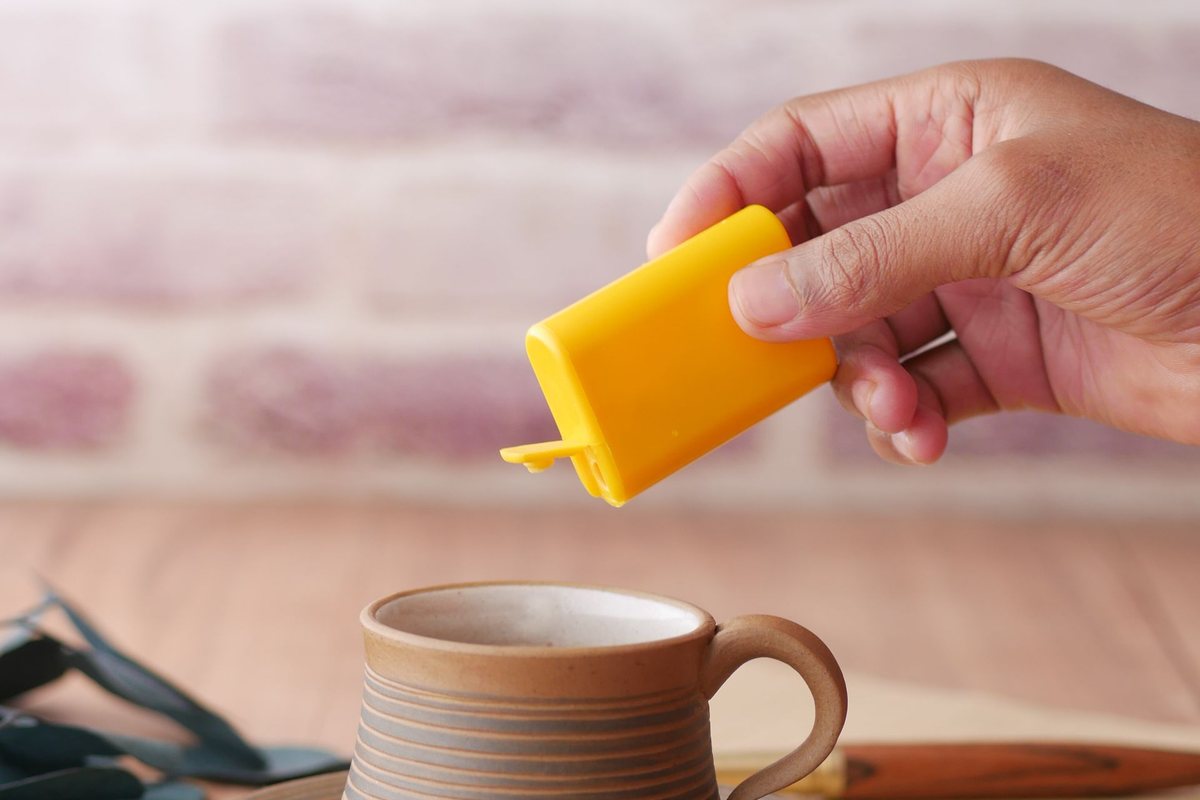
- Tabletop sweeteners — all eight, in the coloured packets that are standard US trade practice: blue for aspartame, pink for saccharin, yellow for sucralose. The FDA's packet illustrations say a 60 kg person would need 75 aspartame packets, 45 saccharin, 23 acesulfame K, 23 sucralose or 27 rebaudioside A (stevia) packets a day to reach the FDA daily limit.
- Sugar-free gum, mints and confectionery — aspartame, acesulfame K, sucralose and steviol glycosides, often alongside sugar alcohols.
- Yogurts, flavoured milks and dairy desserts — sucralose and stevia are common here, and aspartame-acesulfame salt in some markets.
- Some medicines — aspartame in chewable tablets and cough drops, where the phenylalanine warning still applies.
The same processed foods often carry the other ingredients in this guide's food pool — added sugars, high fructose corn syrup and maltodextrin — but each ingredient is a separate question.
Tip: the dose matters more than the presence. A can of diet drink contains 200–300 mg of aspartame; the daily limit for a 70 kg adult is 2,800 mg a day on the European and international limit of 40 mg per kilo, or 3,500 mg on the FDA's 50 mg per kilo — more than 9–14 cans a day, and no other aspartame, to exceed the international limit. The question is never "is it in there?" — it is "how much, and how often?"
The daily limits: what an ADI is, and why the numbers disagree
Every sweetener in this article has an acceptable daily intake — an ADI — and understanding what that number is, and is not, is the key to the whole topic. The FDA's definition: the ADI is "the amount of a substance considered safe to consume each day over the course of a person's lifetime", set with a large (usually 100-fold) safety margin below the no-effect level in animals. An ADI is a lifetime benchmark, not a target and not a cliff edge: exceeding it on one day is not the same as exceeding it every day for a lifetime.
The second thing to know is that there is no single global ADI. The FDA, EFSA (Europe) and JECFA (the WHO/FAO joint committee) each set their own, from different pivotal studies, different safety factors and different dates. The table gives all three, with the date each European figure was set or confirmed, because the European figures have moved recently and older sources quote superseded values.
| Sweetener | FDA (US) | EFSA (EU) | JECFA (international) |
|---|---|---|---|
| Aspartame | 50 | 40 (2013; re-affirmed Sep 2026) | 0–40 (reaffirmed 2023) |
| Sucralose | 5 | 15 (confirmed Feb 2026) | 0–15 |
| Saccharin | 15 | 9 as free imide (Nov 2024; raised from 5) | 0–5 |
| Acesulfame K | 15 | 15 (Apr 2025; raised from 9) | 0–15 |
| Neotame | 0.3 | 2 (2007) | 0–2 |
| Advantame | 32.8 | 5 (2013) | 0–5 |
| Steviol glycosides | — (GRAS; JECFA ADI applies) | 4 as steviol equivalents (2010; kept 2024) | 0–4 as steviol (confirmed 2023 and 2026) |
| Monk fruit extract | — (GRAS; no FDA ADI) | — (not authorised; EFSA 2019 could not establish an ADI) | 0–10 temporary, as mogroside V (June 2026) |
All values are mg per kilo of body weight per day. Two things stand out. First, the gaps are real — sucralose 5 in the US against 15 in Europe, saccharin 15 against 9, advantame 32.8 against 5, neotame 0.3 against 2. These gaps come from different pivotal studies and different dates — not from one side being "wrong". Second, the recent European pattern cuts against the "regulators are tightening" narrative: the recent re-evaluations raised the limit (saccharin 5 to 9, acesulfame K 9 to 15) or confirmed it (sucralose 15, aspartame 40, stevia 4). The neotame figure in the table is 2, not 10: a 2026 review table lists 10, but the established EFSA and international value is 2, and the review table appears to be in error, so this article does not quote 10 as current.
Exposure is where the numbers get concrete. JECFA's 2023 aspartame assessment estimated mean exposures up to 10 mg per kilo a day for children and 5 mg per kilo for adults, and high estimates up to 20 mg per kilo (children) and 12 mg per kilo (adults). EFSA's 2025 acesulfame K, 2024 saccharin and 2026 sucralose opinions all found exposure below the ADI at currently authorised uses. The pattern is consistent: typical intakes sit below the limits, and the people closest to them are children and toddlers — a point the stevia and monk fruit sections return to.
Related: Sodium benzoate — another additive where the FDA and EFSA limits disagree, fourfold in that case, and where the same "which number do I trust?" question arises.
Aspartame: the PKU rule and the 2023 cancer verdict
Aspartame is the most studied food additive in the human food supply, and the one with the loudest headline.
What it is, and what it becomes. Aspartame is a dipeptide, completely hydrolysed in the gut to phenylalanine (50%), aspartic acid (40%) and methanol (10%). Aspartame itself does not circulate in the blood; its safety is the safety of its three components at the doses produced. Claims about "aspartame accumulating" or "aspartame crossing the blood–brain barrier" confuse the parent compound with its metabolites. The methanol is the same methanol found in fruit juices and fermented foods — but no primary methanol-dose comparison was verified, so this article quotes none. Aspartame is not heat-stable, which is why it is used in cold drinks and tabletop sweeteners, not baking.
The PKU rule — the one hard contraindication. People with phenylketonuria cannot metabolise phenylalanine, because of mutations in the phenylalanine hydroxylase gene, so aspartame "is avoided in phenylketonuria (PKU)" and "can be safely consumed by healthy individuals, but it has long been recognised as a hazard to individuals with phenylketonuria." In the US, the label of any food containing aspartame must bear, in bold type on a clear contrasting background, the statement "PHENYLKETONURICS: CONTAINS PHENYLALANINE" (21 CFR 172.804(d)(2)). In the EU the label must say "contains aspartame (a source of phenylalanine)" or "contains a source of phenylalanine". The practical problem for PKU patients is that the amount of phenylalanine from aspartame is not declared on labels — only its presence — so they cannot calculate their intake from a product. EFSA's 2013 re-evaluation found that in normal people and in PKU carriers, aspartame intakes up to the ADI of 40 mg per kilo a day would not push peak plasma phenylalanine above the clinical guideline for preventing adverse effects in fetuses — but the ADI is not applicable to PKU patients themselves. Neotame and advantame do not need the PKU warning: neotame resists breakdown to the amino acids, and advantame is used in such small amounts that no warning is required.
The 2023 cancer verdict: hazard is not risk. On 14 July 2023 the WHO announced two findings at once, and the confusion since has come from collapsing them into one. The WHO's cancer agency, IARC, classified aspartame as possibly carcinogenic to humans (IARC Group 2B), citing "limited evidence" for carcinogenicity in humans — specifically for hepatocellular carcinoma (liver cancer), from only three studies. Group 2B rates the strength of the evidence, not the size of the risk at real doses. At the same time, the WHO/FAO food-additives committee, JECFA, concluded that the data "indicated no sufficient reason to change the previously established acceptable daily intake (ADI) of 0–40 mg/kg body weight for aspartame" and that "the evidence of an association between aspartame consumption and cancer in humans is not convincing." The FDA disagreed with IARC, saying its scientists had reviewed the studies IARC relied on and found "significant shortcomings", and that "Aspartame being labeled by IARC as 'possibly carcinogenic to humans' does not mean that aspartame is actually linked to cancer." EFSA's 2013 re-evaluation had already concluded aspartame was not of safety concern at current exposure estimates or at the ADI of 40 mg per kilo, based on a no-effect level of 4,000 mg per kilo a day in chronic animal studies. And in 2026 EFSA re-assessed aspartame as part of its re-evaluation of aspartame-acesulfame salt (E 962, adopted July 2026, announced September 2026) and reaffirmed the ADI of 40 mg per kilo: "there are no scientific studies that reliably confirm the suspicions" of carcinogenicity.
Fair framing: IARC answered "could it cause cancer?" (hazard, limited evidence, liver cancer only); JECFA, EFSA and the FDA answered "is it a risk at the amounts people eat?" (no, within the ADI). The honest line is "possibly carcinogenic on limited evidence; no agency has found a risk at normal intakes."
Weight, diabetes and metabolic health: the trial–cohort split
This is the central scientific tension in the whole topic: the two study designs genuinely disagree.
The WHO's 2023 guideline. In May 2023 the WHO issued a conditional recommendation that non-sugar sweeteners "not be used as a means of achieving weight control or reducing the risk of noncommunicable diseases." It covers acesulfame K, aspartame, advantame, cyclamates, neotame, saccharin, sucralose, stevia and stevia derivatives; it applies to everyone except people with pre-existing diabetes; and it does not apply to personal-care products, medicines, or low-calorie sugars and sugar alcohols. Monk fruit was not in the guideline's scope. The recommendation is conditional because, in the WHO's own words, "the link observed in the evidence between NSS and disease outcomes might be confounded by baseline characteristics of study participants and complicated patterns of NSS use". And the guideline is not a safety verdict: the sweeteners "remain safe" within their ADIs. It is about usefulness for weight control, assessed separately from toxicological safety.
What the trials say. The systematic review behind the guideline (Rios-Leyvraz & Montez 2022, 283 studies) found that in randomised controlled trials, low- and no-calorie sweeteners "may be effective at assisting with short-term weight loss in adults, particularly when compared with sugars", with "no evidence of harm on measures of cardiometabolic health including fasting glucose, insulin, blood lipids and blood pressure". The cleanest trial-versus-cohort comparison is Azad et al. 2017 (CMAJ): 7 randomised trials (1,003 participants, median follow-up 6 months) and 30 cohort studies (405,907 participants, median follow-up 10 years). The trials found "no significant effect on BMI (mean difference −0.37 kg/m²; 95% CI −1.10 to 0.36)". The newest trial meta-analysis (Li et al. 2026, 19 trials) found that replacing daily caloric sugars with non-nutritive sweeteners gave a weight change of −0.79 kg (95% CI −1.55 to −0.04) — significant in studies lasting under 18 weeks (−0.91 kg) but minimal in studies over 18 weeks (p = 0.51), and in people with diabetes (−1.56 kg) but not in non-diabetic participants. A separate meta-analysis of 29 trials (741 participants) found non-nutritive sweeteners did not raise blood glucose at all. The trial evidence, in short, says sweeteners help weight only as a sugar replacement, only in the short term, and only by under a kilogram on average.
What the cohorts say. The same reviews found the opposite direction in observational studies. Rios-Leyvraz & Montez: "higher low/no calorie sweetener intake may be associated with increased risk of obesity, type 2 diabetes, and cardiovascular diseases (very low to low certainty evidence)." Azad 2017: cohort consumption "was associated with a modest increase in BMI" and with higher incidence of obesity, hypertension, metabolic syndrome, type 2 diabetes and cardiovascular events — pooled figures of incident overweight and obesity odds ratio 1.84, metabolic syndrome relative risk 1.31, and type 2 diabetes relative risk 1.03 per daily serving. Imamura et al. 2015 (BMJ, 17 cohorts, 38,253 cases) found artificially sweetened beverages associated with 8% higher type 2 diabetes incidence per serving a day after adjustment for adiposity (95% CI 2% to 15%), but trim-and-fill attenuated the association by 96% (to a relative risk of 1.01).
The counter-argument to the WHO guideline. The guideline sided with the cohorts — a choice that has been formally criticised. A 2023 perspective in the European Journal of Clinical Nutrition argued the guideline "disregarded the trial evidence and solely relied on the prospective cohort studies, ignoring the established hierarchy of evidence as described by GRADE". The UK's Scientific Advisory Committee on Nutrition noted the same "discordant results" between trial and cohort evidence. And the key confounder, reverse causality, is stated by the cohort authors themselves: people who are already gaining weight or at risk of diabetes switch to diet drinks because of that risk, so the sweetener looks like the cause when it may be the marker.
The gut microbiome: a real signal, an unresolved question
The newest science in this topic is in the gut — and it is genuinely unresolved.
The mouse study that started it. Suez et al. 2014 (Nature) found that sweetener consumption "drives the development of glucose intolerance through induction of compositional and functional alterations to the intestinal microbiota", that the effects "are abrogated by antibiotic treatment, and are fully transferrable to germ-free mice upon faecal transplantation", and that the researchers "demonstrate similar NAS-induced dysbiosis and glucose intolerance in healthy human subjects." Saccharin had the most pronounced effect: mice received 0.1 mg per ml of pure saccharin in drinking water and developed significant glucose intolerance after 5 weeks. The human pilot was 7 healthy volunteers who did not normally consume sweeteners, given 120 mg of saccharin a day for 7 days; 4 of the 7 developed poorer glycaemic responses with altered microbiota. The limits: mostly mice; the human arm was 7 people for one week, unblinded, with no placebo group. It is a mechanism-demonstration paper, not a population-risk paper.
The human trial. Suez et al. 2022 (Cell) is the strongest human-trial evidence in the whole topic: a randomised controlled trial of 120 healthy adults (20 per group), given two weeks of saccharin, sucralose, aspartame or stevia sachets at doses below the ADI — aspartame at 8%, saccharin at 20%, sucralose at 34%, stevia at 75% — against glucose-vehicle or no-supplement controls, with continuous glucose monitoring throughout and a one-week follow-up. The findings: "As groups, each administered NNS distinctly altered stool and oral microbiome and plasma metabolome, whereas saccharin and sucralose significantly impaired glycemic responses" — the saccharin group against glucose-only (p = 0.042) and against no supplement (p = 0.018); the sucralose group against glucose (p = 0.004) and against no supplement (p = 0.001). Aspartame and stevia did not impair glycaemic responses. The effects were person-specific, varied widely between individuals, and returned to baseline during the follow-up week after supplementation stopped. Microbiomes from the top and bottom human responders, transplanted into germ-free mice, reproduced the donors' glycaemic responses. The authors' own caveat: "These results should not be interpreted as calling for consumption of sugar, which is strongly linked to cardiometabolic diseases and other adverse health effects."
The two null trials — the honest counterweight. Serrano et al. 2021 (Microbiome) ran a double-blind, placebo-controlled trial of 46 healthy adults randomised to placebo, pure saccharin at 400 mg a day (the maximum acceptable daily intake), lactisole, or saccharin plus lactisole, in capsules twice daily for two weeks, plus a parallel 10-week high-dose mouse study. "In humans and mice, none of the interventions affected glucose or hormonal responses to an oral glucose tolerance test or glucose absorption in mice. Similarly, pure saccharin supplementation did not alter microbial diversity or composition at any taxonomic level in humans and mice alike." Thomson et al. 2019 ran a randomised placebo-controlled trial of 34 healthy men given sucralose at 780 mg a day for 7 days in capsules, and found no effect on glucose tolerance or microbiome composition. The design difference that matters, flagged here as a hypothesis rather than a proven explanation: the trial that found effects delivered sweeteners in sachets, by mouth (sweet taste receptors in the mouth engaged, glucose bulking agent present), while the two null trials delivered them in capsules (bypassing oral taste receptors). The Serrano trial also used pure saccharin at the maximum ADI — a higher exposure than Suez 2022's 20% of the ADI — and still found nothing. The field has not resolved this contradiction. Fair summary: one good 120-person trial found saccharin and sucralose impair glucose tolerance for two weeks via the microbiome, reversibly and person-specifically; two smaller trials found nothing with capsule delivery. The microbiome question is genuinely unresolved.
Neotame and the gut lining — in-vitro only. Shil et al. 2024 found that in a Caco-2 intestinal-epithelium model and in E. coli and E. faecalis models, neotame caused epithelial cell death, barrier disruption with reduced claudin-3 expression through a T1R3-dependent pathway, increased biofilm formation, and increased bacterial adhesion and invasion of cells. The limits are absolute: entirely in-vitro (a cell line plus two bacterial species), with no human or animal data. Do not present it as evidence that neotame harms human guts — present it as a lab signal awaiting human testing. The same group's earlier work found similar in-vitro gut-barrier effects for saccharin, sucralose and aspartame.
Sucralose: heat, and a lab finding about an impurity
Sucralose is sucrose with three hydroxyl groups replaced by chlorine atoms, about 600 times sweeter than sugar, with essentially no calories. Unlike aspartame it is poorly absorbed — it "reaches the colon and is excreted unchanged in feces" — and it is not broken down into amino acids or methanol. The FDA approved it in April 1998 for 15 food categories and expanded it to a general-purpose sweetener in August 1999; the 1998 final rule derived the FDA ADI of 5 mg per kilo a day from a no-effect level of 500 mg per kilo a day in the combined chronic toxicity and carcinogenicity rat study, with a 100-fold safety factor. That 5 against Europe's and JECFA's 15 is the widest FDA–EU gap of any sweetener in this article.
The heat question — the new finding. The FDA describes sucralose as heat-stable: it stays sweet at baking temperatures. Germany's Federal Institute for Risk Assessment (BfR) says something different. In Communication 015/2026 (26 February 2026), BfR said: "When sucralose is heated, especially when foods containing sucralose such as baked goods are heated, chlorinated organic compounds with harmful and carcinogenic potential can be formed. If sucralose is heated to temperatures above 120 °C for a prolonged period, this leads to gradual and, as the temperature continues to rise, progressive decomposition and dechlorination." Temperatures of 120–150 °C "are possible in industrial food production and processing and are also reached in private households when cooking and baking", and BfR recommends not heating sucralose-containing foods to baking, deep-frying or roasting temperatures, or adding sucralose only after heating. A typical 350 °F (177 °C) oven is well above the 120 °C threshold. EFSA's February 2026 re-evaluation (EFSA Journal 2026;24:e9854) found "no safety concerns arose for genotoxicity of sucralose (E 955) and its impurities and degradation products", set a benchmark-dose reference point of 55 mg per kilo a day, and concluded "there is no need to revise the current ADI of 15 mg/kg bw per day" — but it could not conclude on the safety of the proposed extension of use of sucralose in fine bakery wares, and the uncertainty "also applies to home cooking: the formation of chlorinated compounds during the preparation of home-made products that require high temperature such as frying and baking with sucralose cannot be excluded." The regulator split is genuine: "stays sweet" and "does not form chlorinated compounds" are different claims, and this article says so.
Sucralose-6-acetate — a laboratory finding, not a human one. A 2023 laboratory study reported that sucralose-6-acetate, an intermediate and impurity in sucralose manufacture, was found in commercial sucralose samples at up to 0.67%, and was genotoxic in lab tests (MultiFlow assay and micronucleus test) in cultured human blood cells, plus impaired barrier integrity in a lab-grown intestinal model. The authors said the sucralose-6-acetate in a single daily sucralose-sweetened drink might exceed the genotoxicity threshold of toxicological concern (0.15 micrograms per person per day). The industry group the Calorie Control Council responded that the study "cannot be extrapolated to humans", and that it tested the impurity and not commercial sucralose. EFSA's 2026 re-evaluation found no genotoxicity concern for sucralose and its impurities and degradation products. The Splenda manufacturer sued the study's lead author for defamation over her press-release comments in August 2023 — a fact about the controversy, not about the science. The paper itself was not fetched for this article, so its details are cited only through secondary summaries. Fair summary: sucralose itself is not genotoxic by regulators' assessment; the live questions are its trace impurity, genotoxic in cells but unproven in people, and what prolonged high heat does to it — where Europe's agencies now advise caution and the FDA does not.
Saccharin: the rat-cancer story that was resolved
Saccharin is the oldest high-intensity sweetener, discovered in 1879, about 300–500 times sweeter than sugar, zero calories, and not metabolised — excreted largely unchanged. It is also the sweetener with the longest-resolved scare story — the template for how a rat finding becomes a human warning and then gets undone.
In the 1970s, studies showed sodium saccharin caused bladder tumours in rats at very high dietary doses — 5% and 7.5% of the diet, with male rats more sensitive than females. The FDA proposed a ban on 9 March 1977; Congress intervened with the Saccharin Study and Labeling Act 1977, imposing a moratorium on the ban and requiring a warning label. The mechanism, established later, is why it does not apply to humans: a male-rat urinary protein combines with calcium phosphate and saccharin to form microcrystals that damage the bladder lining, and the repair over-proliferation leads to tumours. Saccharin does not damage DNA, and human urine chemistry does not produce the same crystals. In May 2000 the US National Toxicology Program dropped saccharin from its Report on Carcinogens, Congress removed the warning label later the same year, and the US EPA removed saccharin from its hazardous-substances list in December 2010. IARC concluded sodium saccharin "can no longer be considered" a human carcinogen concern, and human epidemiology has found no consistent association with bladder cancer.
EFSA's 2024 re-evaluation (EFSA Journal 2024;22:e9044, adopted 24 September 2024) closed the file on the European side: "The Panel concluded that the newly available studies do not raise a concern for genotoxicity of E 954 and the saccharins impurities associated with the Remsen–Fahlberg manufacturing process", and it set a new ADI of 9 mg per kilo a day expressed as free imide, replacing the 1995 ADI of 5 mg per kilo (as sodium saccharin). 95th-percentile chronic exposure estimates were below the ADI. One flag remains: a genotoxicity concern was identified for potential impurities from the alternative Maumee manufacturing process. The advocacy group CSPI still argues the rat mechanism is "still-unproved" and cites a National Cancer Institute epidemiology study finding higher bladder-cancer incidence with artificial sweeteners — while acknowledging other studies found no risk. That is the dissenting view; the regulators have all concluded the opposite, and this article presents CSPI's position as the dissent, not as the consensus.
Current status: FDA ADI 15 mg per kilo; EFSA ADI 9 mg per kilo as free imide (2024); JECFA ADI 0–5 mg per kilo. Saccharin sits in an odd legal position in the US: it is regulated under 21 CFR 180.37 as an interim food additive, with per-serving use limits (12 mg per fluid ounce in beverages; 20 mg per teaspoon-of-sugar equivalent for table use; 30 mg per serving in processed foods) rather than an ADI in the regulation itself — the "15" is the ADI the FDA publishes on its sweeteners page.
Acesulfame potassium: the least-studied of the big four
Acesulfame potassium — Ace-K, E950, CAS 55589-62-3 — is the least-studied of the four sweeteners that dominate diet drinks, and the one with the largest single-molecule hazard ratios in the cohort literature. It is about 200 times sweeter than sugar, zero calories, heat-stable, and usually blended with aspartame or sucralose to mask bitterness. It is absorbed and excreted unchanged. The FDA approved it in 1988 for specific food and beverage categories and as a general-purpose sweetener on 31 December 2003, and reviewed more than 90 studies.
EFSA's 2025 re-evaluation (EFSA Journal 2025;23:e9317, published 30 April 2025) is the most recent full look at it: "Based on the synthesis of systematically appraised evidence of human and animal studies, the Panel concluded that there are no new studies suitable for identification of a reference point on adverse effects. Consequently, the Panel established an acceptable daily intake (ADI) of 15 mg/kg body weight per day based on the highest dose tested without adverse effects in a chronic toxicity and carcinogenicity study in rats" — replacing the 1985 ADI of 9 mg per kilo (based on a 2-year dog study). The no-effect level was 1,500 mg per kilo a day, and "the highest estimate of exposure to acesulfame K (E 950) was generally below the ADI in all population groups" — 0.04 mg per kilo a day (adolescents) to 5.2 mg per kilo (toddlers). No genotoxicity concern was found for Ace-K or its degradation products. One impurity flag: EFSA recommended a maximum limit of 0.1 mg per kilo for 5-chloro-acesulfame in the EU specifications — a possible genotoxicity concern for this impurity identified by computer modelling, not for Ace-K itself.
The cohort associations all come from the one French cohort, NutriNet-Santé, and Ace-K had the largest single-molecule figures in it: coronary heart disease hazard ratio 1.40 (1.06–1.84), type 2 diabetes hazard ratio 1.70 (1.42–2.04), overall cancer hazard ratio 1.13 (1.01–1.26). EFSA 2025 weighed these and judged an association with cancer, cardiovascular disease, disturbed glucose or insulin control, or kidney and liver toxicity "unlikely", rating the human evidence as low-level. Current status: FDA ADI 15; EFSA ADI 15 (2025); JECFA ADI 0–15. The three authorities now agree on 15 — the only sweetener in the group where they do.
Steviol glycosides (stevia): purified extracts, not the leaf
The distinction that matters most about stevia is the one the label usually hides: "Whole stevia leaves and crude stevia leaf extracts are not approved food additives because there is not enough toxicological information available." Only highly purified steviol glycosides (at least 95% total steviol glycosides) are GRAS in the US, through GRAS notices the FDA has not questioned — the first, GRN 252 for rebaudioside A, closed on 17 December 2008. The EU position is the same in substance: purified steviol glycosides (now E 960a–d, split by production method in 2021) are authorised; the leaf itself is not an authorised food additive. A product that says "stevia leaf extract" is selling the purified glycosides, not the leaf.
What they are: stevioside, rebaudioside A (and now rebaudioside M and others, including fermentation-produced versions) from Stevia rebaudiana leaves, 150–300 times sweeter than sugar. Gut bacteria convert the glycosides to steviol, the common metabolite, so toxicology on stevioside or rebaudioside A applies to the group. The ADI is 0–4 mg per kilo a day expressed as steviol equivalents, set by JECFA in 2008/2009 (no-effect level 970 mg per kilo a day of stevioside, equal to 383 mg per kilo as steviol, safety factor 100) and confirmed at the 2023 and 2026 JECFA meetings. EFSA set the same 4 mg per kilo in 2010. In the Suez 2022 trial, stevia altered the microbiome but did not impair glycaemic responses.
Two exposure flags belong here. First, EFSA in 2024 refused an industry request to raise the ADI to 6 or 16 mg per kilo and to extend uses into fine bakery wares (EFSA Journal 2024;22:e9045, adopted 25 September 2024): "there is insufficient justification to increase the current ADI of 4 mg/kg bw per day, expressed as steviol equivalents", and under the proposed maximum levels the highest 95th-percentile exposures would be 4.1 mg per kilo (infants) and 6.9 mg per kilo (toddlers). Second, JECFA's 2026 database entry notes dietary exposure "of up to 4.8 mg/kg bw per day (expressed as steviol equivalents) for children from the EU who were high consumers exceeded the upper bound of the ADI". Toddlers are the group closest to — and occasionally above — the stevia limit. Finally, the "natural" framing: steviol glycosides are plant-derived but purified, processed food additives — including fermentation-produced rebaudioside M made with genetically modified yeast or E. coli strains. "Natural" does not mean unprocessed or safer than synthetic sweeteners.
Monk fruit: the 'natural' sweetener with the thinnest file
Monk fruit has the weakest evidence base of the eight — and the most instructive recent history, because it shows a "natural" sweetener acquiring a real limit in real time.
It is the extract of Siraitia grosvenorii (luo han guo), a fruit from southern China; its sweetness comes from mogrosides, chiefly mogroside V; it is 100–250 times sweeter than sugar on the FDA's figures (250–400 times on Australia and New Zealand's figures, for different grades), zero calories, and does not raise blood glucose. In the US it is GRAS through FDA no-questions letters (the first, GRN 301, in 2010); GRAS is notice-specific, not blanket approval of every monk fruit product. The FDA has set no ADI for monk fruit. In Australia and New Zealand, FSANZ permits it at good manufacturing practice levels; its risk assessment "found that there were no public health and safety issues associated with monk fruit extract. Therefore, an ADI wasn't set."
In the EU it is not authorised as a food additive. EFSA's 2019 opinion concluded the submitted data were insufficient to complete a safety assessment and could not establish an ADI — the animal dataset was incomplete, notably unresolved testicular effects in a 90-day rat study, and no chronic or carcinogenicity studies. Genotoxicity assays were negative. The position is preparation-specific, so neither "monk fruit is banned in the EU" nor "monk fruit is approved in the EU" is accurate.
Then came the change. At its 102nd meeting (9–18 June 2026, summary issued 7 July 2026), JECFA set a temporary ADI of 0–10 mg per kilo a day, expressed as mogroside V, based on a no-effect level of 2,144 mg per kilo a day in a 52-week rat study with a 200-fold uncertainty factor. More importantly, JECFA concluded that the conservative child-exposure estimate (38 mg per kilo a day) exceeds the temporary ADI by about four-fold, "which would pose a potential safety concern under the proposed uses and proposed maximum levels." Further data were requested by end-2029. This article does not present monk fruit as the unproblematic "natural" option. Human evidence is thin — mostly small, short trials. "Natural" and "no ADI" do not mean "unlimited safe intake."
Advantame and neotame: the ultra-potent pair
Advantame and neotame are the two sweeteners most people have never heard of, and the two whose numbers look strangest on the page — because they are thousands of times sweeter than sugar, so the amounts consumed are micrograms to milligrams, which is why their daily limits look so different from aspartame's, and why direct ADI comparisons across sweeteners are meaningless without accounting for potency.
Advantame (E969) is an aspartame derivative, about 20,000 times sweeter than sucrose on the FDA's figures and approximately 37,000 times on EFSA's 2013 figures — the unresolved discrepancy noted in the first section. It is "stable under normal storage conditions", with "an indication of advantame instability in acidic beverages and thermally treated foods", "rapidly but poorly absorbed and the main excretion route is via faeces", with no genotoxicity or carcinogenicity concern. The critical effect in animals was maternal toxicity in a prenatal developmental toxicity study in rabbits, no-effect level 500 mg per kilo a day, giving an EFSA ADI of 5 mg per kilo a day (2013, safety factor 100). The FDA's ADI is 32.8 mg per kilo a day — more than six times the EFSA value, because the two authorities used different datasets and endpoints. Advantame was authorised in the EU by Commission Regulation (EU) No 497/2014 (14 May 2014) and approved by the FDA in 2014, which reviewed 37 studies. It was well tolerated in humans in single or repeated doses up to 0.5 mg per kilo a day, and high-consumer exposure estimates sit below the ADI. Like neotame, it needs no phenylalanine warning, because the amounts used are so small.
Neotame (E961) is 7,000–13,000 times sweeter than sucrose and heat-stable. The FDA approved it on 9 July 2002; the final rule set the ADI at 18 mg per person per day — "three times higher than the 90th percentile estimated daily intake of 6 mg per person per day" — which is 0.3 mg per kilo a day for a 60 kg person, the figure the FDA publishes. The FDA reviewed more than 110 animal and human studies. EFSA's 2007 assessment set the ADI at 0–2 mg per kilo a day, "not of safety concern with respect to the proposed uses", with exposure "very unlikely" to exceed the ADI. That 2 is the current European value used in this article — not 10, for the reasons given above. Neotame is made from aspartic acid and phenylalanine like aspartame, but it is metabolised differently and releases only negligible phenylalanine, so no PKU warning label is required. The only caution attached to it is the in-vitro gut-barrier signal described in the microbiome section — a lab finding, not human evidence.
Dental health: what is and is not established
High-intensity sweeteners are not fermented by oral bacteria, so they do not produce the acids that demineralise enamel — they are non-cariogenic. That is a property (absence of harm), not a proven active benefit: a 2024 systematic review of 32 trials found 31 were on low-intensity sweeteners (xylitol and other sugar alcohols) and only one on a high-intensity sweetener (stevia), with none on sucralose, saccharin or aspartame — "limited clinical evidence" for benefit. The proven cavity-reducing sweetener is xylitol, a sugar alcohol, not a high-intensity sweetener. Sugar-free drinks are still usually acidic, so they can erode enamel even without sugar. Do not write "sweeteners prevent cavities" — write "they don't feed the bacteria that cause cavities, unlike sugar."
What regulators say
Every major authority permits these sweeteners in food — but the rules about naming them, and the numbers attached to them, no longer agree. That disagreement is the regulatory story of this ingredient group.
United States. Six sweeteners are approved as food additives under Part 172 of the Code of Federal Regulations — aspartame (21 CFR 172.804), acesulfame potassium (21 CFR 172.800), sucralose (21 CFR 172.831), neotame (21 CFR 172.829) and advantame (21 CFR 172.803) — while saccharin sits in the interim regulation 21 CFR 180.37. Steviol glycosides, monk fruit extract and thaumatin are used through GRAS notices the FDA has not questioned: the first stevia notice (GRN 252) closed with "no questions" on 17 December 2008, and the first monk fruit notice (GRN 301) on 15 January 2010. Whole stevia leaves and crude stevia extracts are not GRAS. The FDA's proposed rule of August 2026 to convert the voluntary GRAS notification programme into a mandatory one (comments due 9 December 2026) revokes no GRAS substance and names no sweetener — but the GRAS sweeteners would be the most affected in this topic, while the six Part 172 sweeteners rest on codified regulations.
European Union — authorisation and labelling. Regulation (EC) No 1333/2008, Annex II, is the Union list: Part B lists the sweeteners (E 950 acesulfame K, E 951 aspartame, E 954 saccharin, E 955 sucralose, E 960 steviol glycosides — now E 960a–d — E 961 neotame, E 962 aspartame-acesulfame salt, E 969 advantame), and Part E sets conditions of use per food category. Sweeteners may be used only in energy-reduced foods, foods with no added sugar, or the specific categories listed. All of them are authorised at quantum satis (as much as needed) in table-top sweeteners. Steviol glycosides were split by production method in 2021, and advantame was authorised by Regulation (EU) No 497/2014 (14 May 2014). Monk fruit is not authorised. On labelling, Regulation (EU) No 1169/2011, Annex III, requires foods containing a sweetener to carry "with sweetener(s)" accompanying the name of the food, and foods containing aspartame to carry the phenylalanine statement. There is no US equivalent of the "with sweetener(s)" rule. Cyclamate — not one of the eight in this article — is banned in the US since 1969 (21 CFR 189.135) yet authorised in the EU, Australia and New Zealand and more than 50 countries: the one sweetener where "banned in America, legal in Europe" is literally true.
Australia, New Zealand and Canada. Sweeteners are permitted food additives under Standard 1.3.1 and Schedule 15 of the Food Standards Code, with category maximum levels or good-manufacturing-practice permissions. FSANZ follows the JECFA ADIs, and a recent FSANZ review of all the intense sweeteners permitted in the Food Standards Code found "no public health and safety issues were identified". Monk fruit extract is permitted at good manufacturing practice levels under FSANZ Application A1129 (2019); steviol glycosides have been permitted since 2008. Health Canada's List of Permitted Sweeteners includes acesulfame potassium, advantame, aspartame (permitted since 1981), neotame, saccharin, steviol glycosides, sucralose and thaumatin, each with food-specific maximum levels. Saccharin was re-listed in 2014 after a decades-long restriction.
US state law — no sweetener is banned, but 2026 changed the picture. California's AB 418 (signed 7 October 2023, effective 1 January 2027) bans exactly four substances — brominated vegetable oil, potassium bromate, propylparaben and Red dye 3. West Virginia's HB 2354 (enacted 24 March 2025) deems foods containing BHA, propylparaben and seven FD&C colours "poisonous or injurious" (statewide enforcement preliminarily enjoined on 23 December 2025). New York's S1239 bans Red 3, potassium bromate and propylparaben and requires disclosure of self-determined GRAS ingredients; it passed both houses in 2026, and governor action was not verified. No sweetener is in any of those lists. But two 2026 developments now name the sweetener class: California's AB 2244 (signed 28 September 2026) creates a state seal for "Non-Ultraprocessed" foods, and products containing non-nutritive sweeteners cannot carry it — a labelling measure, not a ban, but the first US state law to name the class in a restrictive rule. And New York's S2330 (pending), a sugary-drinks excise-tax bill, defines "non-nutritive sweetener" expressly as aspartame, acesulfame-K, neotame, saccharin, sucralose and stevia. No enacted US state law bans any high-intensity sweetener, and no pending state bill found in this research would ban one.
The debate
The case that sweeteners are a reasonable tool
All eight are lawful, approved or GRAS sweeteners with daily limits set 100-fold below animal no-effect levels. EFSA re-evaluated five of them in 2024–2026 and in every case kept or raised the limit. JECFA kept aspartame's limit in 2023 and stevia's in 2023 and 2026. Typical exposures sit below the limits. The cohort associations are modest (hazard ratios 1.09–1.70), come from one French cohort, show no clear dose-response for cancer, and are judged unlikely to be causal by EFSA. The microbiome trial signal is real but short-term, reversible and contradicted by two null trials. And the alternative for most users is sugar, which is proven to cause weight gain, diabetes and tooth decay.
The case that the concerns are real
The cohort associations are consistent across three outcomes in the same large cohort and across other cohorts — the pattern is too repeated to dismiss as pure confounding. The WHO guideline, based on 283 studies, says there is no long-term weight benefit and possible long-term harms, so there is no upside to offset even a small risk. The Suez 2022 trial proved a causal microbiome-mediated glucose effect in humans for saccharin and sucralose — this is not mere association. The sucralose heat question and the sucralose-6-acetate genotoxicity finding show the safety files are not closed. Monk fruit's 2026 JECFA verdict shows a "natural" sweetener can carry a real exposure concern. And children and toddlers sit closest to the daily limits. Approved everywhere is true; settled is not.
Who should avoid them
High-intensity sweeteners are not ingredients most people need to avoid. The people who should think about them are specific.
- People with phenylketonuria (PKU). This is the one absolute rule in the group: aspartame must be avoided entirely, because it breaks down to phenylalanine, which PKU patients cannot metabolise. Neotame and advantame need no phenylalanine warning — but they are aspartame derivatives, so anyone with PKU should check with their clinician rather than assuming. And the amount of phenylalanine from aspartame is not declared, only its presence.
- People with diabetes. The WHO's 2023 guideline explicitly does not apply to people with pre-existing diabetes, and the newest trial meta-analysis found the weight effect was significant in people with diabetes (a reduction of 1.56 kg on average) but not in non-diabetic participants. For people with diabetes, sweeteners remain a sugar-replacement option — the direct blood-sugar evidence (29 trials) found no rise in blood glucose from the sweeteners themselves. That is a decision to make with a clinician.
- Parents of young children. Children and toddlers sit closest to the daily limits, and occasionally above them: high-consumer children in the EU reach up to 4.8 mg per kilo a day of steviol glycosides against an ADI of 4, and JECFA's conservative child-exposure estimate for monk fruit (38 mg per kilo a day) exceeds its temporary ADI four-fold. The WHO guideline applies to children too. The practical move is the same as for adults — less sweetness overall, not a different sweetener.
- People who want to avoid the microbiome question. The 120-person trial found saccharin and sucralose measurably worsened blood-sugar responses for two weeks through the microbiome, reversibly — but two smaller trials found nothing, and aspartame and stevia did not impair glycaemic responses in the positive trial. Anyone who wants to avoid the open question entirely can use water, unsweetened tea or coffee, or plain sparkling water.
For everyone else, the numbers are worth stating plainly: at the doses in a normal diet, these are lawful, reviewed additives with daily limits that typical intakes sit below. Use them sparingly, and judge them on whether they help you eat less sugar — the only benefit the trials support.
How to spot them on a label
High-intensity sweeteners are among the easier ingredients to spot — but the names vary by country, and the E-numbers are the reliable key.
- The E-numbers (EU). E950 acesulfame K, E951 aspartame, E954 saccharin, E955 sucralose, E960 steviol glycosides (now E 960a–d by production method), E961 neotame, E962 aspartame-acesulfame salt, E969 advantame. Additives are declared by category name followed by their specific name or E number — "sweetener (aspartame)" or "sweetener (E 951)".
- The names (US). Declared by name in the ingredients list; aspartame additionally carries the phenylalanine warning in bold. There is no US equivalent of the EU's "with sweetener(s)" statement that must accompany the food name.
- Monk fruit and stevia. Monk fruit appears as "monk fruit extract" or "luo han guo extract"; stevia as "stevia leaf extract", "steviol glycosides", "reb A" or "reb M" — "stevia leaf extract" means the purified glycosides, not the leaf.
- Tabletop packets. In the US the coloured packets are standard trade practice — blue for aspartame, pink for saccharin, yellow for sucralose — but the colour is a convention, not a regulation.
- What the label will not tell you. It will not tell you how much of the daily limit a serving uses — the ADI is a regulatory number, not a declared one — and it will not tell you whether the product was heated with sucralose in it.
Alternatives: what replaces them
There is no drop-in "healthy sweetener" in this group — the differences between the eight are in their open questions, not in any proven benefit of one over another.
- For sweetness generally: the evidence-based swap is not sweetener-for-sweetener but sweetness reduction — water, unsweetened tea or coffee, and plain sparkling water carry none of the open questions attached to any of the eight. The trials support sweeteners only as a sugar replacement, and only in the short term.
- For baking: aspartame loses sweetness on heating; sucralose survives heating but Germany's risk agency advises against heating it above 120 °C and suggests adding it after cooking; steviol glycosides and acesulfame K are heat-stable. No sweetener in this group is both heat-stable and free of open questions.
- For PKU: neotame and advantame need no phenylalanine warning, but aspartame must be avoided entirely — and the amounts of phenylalanine are not declared.
- For children: the same sweetness-reduction advice applies, more strongly, because children sit closest to the daily limits for stevia and monk fruit.
- For the "natural" question: stevia's purified extracts and monk fruit extract are plant-derived, but they are purified, processed food additives with the same ADI system as the synthetic ones — and monk fruit carries the thinnest file and the only child-exposure concern in the group. "Natural" is not a safety ranking.
The trade-off that runs through this whole article is the one the WHO states: sweeteners replace sugar, and sugar is proven to cause weight gain, diabetes and tooth decay, while the sweeteners' harms are small, unresolved signals. The sensible response is the general rule — less sweetness overall, sugar replaced only where it helps.
Frequently asked questions
Does aspartame cause cancer?
The WHO's cancer agency, IARC, classified aspartame as "possibly carcinogenic to humans" (Group 2B) in 2023, on limited evidence for liver cancer from three studies. At the same time JECFA reaffirmed the daily limit of 40 mg per kilo and said the evidence of an association with cancer in humans "is not convincing", the FDA disagreed with IARC, and EFSA re-affirmed the limit in 2026. IARC rates hazard; the other agencies rate risk at the amounts people eat. No agency has found a risk at normal intakes.
Which high-intensity sweetener is the safest?
There is no winner — each has a different open question, and none has a proven health benefit over the others in humans. Aspartame has the IARC 2B label and the PKU rule; sucralose has the heat question; saccharin has a microbiome trial signal; acesulfame K has the largest cohort hazard ratios; stevia has a limit toddlers can exceed; monk fruit has the thinnest file; neotame has an in-vitro gut signal only.
Do sweeteners help you lose weight?
Only a little, only in the short term, and only when they replace sugar. The newest trial meta-analysis (19 trials, 2026) found a weight change of 0.79 kg on average — significant in studies under 18 weeks, minimal in longer ones, and in people with diabetes but not in non-diabetic participants. The WHO's 2023 guideline advises against using them for weight control: the trials show no long-term benefit and the cohorts show small associations with more diabetes and cardiovascular disease.
Can I bake with sucralose?
The FDA describes sucralose as heat-stable — it stays sweet at baking temperatures. But Germany's risk agency (BfR, 2026) says heating sucralose above 120 °C for a prolonged period can form chlorinated organic compounds with harmful and carcinogenic potential, and recommends not heating sucralose-containing foods to baking, deep-frying or roasting temperatures, or adding sucralose only after heating. EFSA (2026) could not conclude on the safety of extending sucralose into fine bakery wares. A typical 350 °F (177 °C) oven is well above the 120 °C threshold.
Is stevia or monk fruit safer because they are natural?
Not on the evidence. Stevia's purified extracts are safe within a daily limit of 4 mg per kilo as steviol equivalents — but high-consumer children in the EU already reach 4.8 mg per kilo, above the limit. Monk fruit got its first international limit only in June 2026, a temporary 0–10 mg per kilo as mogroside V, and the WHO committee found the conservative child-exposure estimate (38 mg per kilo a day) exceeds it about four-fold. Both are purified, processed food additives; "natural" does not mean unprocessed or safer.
Who must avoid aspartame completely?
People with phenylketonuria (PKU), who cannot metabolise phenylalanine — aspartame breaks down into phenylalanine (50%), aspartic acid (40%) and methanol (10%). In the US every food containing aspartame must carry the bold warning "PHENYLKETONURICS: CONTAINS PHENYLALANINE"; in the EU the label says "contains a source of phenylalanine". The amount is not declared, only its presence, so PKU patients cannot calculate their intake from a product. Neotame and advantame need no phenylalanine warning.
Checked against FDA High-Intensity Sweeteners, EFSA Journal 2026;24:e9854, JECFA 102nd meeting summary (2026), WHO guideline on non-sugar sweeteners (2023) and Azad et al. 2017 (CMAJ) · Last updated 2026-11-15 · How we assess ingredients
Sources (42)
- US Food and Drug Administration — High-Intensity Sweeteners: six FDA-approved food additives plus GRAS steviol glycosides and monk fruit extract; ADIs and packet figures
- US Food and Drug Administration — Aspartame and Other Sweeteners in Food (updated 27 Feb 2025): six food-additive sweeteners, three GRAS plant/fruit sweeteners, FDA position on IARC
- World Health Organization / PAHO — Aspartame hazard and risk assessment results released (14 Jul 2023): IARC Group 2B on limited evidence for hepatocellular carcinoma; JECFA reaffirmed the ADI of 0–40 mg/kg bw
- World Health Organization — Guideline: Use of non-sugar sweeteners (May 2023): conditional recommendation against using NSS for weight control or NCD-risk reduction; applies to everyone except people with pre-existing diabetes
- Rios-Leyvraz M, Montez J (2022), Health effects of the use of non-sugar sweeteners: a systematic review and meta-analysis (WHO): 283 studies; RCTs show small short-term weight loss and no cardiometabolic harm; cohorts show associations with obesity, type 2 diabetes and cardiovascular disease
- Azad MB et al. (2017), Nonnutritive sweeteners and cardiometabolic health, CMAJ 189(28):E929–E939: 7 RCTs (1,003 participants) vs 30 cohorts (405,907 participants); RCTs no significant BMI effect; cohorts associated with higher BMI, obesity, metabolic syndrome, type 2 diabetes and cardiovascular events
- Li D et al. (2026), Effects of non-nutritive sweeteners on body weight, Journal of Endocrinology Investigation 49(1):11–24: 19 RCTs; replacing caloric sugars gave MD −0.79 kg; significant under 18 weeks only, and in people with diabetes only
- Glycemic impact of non-nutritive sweeteners: a systematic review and meta-analysis of randomized controlled trials (2018): 29 RCTs, 741 participants; NNS consumption did not increase blood glucose; impact did not differ by sweetener type
- Imamura F et al. (2015), Consumption of sugar sweetened beverages, artificially sweetened beverages, and fruit juice and incidence of type 2 diabetes, BMJ 351:h3576: 8% higher type 2 diabetes incidence per serving/day after adiposity adjustment; publication bias and residual confounding indicated; trim-and-fill attenuated the association by 96%
- Debras C et al. (2022), Artificial sweeteners and cancer risk: Results from the NutriNet-Santé population-based cohort study, PLOS Medicine 19(3):e1003950: 102,865 adults; overall cancer HR 1.13; aspartame HR 1.15; no dose–risk relationship; authors note selection bias, residual confounding and reverse causality
- Debras C et al. (2022), Artificial sweeteners and risk of cardiovascular diseases: results from the prospective NutriNet-Santé cohort, BMJ 378:e071204: 103,388 participants; total sweeteners HR 1.09; absolute incidence 346 vs 314 per 100,000 person-years; acesulfame potassium and coronary heart disease HR 1.40
- Debras C et al. (2023), Artificial sweeteners and risk of type 2 diabetes in the prospective NutriNet-Santé cohort, Diabetes Care 46(9):1681–1690: 105,588 participants; higher consumers HR 1.69; aspartame HR 1.63, acesulfame-K HR 1.70, sucralose HR 1.34; authors note potential for reverse causality cannot be eliminated
- Suez J et al. (2014), Artificial sweeteners induce glucose intolerance by altering the gut microbiota, Nature 514:181–186: saccharin in mice and a 7-person human pilot; effects transferrable by faecal transplantation
- Suez J et al. (2022), Personalized microbiome-driven effects of non-nutritive sweeteners on human glucose tolerance, Cell 185(18):3307–3328: 120-person RCT; saccharin and sucralose significantly impaired glycemic responses; aspartame and stevia did not; effects reversible within a week
- Serrano J et al. (2021), High-dose saccharin supplementation does not induce gut microbiota changes or glucose intolerance in healthy humans and mice, Microbiome 9:11: 46-person double-blind trial, pure saccharin 400 mg/day in capsules for 2 weeks; no effect on glucose or microbiota
- Thomson P et al. (2019), Randomised, placebo-controlled trial of sucralose 780 mg/day for 7 days in capsules, British Journal of Nutrition 122(8):856–862: no effect on glucose tolerance or microbiome composition in 34 healthy men
- Shil A et al. (2024), The artificial sweetener neotame negatively regulates the intestinal epithelium directly through T1R3-signaling, Frontiers in Nutrition 11:1366409: in-vitro Caco-2 and bacterial models only; epithelial apoptosis, barrier disruption, reduced claudin-3
- European Food Safety Authority — Re-evaluation of sucralose (E 955) as a food additive, EFSA Journal 2026;24:e9854: no genotoxicity concern; ADI 15 mg/kg bw/day retained; could not conclude on the bakery extension; home-cooking chlorinated-compound formation cannot be excluded
- German Federal Institute for Risk Assessment (BfR) — Communication 015/2026 (26 Feb 2026): heating sucralose above 120 °C for a prolonged period forms chlorinated organic compounds with harmful and carcinogenic potential; recommends not heating sucralose-containing foods to baking, frying or roasting temperatures
- European Food Safety Authority — Re-evaluation of saccharin and its sodium, potassium and calcium salts (E 954), EFSA Journal 2024;22:e9044: ADI raised to 9 mg/kg bw/day as free imide; no genotoxicity concern for E 954 or Remsen–Fahlberg impurities; P95 exposure below the ADI
- European Food Safety Authority — Re-evaluation of acesulfame K (E 950) as a food additive, EFSA Journal 2025;23:e9317: ADI raised to 15 mg/kg bw/day; no genotoxicity concern; human evidence on cancer and cardiovascular outcomes rated low level, associations judged unlikely
- European Food Safety Authority — Scientific opinion on the extension of the authorisation of use of steviol glycosides (E 960a–d), EFSA Journal 2024;22:e9045: insufficient justification to raise the ADI of 4 mg/kg bw/day; proposed uses would push toddlers to 6.9 mg/kg bw/day
- European Food Safety Authority — Re-evaluation of the salt of aspartame-acesulfame (E 962), EFSA Journal 2026;24:e10259 (adopted 1 Jul 2026, published 10 Sep 2026): no safety concern at current uses; aspartame ADI 40 mg/kg bw/day reconfirmed; see also BfR Communication 062/2026
- European Food Safety Authority — Scientific opinion on aspartame, EFSA Journal 2013;11:3496: full re-evaluation; aspartame not of safety concern at current exposure or at the ADI of 40 mg/kg bw/day; NOAEL 4,000 mg/kg bw/day
- European Food Safety Authority — Scientific opinion on advantame, EFSA Journal 2013;11(7):3301: ADI 5 mg/kg bw/day; advantame approximately 37,000 times sweeter than sucrose; no genotoxicity or carcinogenicity concern
- Joint FAO/WHO Expert Committee on Food Additives — Steviol glycosides database entry: ADI 0–4 mg/kg bw/day as steviol equivalents, confirmed 2023 and 2026; high-consumer EU children up to 4.8 mg/kg bw/day exceeded the ADI
- Joint FAO/WHO Expert Committee on Food Additives — 102nd meeting summary and conclusions (July 2026): temporary ADI for monk fruit 0–10 mg/kg bw/day as mogroside V; conservative child exposure 38 mg/kg bw/day exceeds it about four-fold, a potential safety concern under proposed uses
- Magnuson BA et al. (2021) / MDPI Nutrients — aspartame metabolism and phenylketonuria: aspartame completely hydrolysed to phenylalanine (50%), aspartic acid (40%) and methanol (10%); aspartame avoided in PKU; phenylalanine amount not declared on labels
- UK Scientific Advisory Committee on Nutrition — Statement on the WHO guideline on non-sugar sweeteners: discordant RCT and cohort results; NSS may help adults lose a small amount of weight in the short term; criticised WHO for weighting cohorts over RCTs
- WHO guideline on the use of non-sugar sweeteners: a need for reconsideration, European Journal of Clinical Nutrition 2023: the guideline disregarded the trial evidence and relied solely on prospective cohort studies, ignoring the established hierarchy of evidence as described by GRADE
- Health Canada — Information document: proposal to reinstate saccharin use as a sweetener in foods: rat bladder tumours at 5% and 7.5% of diet; male-rat microcrystal mechanism; NTP delisting May 2000; re-listing in 2014
- Center for Science in the Public Interest (ADVOCACY) — Chemical Cuisine: Saccharin: dissenting cancer position; rat mechanism described as still-unproved; cites a National Cancer Institute epidemiology study
- Environmental Working Group (ADVOCACY) — EWG evaluation: food chemicals, aspartame: rates aspartame an ingredient of concern and recommends limiting consumption, citing IARC Group 2B and the PKU risk; current Food Scores page rates it of moderate concern
- Environmental Working Group (ADVOCACY) — EWG evaluation: food chemicals, sucralose: rates sucralose an ingredient of concern, citing the WHO 2023 review and EFSA's 2026 heating concern; Food Scores page separately rates it of lower concern in food
- International Food Information Council — What is monk fruit?: GRAS notices, no FDA ADI; EFSA 2019 data insufficient to complete a safety assessment; sweetness from mogrosides
- Food Standards Australia New Zealand — Intense sweeteners (via mirror): FSANZ ADIs follow JECFA; review of all permitted intense sweeteners found no public health and safety issues; monk fruit permitted at GMP under Application A1129
- Systematic review and meta-analysis of sugar substitutes and dental caries, International Dental Journal 2024;74(5):987–998: 32 trials, 31 on xylitol and other sugar alcohols; one on stevia; none on sucralose, saccharin or aspartame; limited clinical evidence for high-intensity sweeteners
- European Union — Regulation (EC) No 1333/2008, Annex II (Union list of food additives): Part B sweeteners E 950–E 969; table-top sweeteners at quantum satis; Part E conditions of use per food category
- European Union — Regulation (EU) No 1169/2011, Annex III: foods containing a sweetener must carry 'with sweetener(s)'; aspartame foods must carry the phenylalanine statement
- Calorie Control Council — Response to Schiffman et al. study on sucralose (2023): the laboratory study on sucralose-6-acetate cannot be extrapolated to humans; it tested the impurity, not commercial sucralose
- California Legislative Information — AB 418 (2023–2024), California Food Safety Act: bans exactly four substances (brominated vegetable oil, potassium bromate, propylparaben, Red 3); no sweetener named
- Lexology — California's AB 2244 (signed 28 September 2026) creates a 'Non-Ultraprocessed' seal that products containing non-nutritive sweeteners cannot carry; SB 869 added-sugar menu warnings